
Historic Square · Munich, Germany
Marienplatz
The beating heart of Munich for over eight centuries
Marienplatz has been the central square of Munich since the city's founding in 1158. It is the place where the city's history is most visibly concentrated — where the medieval market once stood, where royal processions passed, and where Münchners still gather today for festivals, celebrations and everyday life.
History
The square takes its name from the Mariensäule, a column topped by a golden statue of the Virgin Mary erected in 1638 to celebrate Munich's survival of the Thirty Years' War and the plague. For centuries before that, the square served as the city's main market and the site of public events — tournaments, executions, and royal celebrations alike.
The Neues Rathaus, the neo-Gothic town hall that dominates the northern side of the square, was built between 1867 and 1909. Despite its medieval appearance, it is a relatively modern building. The older Altes Rathaus, on the eastern side, dates to the 15th century and now houses a toy museum.
Marienplatz is not just a tourist attraction — it is the place where Munich has always come together, from medieval markets to modern celebrations.
The Glockenspiel
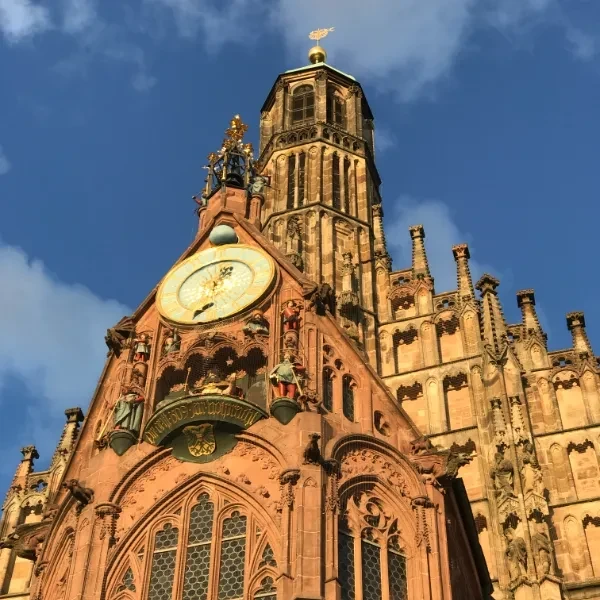
The Glockenspiel in the Neues Rathaus tower is one of Munich's most famous attractions. At 11am, noon, and 5pm (in summer), 43 bells chime and 32 life-sized figures re-enact two stories from Munich's history: a 16th-century royal wedding and a dance celebrating the end of a plague epidemic.
I'll be honest: the Glockenspiel is more interesting as a piece of history than as a spectacle. The figures move slowly and the performance lasts about 12 minutes. But watching it once, surrounded by the square filling with people looking upward, is a genuine Munich experience.
The Tower
Taking the lift to the top of the Neues Rathaus tower gives you one of the best views over central Munich. On a clear day you can see the Alps to the south. The view is particularly good in the early morning before the square fills with visitors. The tower is open daily and the lift makes it accessible to everyone.
The Surroundings
Marienplatz connects naturally to several of Munich's other key sights. The Viktualienmarkt is a five-minute walk to the south. The Kaufingerstraße and Neuhauser Straße pedestrian zones extend westward. The Hofbräuhaus is a short walk to the east. Most visitors find that Marienplatz becomes a natural starting point for exploring the Altstadt on foot.
Visitor Tips
Best time to visit
Arrive before 9am if you want to photograph the square without crowds. By mid-morning it becomes very busy, particularly in summer and during the Christmas market season.
Glockenspiel times
The Glockenspiel plays at 11am and noon year-round, and also at 5pm from March to October. Position yourself on the south side of the square for the best view of the figures.
Tower visit
The tower lift is worth the small admission fee. Go early in the morning for the clearest views toward the Alps and the quietest experience.