
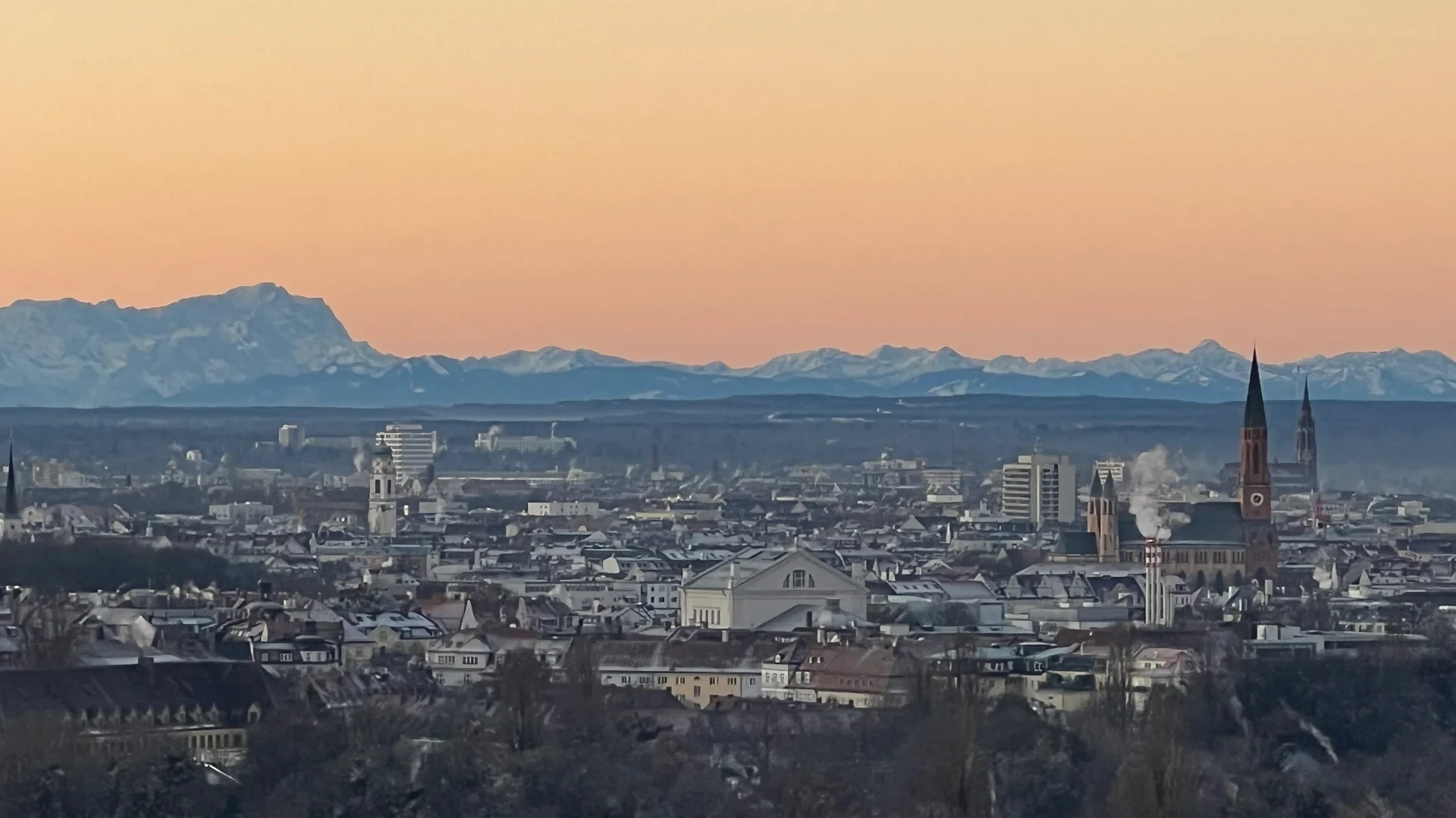
Introduction
Why Visit Munich
Munich has been part of my life for as long as I can remember. I grew up about 50 km north of the city and began visiting as a child with my parents and grandparents for shopping trips, the zoo, Circus Krone, the pedestrian center and, every September, Oktoberfest. As I got older, Munich became the place for concerts, festivals, nightlife and eventually long summer stays. I have experienced the city not only as a visitor, but through different stages of life.
What I continue to appreciate most is how easy Munich feels despite being a major European city. It offers serious museums, opera, concerts, restaurants, shopping, universities, international companies and a busy events calendar, yet it rarely feels overwhelming. The historic center is compact, public transportation reaches almost everywhere, cycling is excellent, and many neighborhoods are easy to explore on foot.
Munich is often reduced to beer, Oktoberfest and expensive cars. Those things are certainly part of the city, but they are only a small part of the story.
Munich is also far more varied than the stereotypes suggest. Beer halls, Oktoberfest and luxury cars are part of the picture, but so are Afghan and Vietnamese restaurants, contemporary art, riverside cycling, neighborhood cafés, outdoor concerts and an unusually strong everyday relationship with parks and public space. You can spend the morning in the Residenz, eat lunch at the Viktualienmarkt, cycle beside the Isar, and finish the day at the opera, a beer garden or a concert in the Olympic Park.
For a first visit, I recommend at least four full days. That gives you time for the historic center, one or two major museums, a palace or Olympic Park, the Englischer Garten or Isar, and at least one neighborhood beyond the Altstadt. Munich rewards visitors who slow down enough to experience how the city actually lives.
Seasons
When to Visit Munich
Munich changes noticeably with the seasons. Spring brings flowering parks, summer is built around beer gardens and outdoor life, autumn begins with Oktoberfest, and December fills the center with Christmas markets. Weather can shape the experience, but museums, palaces and neighborhood life make Munich rewarding year-round.
March – May
Spring
March can still feel wintry, but late April and May are often beautiful, with flowering trees, longer days and beer gardens reopening. Weather remains changeable, so expect a mix of mild sunshine, cool spells and rain. Layers and a light waterproof jacket are still very useful.
✦ Beer gardens reopen; parks bloom and daylight stretches longer
June – August
Summer
Summer is one of the best times to experience Munich outdoors. Beer gardens, the Isar, cycling, concerts and festivals all become part of daily life. Warm spells can be surprisingly hot, and air conditioning is not universal, so choose hotels carefully if summer heat is a concern.
✦ Tollwood, Isar life, cycling and long evenings outdoors
Mid-September – Early October
Oktoberfest Season
From mid-September into early October, Oktoberfest transforms Munich. For locals it is not only about beer tents, but also rides, food and a huge annual fair. The atmosphere is unique, but crowds are intense and hotel prices rise sharply, so book accommodation well ahead of time.
✦ Beer tents, fairground rides and Munich at its most festive and wildest
October – November
Autumn
October can be one of Munich’s loveliest months, especially when clear weather brings color to the Englischer Garten and other parks. November is often grayer, wetter and quieter, with fewer outdoor events before the Christmas season begins. Pack layers and expect shorter days.
✦ Autumn color in the parks; quieter sightseeing after Oktoberfest
December
Christmas Season
December is one of Munich’s most atmospheric times. Christmas markets fill the center, from Marienplatz and the Residenz courtyards to the medieval market at Wittelsbacherplatz and smaller neighborhood markets. Expect cold weather, festive crowds and plenty of seasonal food and drink.
✦ Distinctive Christmas markets, lights and seasonal food
January – February
Winter
January and February are colder and much quieter after the Christmas season. This is a good time for museums, opera and indoor culture, while nearby Alpine areas are easy to reach for winter sports. February also brings Fasching celebrations, including events around the Viktualienmarkt.
✦ Fasching, opera season, museums and easy Alpine ski trips
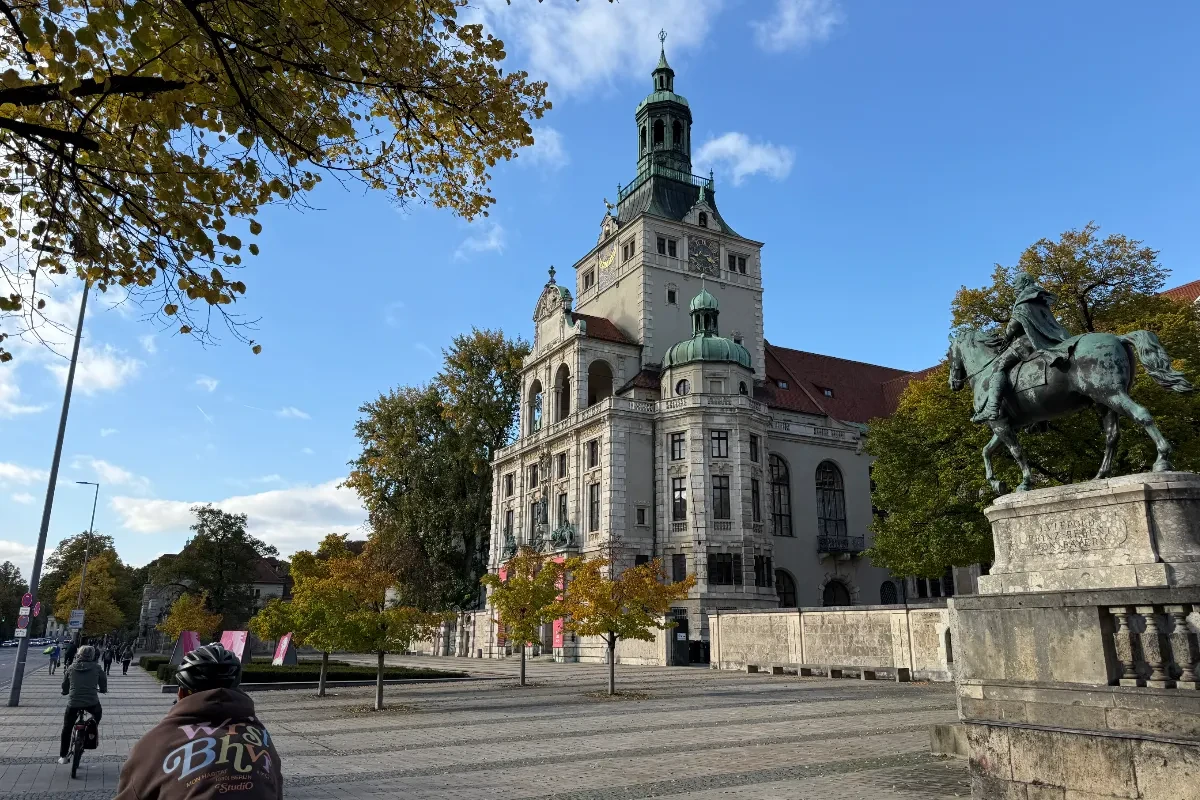
Before You Go
Essential Planning
Munich is unusually easy to navigate for a city of its size. The U-Bahn, S-Bahn, trams and buses work as one network, while cycling and walking are practical for many trips. Cards are widely accepted, although some cash is still useful, and English is common in visitor-facing businesses. The main complication is construction: München Hauptbahnhof and the central S-Bahn system are undergoing major long-term projects, so expect changing routes and occasional disruptions. Otherwise, Munich is a straightforward city to visit independently.
Getting Around
One of the things I value most about Munich is the freedom to move around without much planning. The MVV network combines the U-Bahn (subway), S-Bahn (commuter rail), trams and buses under one ticketing system, and regional trains make it easy to continue beyond the city. For most visitors, a car is unnecessary.
The historic center is compact enough to explore on foot, while cycling is one of the best ways to see a broader side of Munich. The bike network is extensive, and routes along the Isar and through the Englischer Garten make it possible to cross large parts of the city away from heavy traffic. Bike lanes can sometimes run directly beside sidewalks, so watch pavement markings and be aware of cyclists.
München Hauptbahnhof remains convenient for both city trips and excursions throughout Bavaria, but the station and surrounding area are undergoing major long-term reconstruction. A second central S-Bahn route is also being built, so changing platforms and occasional disruptions are part of the experience.
Good to know
- Purchase a day pass if you plan multiple journeys.
- Validate paper tickets where required.
- The Deutschlandticket can be useful for longer stays in Germany, and allows you to use most public transit nationwide but it does not cover long-distance ICE, IC or EC trains.
- Google Maps works very well with Munich’s public transportation network.
- Most stations have elevators, making the system accessible for travelers with luggage.
Money & Payments
Germany has become increasingly card-friendly, and in Munich you’ll generally have no difficulty paying by credit or debit card in hotels, museums, department stores, and most restaurants.
That said, carrying a small amount of cash is still worthwhile, as Germany’s transition to card payments is relatively recent. Smaller cafés, market stalls, traditional beer gardens, bakeries, and independent businesses may still prefer cash or have minimum card payment amounts.
ATMs are widely available throughout the city, and tipping is appreciated but modest by North American standards. Rather than leaving money on the table, it’s customary to round up the bill or tell your server the total amount you’d like to pay when settling the check.
Weather
Munich experiences four distinct seasons, each offering a different atmosphere and range of activities.
Spring brings blooming parks, comfortable sightseeing weather, and fewer visitors. It can also bring frequent rain showers, so packing a light waterproof jacket or umbrella is a good idea.
Summer is perfect for enjoying beer gardens, outdoor concerts, cycling, and spending time along the Isar River, although popular attractions become busier. Air conditioning is still not common in many hotels, restaurants, and older buildings because it traditionally wasn’t necessary and energy efficiency remains a priority. In recent years, however, summers have become noticeably warmer, making occasional heat waves more common.
Autumn combines comfortable temperatures with Oktoberfest, beautiful fall colors, and generally pleasant sightseeing weather. It’s one of my favorite times to visit if you want to experience Munich at its liveliest while still enjoying comfortable conditions.
Winter transforms Munich with festive Christmas markets, seasonal food, and easy access to nearby Alpine skiing. December is another favorite time of year for me because the city truly embraces the holiday season, with Christmas markets appearing throughout Munich and creating a wonderfully festive atmosphere.
Layered clothing is recommended throughout much of the year, as mornings and evenings can be noticeably cooler than daytime temperatures.
Local Customs
Munich is a relaxed and welcoming city where people generally appreciate courtesy, punctuality, and respect for public spaces. At the same time, it’s a major university city with a young, international population that contributes to a vibrant cultural and nightlife scene.
Pedestrians typically wait for traffic lights before crossing, even when roads appear quiet. Public transportation is orderly, with passengers allowing others to exit before boarding. Quiet conversation is appreciated on trains, particularly during commuter hours.
Beer gardens are wonderfully social places, and while some offer table service, others operate on a self-service basis. If you’re unsure, simply observe how locals are ordering or ask a member of staff.
Learning a few basic German phrases such as Hallo, Bitte, Danke, and Auf Wiedersehen is always appreciated, even though English is widely spoken throughout the city.
Where to Stay and Explore
Munich Neighbourhoods
Munich makes more sense when you stop thinking of it as a single city center and begin seeing it as a collection of neighborhoods. The Altstadt contains many of the famous landmarks, but the surrounding districts reveal more of the city’s everyday personality, local routines and different ways to experience Munich.
Neighbourhood
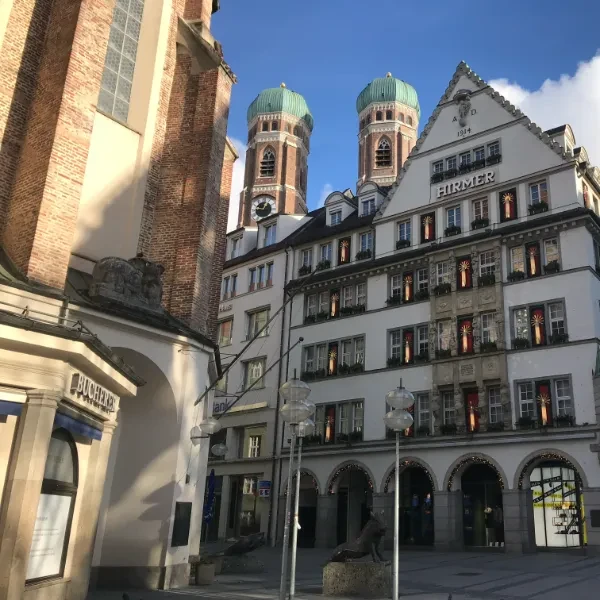
Altstadt
The Historic Heart of Munich
The Altstadt is where most first-time visitors naturally begin. Marienplatz, the Neues Rathaus, Frauenkirche, the Residenz, Odeonsplatz and many of Munich’s best-known streets are concentrated within a compact area. The main pedestrian route runs from Karlsplatz along Neuhauser Straße and Kaufingerstraße to Marienplatz, with shops, churches and historic squares along the way.
Best for: First-time visitors, short stays, historic sights, shopping and Christmas markets
Neighbourhood
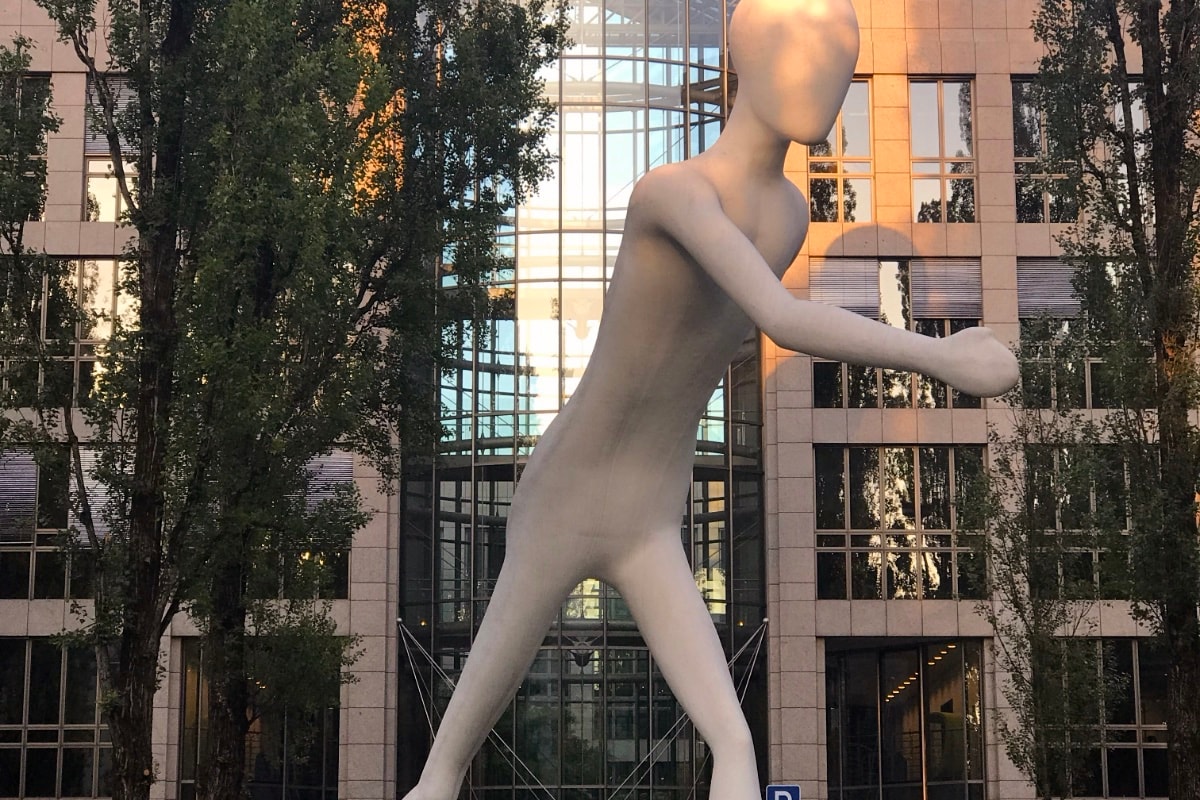
Schwabing
The Munich I Know Most Intimately
I know Schwabing more intimately than most parts of Munich because we rented apartments here for several summers. Once famous as the city’s artistic and bohemian district, it still feels lively and independent. Leopoldstraße runs north from the Siegestor past cafés, restaurants and shops, while Münchner Freiheit is a natural hub for dining, people-watching and easy access to the Englischer Garten.
Best for: Longer stays, cafés, restaurants, cycling and local nightlife
Neighbourhood
Haidhausen
Attractive, Local and Exceptionally Connected
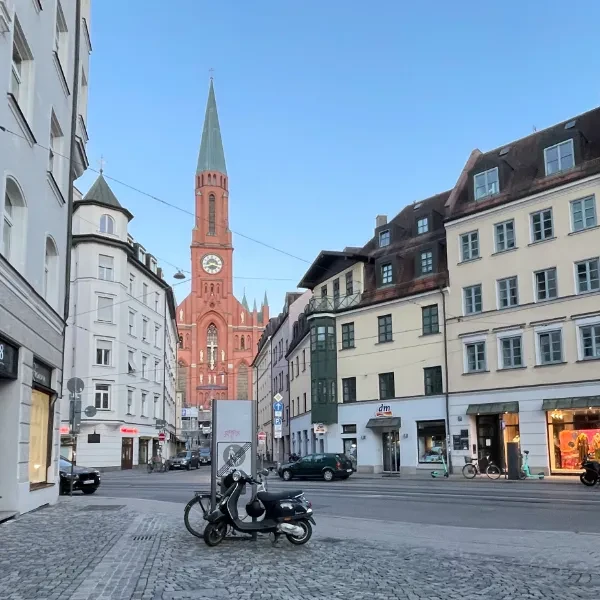
Haidhausen lies east of the Isar and has a distinct neighborhood identity. Around Weißenburger Platz and the Wiener Markt, attractive squares, older buildings, cafés and restaurants create an almost small-town atmosphere. Rosenheimer Platz provides fast S-Bahn access to the center and airport, making the district especially convenient for visitors seeking a local feel with excellent connections.
Best for: A local atmosphere, excellent transit, restaurants, repeat visitors and airport access
Neighbourhood
Maxvorstadt
Museums, Universities and Munich's Intellectual Side
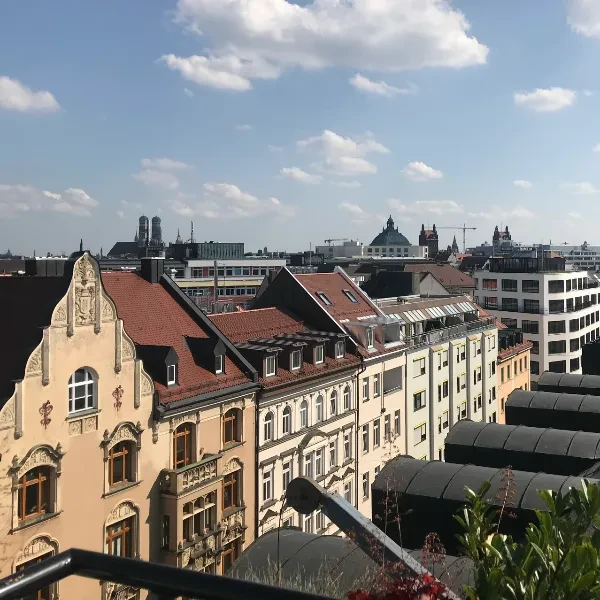
Maxvorstadt begins north of the Altstadt and contains many of Munich’s most important cultural and educational institutions. The Pinakothek museums, Lenbachhaus, Königsplatz and Ludwig Maximilian University give the area an academic, urban character. It is a good base for museum-heavy visits, with plenty of cafés, student life and easy walking access to the historic center.
Best for: Museums, art, university life, cafés and a lively urban atmosphere
Neighbourhood
Glockenbachviertel
LGBTQ+ Munich and Independent City Life
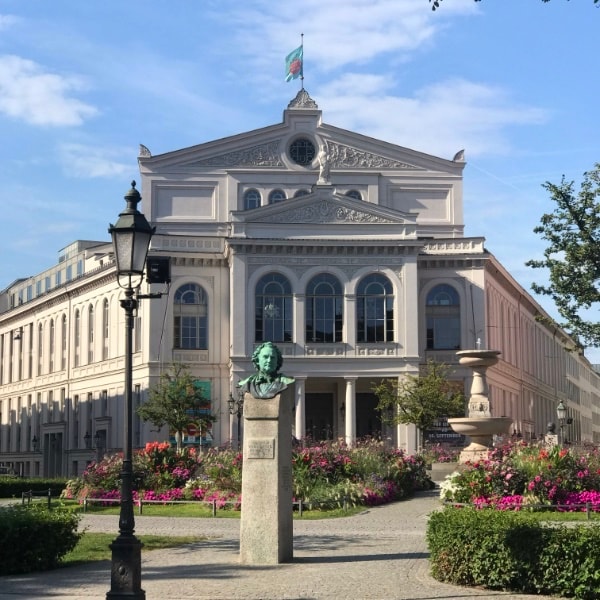
The Glockenbachviertel and adjoining Gärtnerplatz area form one of Munich’s liveliest inner-city districts. Long associated with the city’s LGBTQ+ community, especially around Müllerstraße, the neighborhood mixes restaurants, bars, independent shops and attractive residential streets. Gärtnerplatz is its visual and social center, anchored by the Staatstheater am Gärtnerplatz.
Best for: LGBTQ+ travelers, restaurants, bars and independent city life
Neighbourhood
Neuhausen
Everyday Munich With Excellent Connections
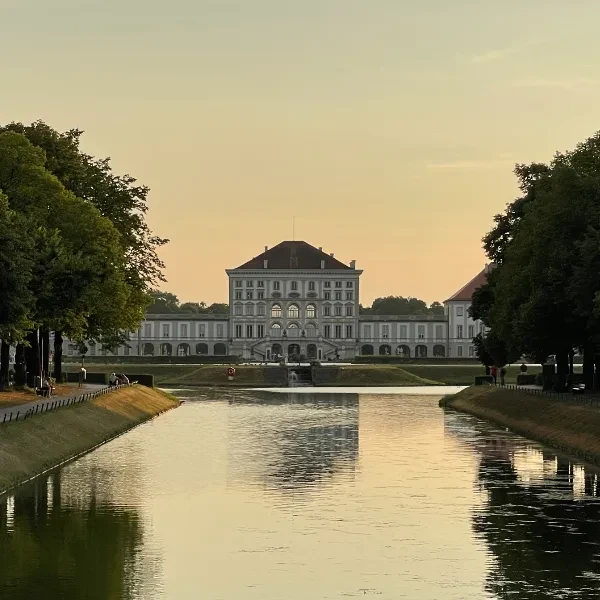
Neuhausen lies west of the center and feels more residential than the Altstadt while remaining very easy to reach. Rotkreuzplatz is its main commercial and transit hub, with shops, cafés and everyday services used by locals. The neighborhood is especially convenient for Schloss Nymphenburg and its gardens, and works well for longer stays when you want a quieter base with strong connections.
Best for: Longer stays, families, Nymphenburg and a quieter residential base
Neighbourhood
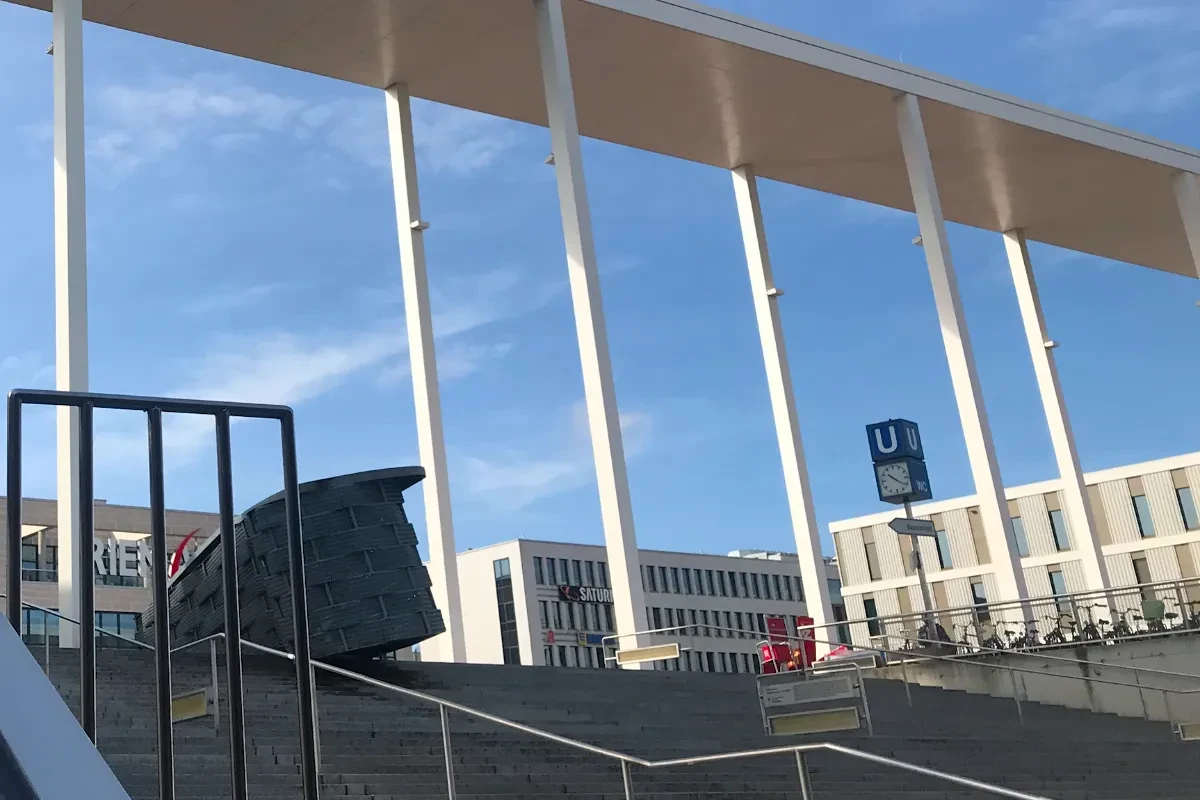
Riem & Messe München
Munich's Convention District
Riem is very different from Munich’s historic neighborhoods, but it matters to many visitors because the Messe München convention center is here. Built around the former airport grounds, the district has modern housing, hotels, shopping and the expansive Riemer Park. I also remember the area from its earlier life, when the old airport hosted concerts, Rock in Riem and later large rave events.
Best for: Convention attendees, Messe München, modern hotels and Riemer Park
Sightseeing
Historic Sights & Major Attractions
Munich's historic center is surprisingly compact and easy to explore on foot. Many of the city's most important landmarks are only a few minutes apart. The best approach is to wander, allow yourself to get distracted by side streets and courtyards, and simply enjoy being there.
Historic Center
Marienplatz
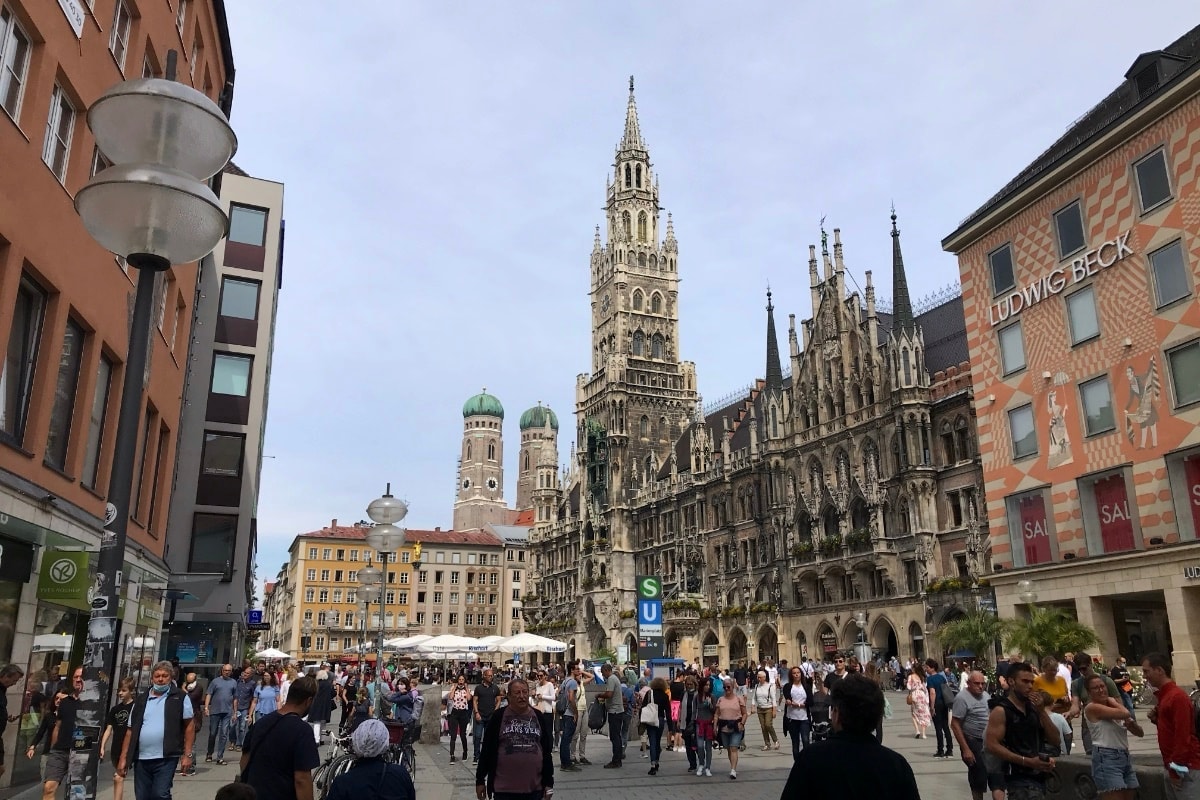
Marienplatz is the heart of Munich and the natural starting point for a first visit. The square is dominated by the elaborate Neues Rathaus, while the pedestrian streets around it lead toward many of the Altstadt’s major sights. It can be extremely busy, but I still enjoy walking through because it remains the historic and social center of the city rather than simply a tourist attraction.
CHURCH
Frauenkirche
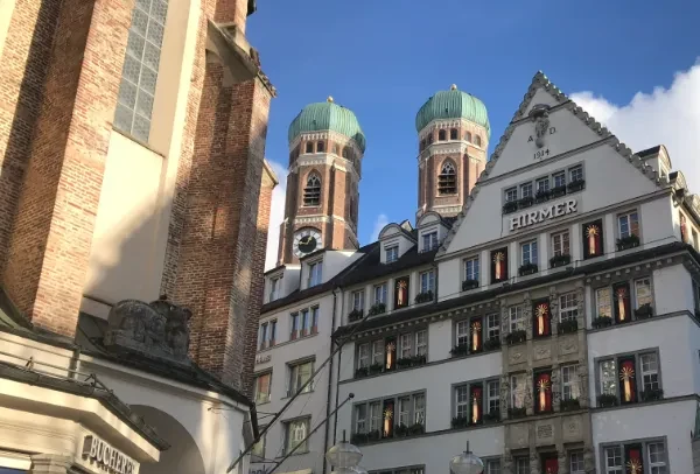
The twin onion-domed towers of the Frauenkirche are among Munich’s defining landmarks and remain visible from many parts of the city. The cathedral itself feels surprisingly restrained compared with some of Munich’s more elaborate churches. Its location just off the main pedestrian streets makes it an easy stop while exploring the Altstadt, even if you have only a short amount of time.
Palaces
Munich Residenz
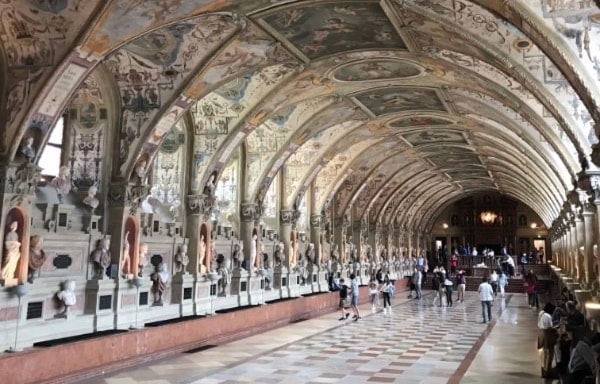
The Munich Residenz may be my favorite palace visit anywhere in Europe. What began as a medieval residence grew over centuries into an enormous complex of state rooms, courtyards and collections. I have returned several times, and continuing restoration has meant discovering newly accessible rooms on different visits. Allow plenty of time; this is much more extensive than it appears from outside.
CHURCH / VIEW POINT
St. Peter / Alter Peter
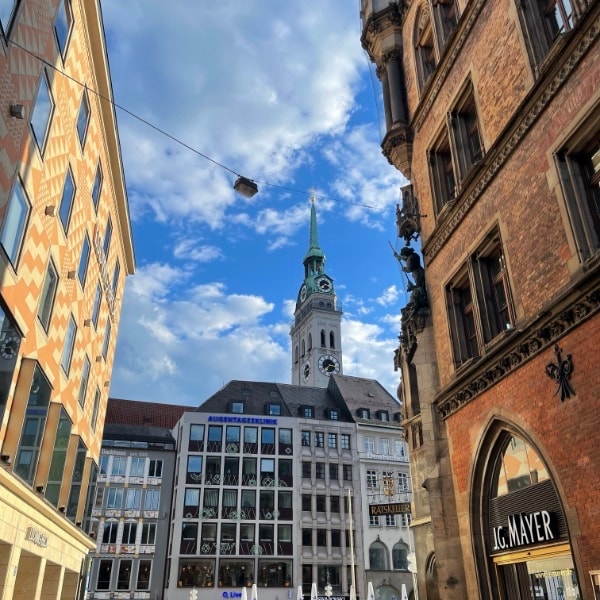
St. Peter is Munich’s oldest parish church and sits just behind Marienplatz, making it easy to overlook while moving between the square and Viktualienmarkt. The church is worth seeing, but the tower known as Alter Peter is the real reason I would include it here. Climbing the narrow stairs rewards you with one of the classic views across the rooftops of the Altstadt.
PUBLIC SQUARE
Odeonsplatz
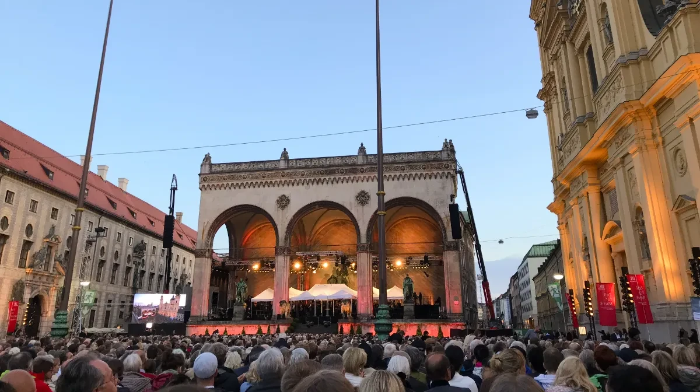
Odeonsplatz is one of Munich’s grandest urban spaces, framed by the Theatinerkirche, Feldherrnhalle and the entrance to the Hofgarten. It also sits at an important transition between the historic center, Residenz and Ludwigstraße. I often pass through rather than treating it as a single attraction, but the architecture and location make it an essential part of exploring central Munich on foot.
Palaces
Schloss Nymphenburg
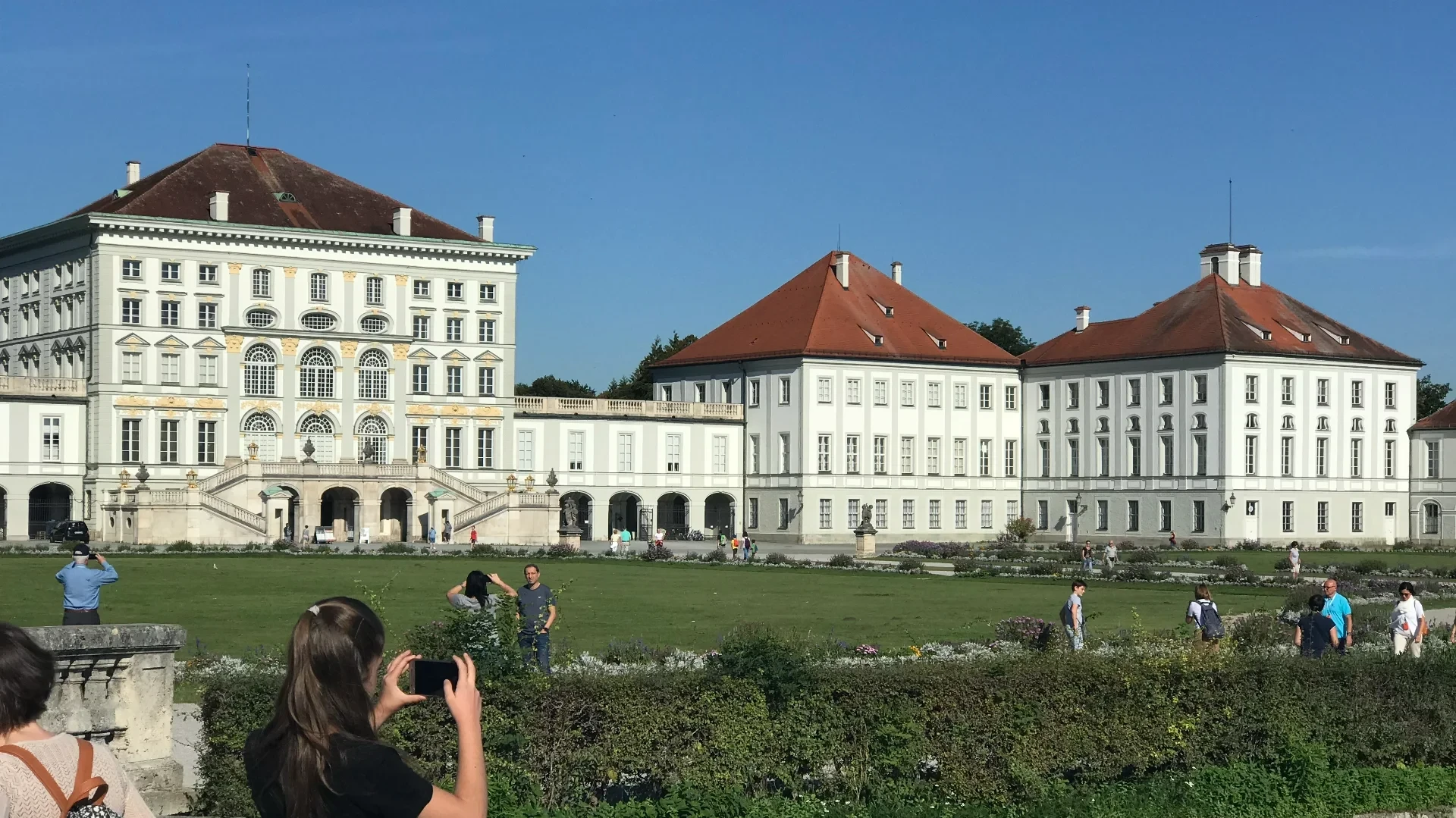
Schloss Nymphenburg was the summer residence of Bavaria’s rulers and offers a very different experience from the Residenz. The palace interiors are worthwhile, but I especially enjoy the enormous grounds, where formal gardens gradually give way to parkland, canals and smaller palace buildings. It is easy to spend several hours here and combine history with a long walk away from the busy center.
HISTORIC Landmarks
Siegestor
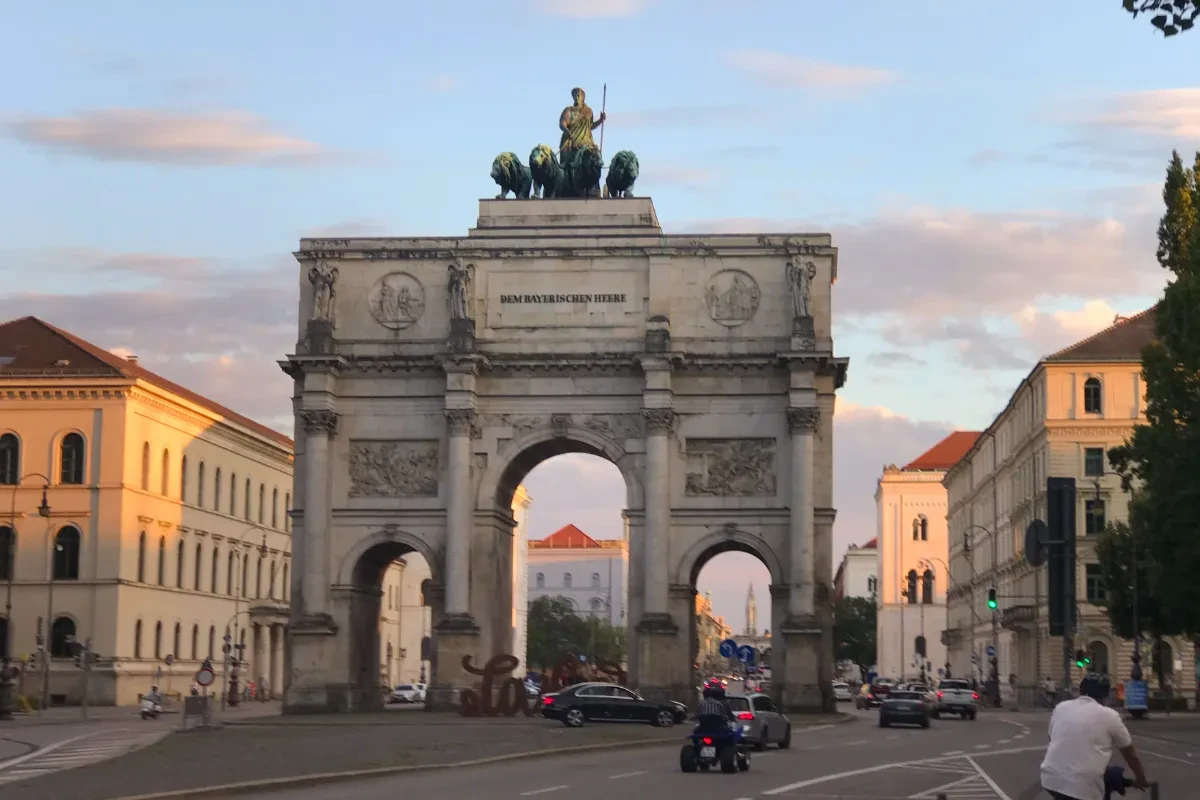
The Siegestor marks the northern end of Ludwigstraße and forms a dramatic transition between Maxvorstadt and Schwabing. Originally built as a triumphal arch, it was heavily damaged during World War II and later restored in a deliberately more restrained form. I pass it often when moving between the university district and Schwabing, and its postwar message gives the monument added meaning.
WWII History
NS Documentation Center
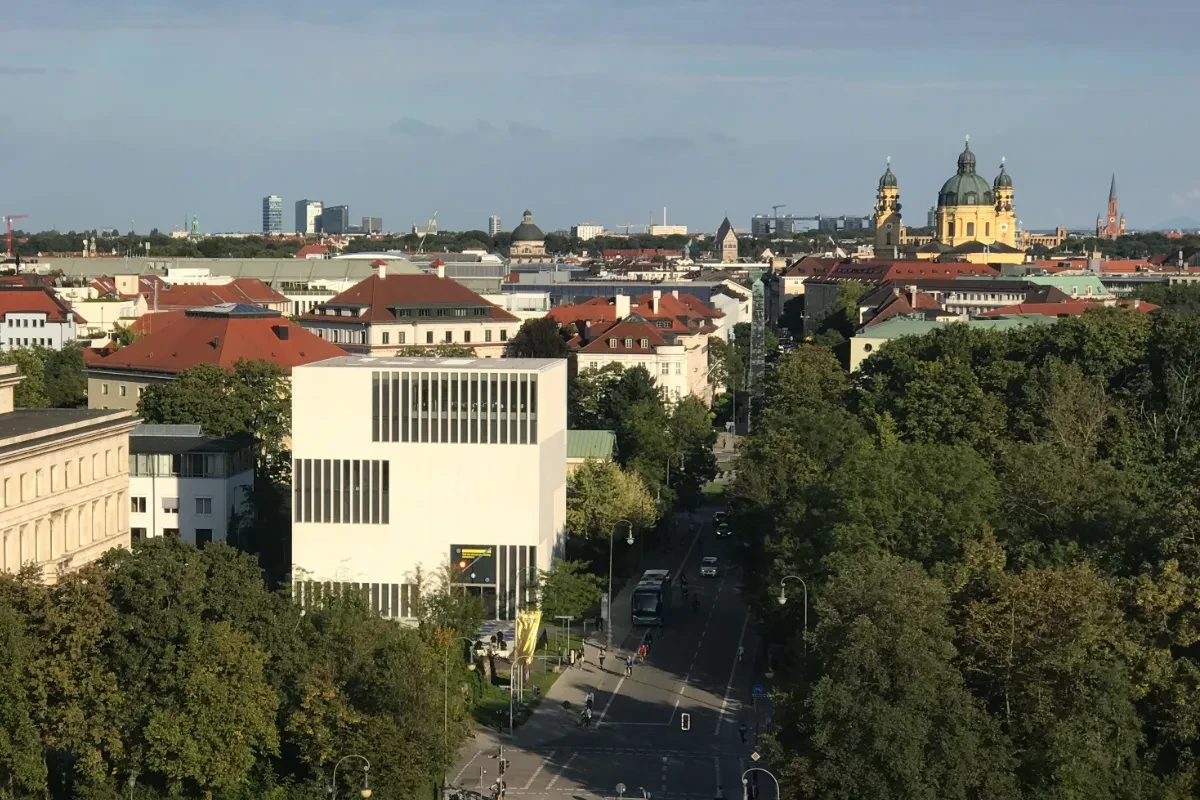
The NS-Dokumentationszentrum stands on the former site of the Nazi Party headquarters, making the location itself an important part of the visit. The exhibitions explain Munich’s central role in the rise of National Socialism and the consequences that followed. I think it is one of the most important places to visit if you want to understand a darker and essential part of the city’s history.
Culture
Museums, Culture & Performing Arts
Munich has enough museums and cultural venues to fill several days, covering everything from science, technology and ancient history to major art collections, opera and musical theater. Rather than trying to see everything, I recommend choosing the places that match your interests and leaving enough time to enjoy them properly.
SCIENCE & TECHNOLOGY
Deutsches Museum
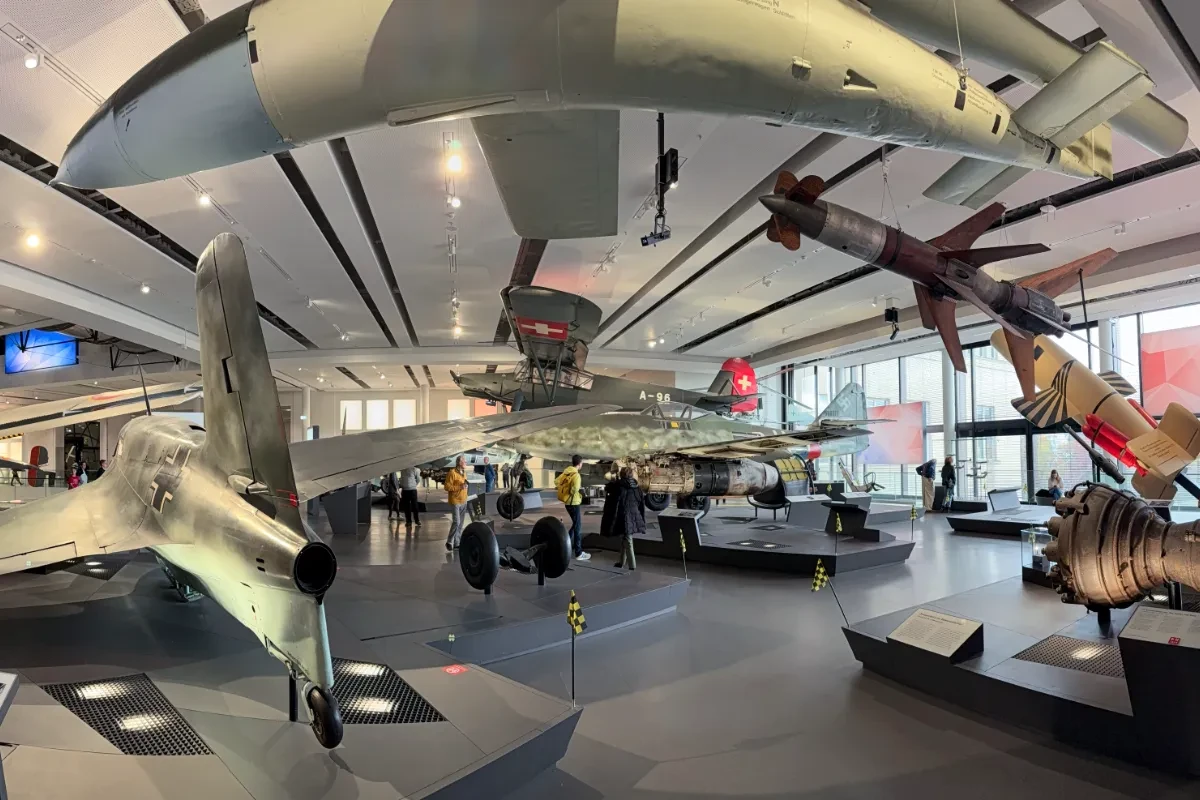
The Deutsches Museum is so large that trying to see everything in one visit quickly becomes exhausting. I recommend choosing the sections that interest you most—science, engineering, aviation, energy, astronomy or another specialty—and spending time there. What I especially like is how interactive many exhibits are, making it engaging even for visitors who normally do not spend hours in museums.
Tip: Pick 3–4 sections and go deep rather than rushing through everything.
MODERN ART
Lenbachhaus
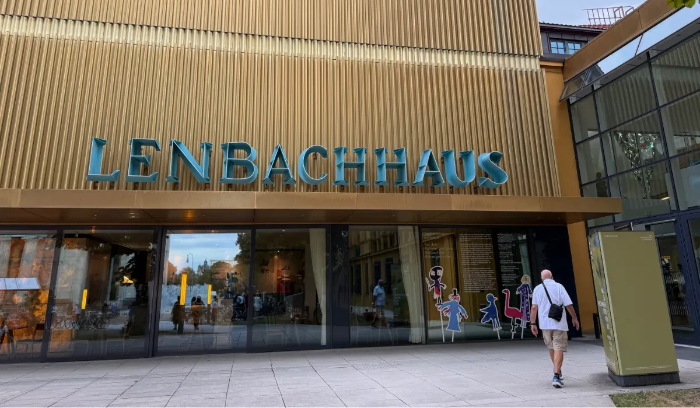
Among Munich’s art museums, Lenbachhaus stands out to me for both its collection and its setting. It is especially known for works by Der Blaue Reiter, including Kandinsky and Franz Marc, but the museum feels approachable even if you are not deeply interested in art. The historic villa and modern galleries also make the building itself part of the experience.
Tip: I usually recommend it ahead of trying to visit every museum in the Kunstareal.
OPERA & BALLET
Nationaltheater
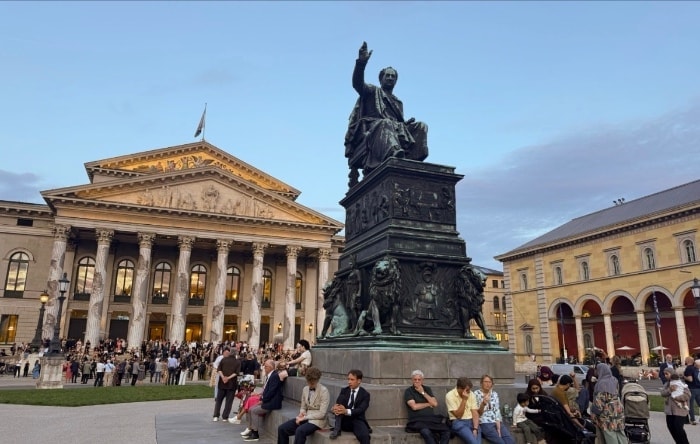
If I had to recommend just one performing-arts experience in Munich, it would probably be an evening at the Nationaltheater. I genuinely think it is one of the world’s great opera houses, and simply entering the building already feels special. The Bavarian State Opera presents a full season here, while the annual summer Opera Festival makes July an especially exciting time to attend.
Tip: Book early for major performances, especially during the Opera Festival.

TRANSPORT HISTORY
Deutsches Museum Verkehrszentrum
Of the Deutsches Museum locations, the Verkehrszentrum may actually be the one I enjoy most. Housed in beautifully restored historic exhibition halls, it focuses on transportation and includes automobiles, trains, bicycles and other vehicles. It is much easier to take in than the main museum and works especially well if you want an interesting museum without committing most of a day.
Tip: A comfortable 2–3 hour visit and easier to manage than the main museum.
MUSICALS & OPERETTA
Gärtnerplatztheater
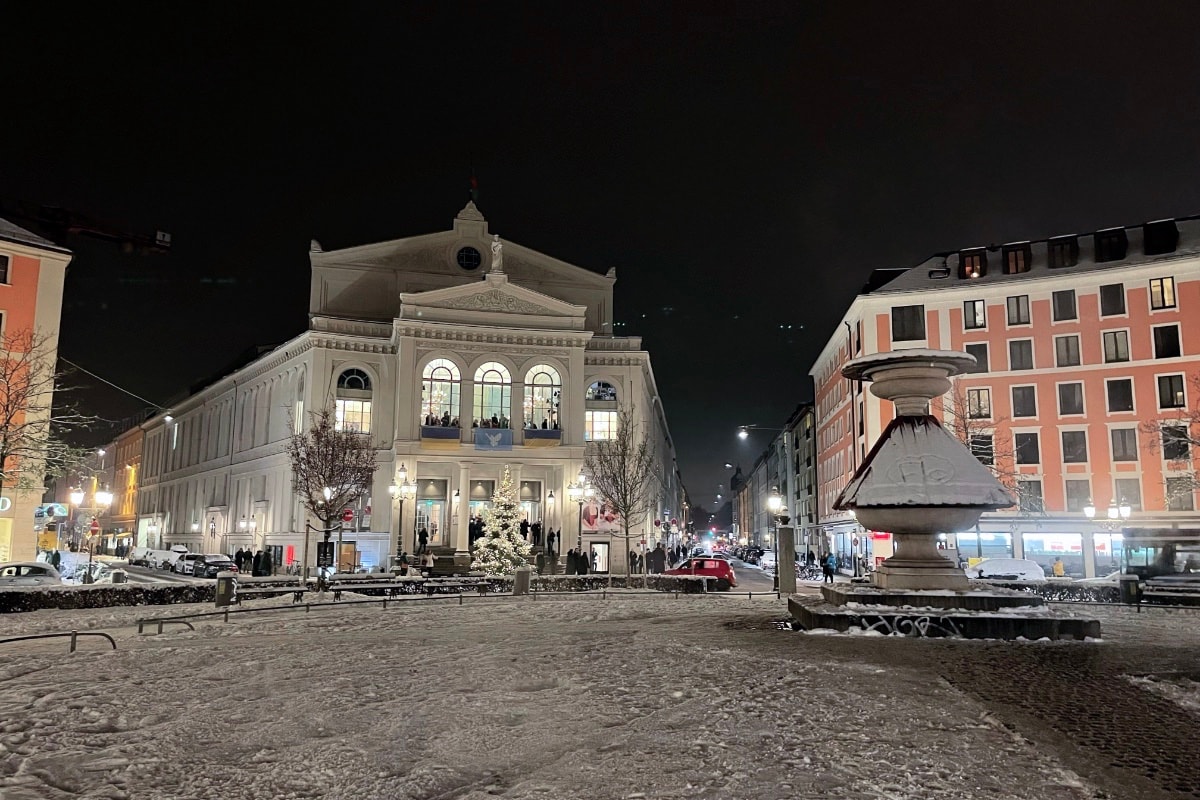
The Gärtnerplatztheater is a wonderful alternative to the more formal Nationaltheater and one of my favorite places for an evening performance. Its program mixes musicals, operetta, opera and dance, and ticket prices can be surprisingly reasonable. I also like its location on Gärtnerplatz, with plenty of restaurants and bars nearby for dinner or a drink before or after the performance.
Tip: Combine a performance with dinner around Gärtnerplatz or Glockenbach.
CARS & TECHNOLOGY
BMW Museum
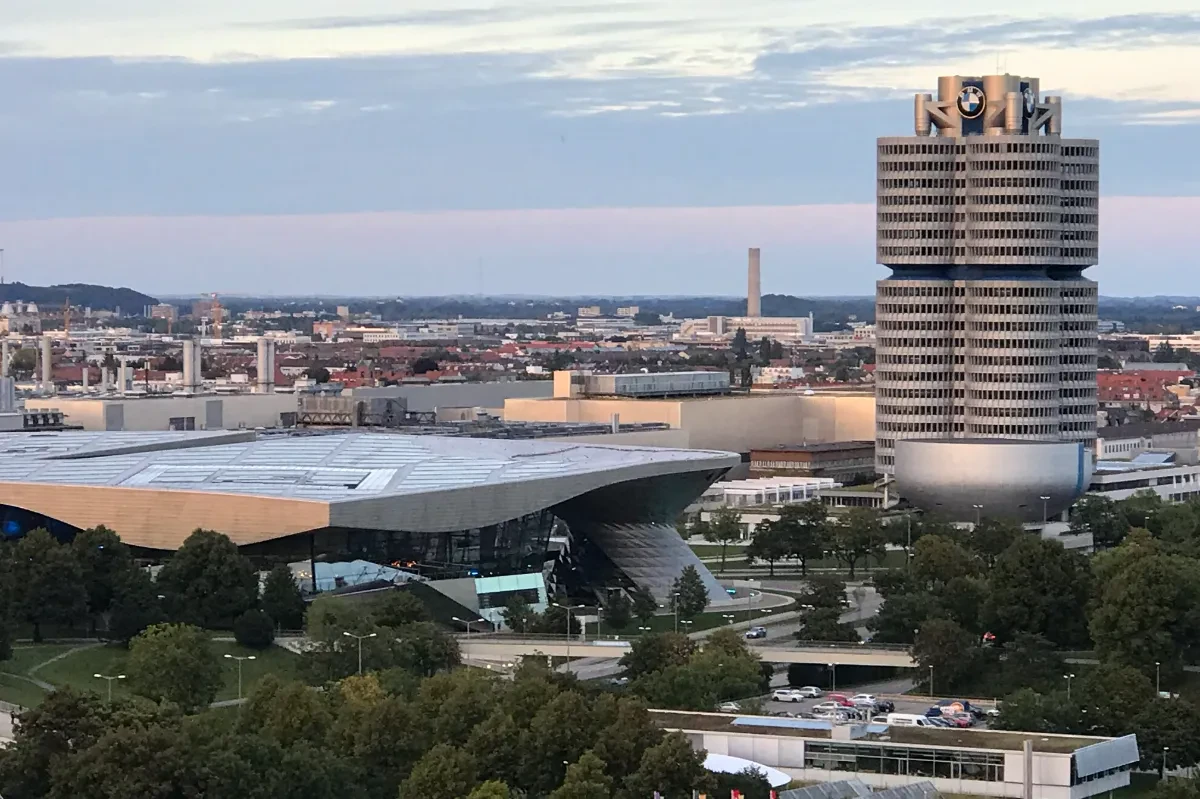
The BMW Museum is a particularly good choice if you are interested in cars, design or technology. Next to BMW’s distinctive headquarters and across from BMW Welt, the museum traces the company’s history through automobiles, motorcycles, engineering and changing design. Even after growing up around BMWs in Bavaria, I find the presentation and architecture make this a pretty special place to explore.
Tip: Combine the museum with BMW Welt and a walk through Olympic Park.
ART COLLECTIONS
Pinakotheken
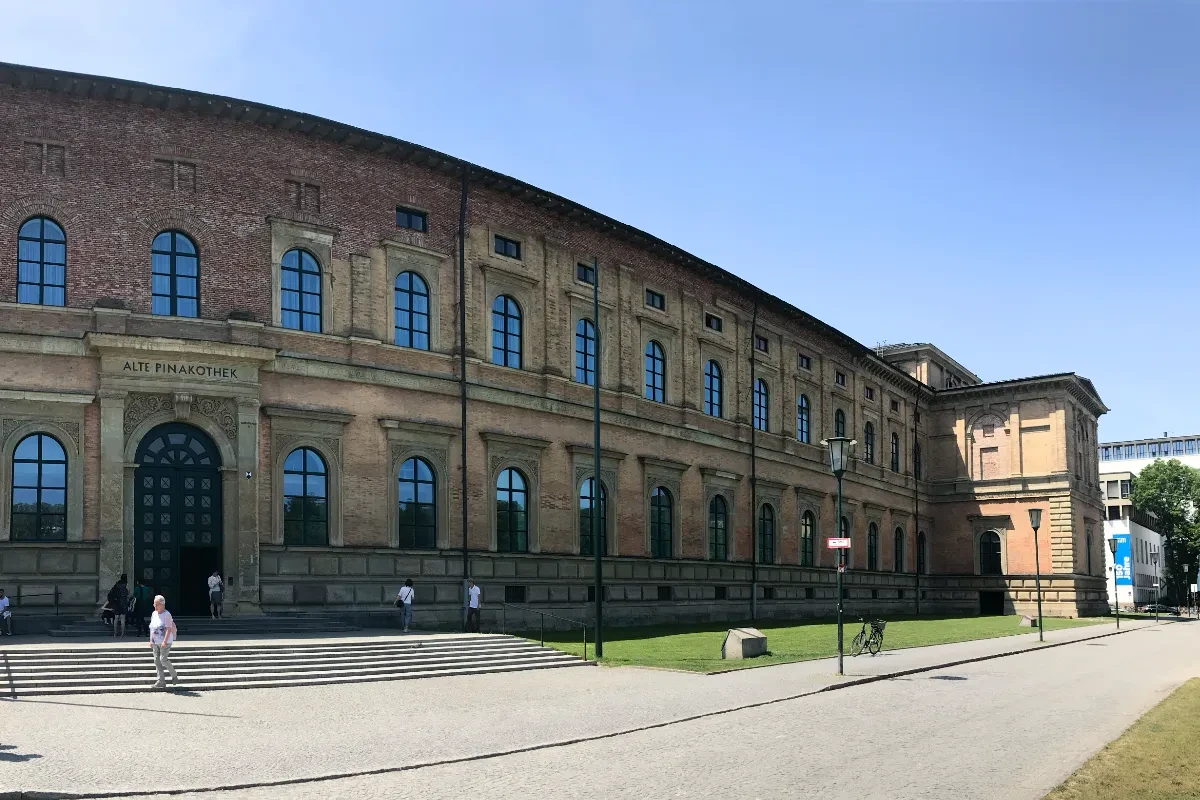
Munich’s three Pinakothek museums sit close together in the Kunstareal and collectively cover an enormous span of European and modern art. The Alte Pinakothek focuses on Old Masters, while the Neue Pinakothek (closed for remodel) and Pinakothek der Moderne move into later periods and contemporary work. The collections are vast, so I would choose according to your interests rather than trying to see everything.
Tip: Choose one collection that interests you rather than museum-hopping.

ANCIENT HISTORY
Staatliches Museum Ägyptischer Kunst
The Egyptian Museum is one of the less obvious museums I would recommend in Munich. Its modern underground galleries near Königsplatz provide a striking setting for ancient Egyptian sculpture, artifacts and art, and the collection is presented in a way that feels manageable rather than overwhelming. It is a good choice if you enjoy ancient history or want something different from Munich’s larger art museums.
Tip: Easy to combine with the Pinakotheken, Lenbachhaus and Königsplatz.
Outdoors
Parks, Gardens & Outdoor Life
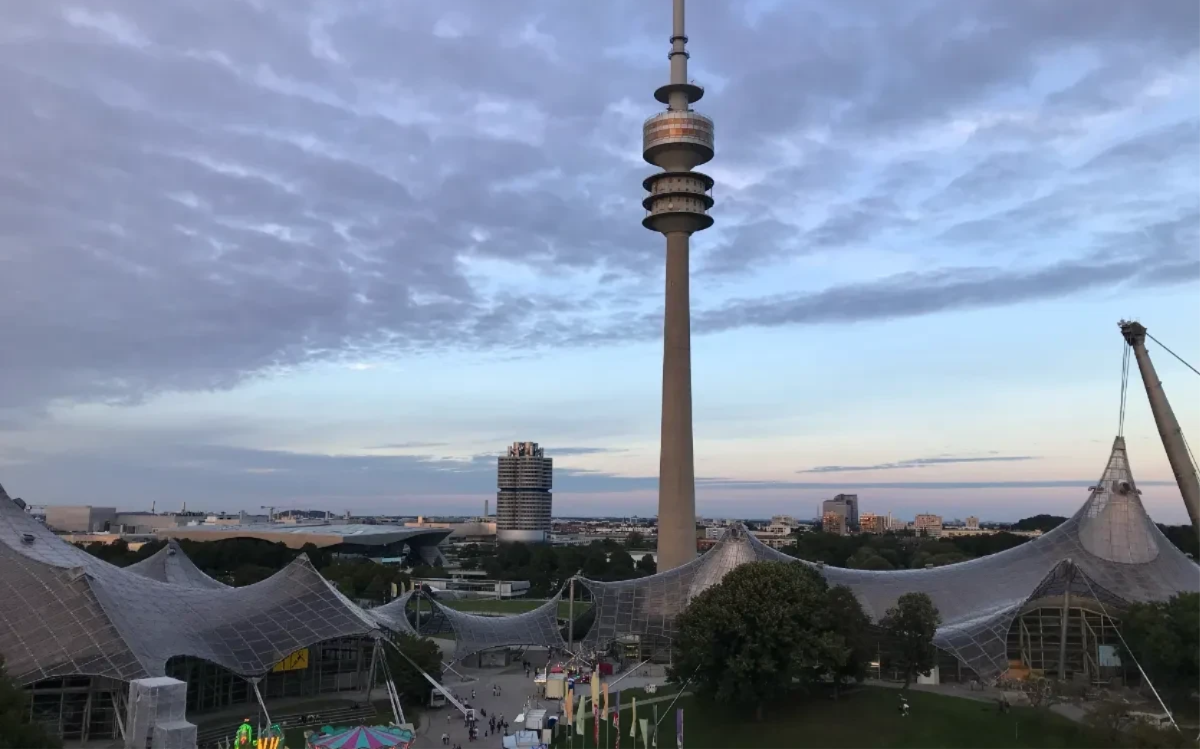
Munich’s parks and green spaces are a major part of everyday city life. From the vast Englischer Garten and Isar riverbanks to palace gardens, urban parks and the zoo, outdoor spaces are woven into the city rather than treated as separate attractions. They are among the best places to slow down and experience how Munich actually lives.
PARK
Englischer Garten
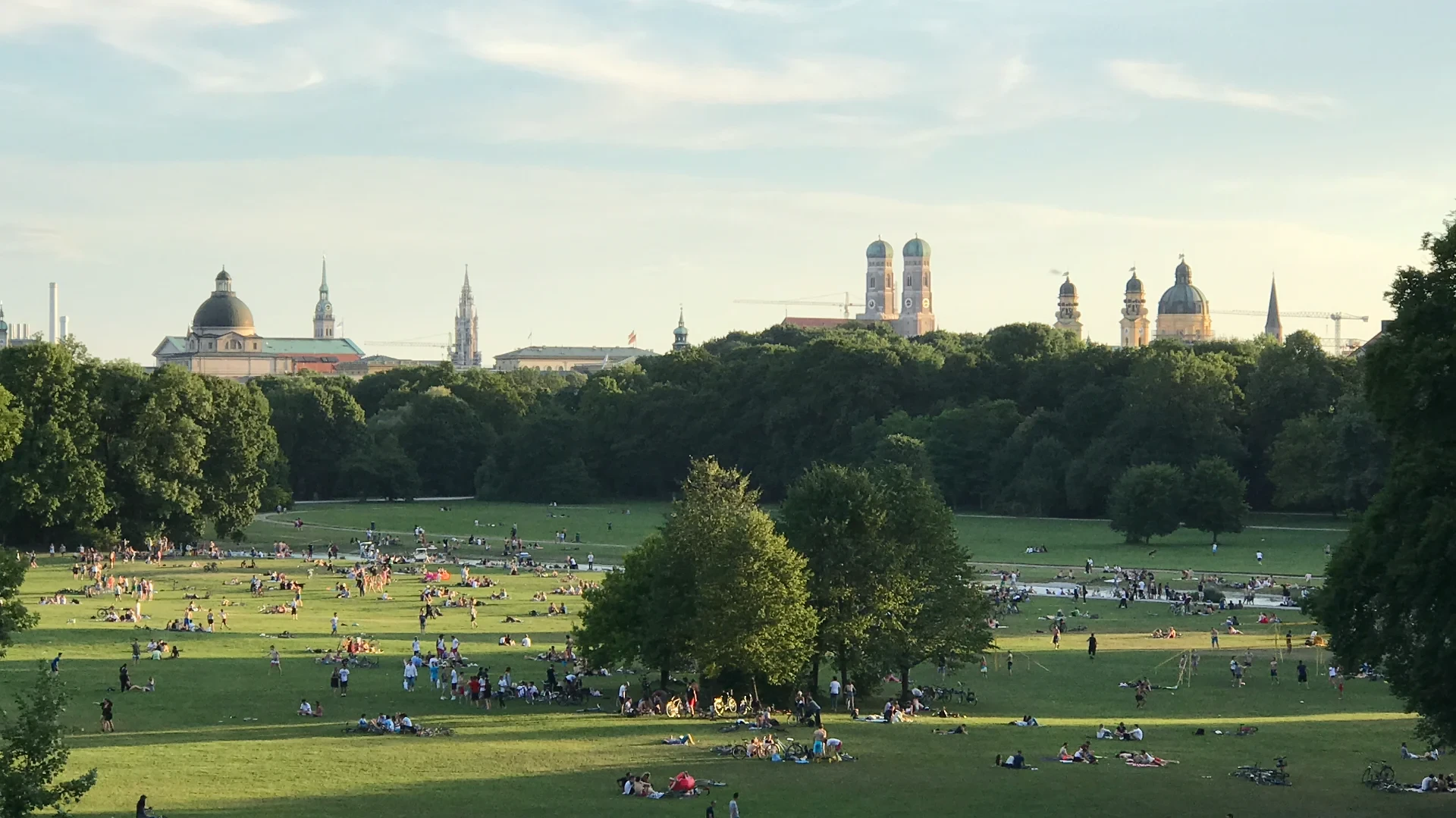
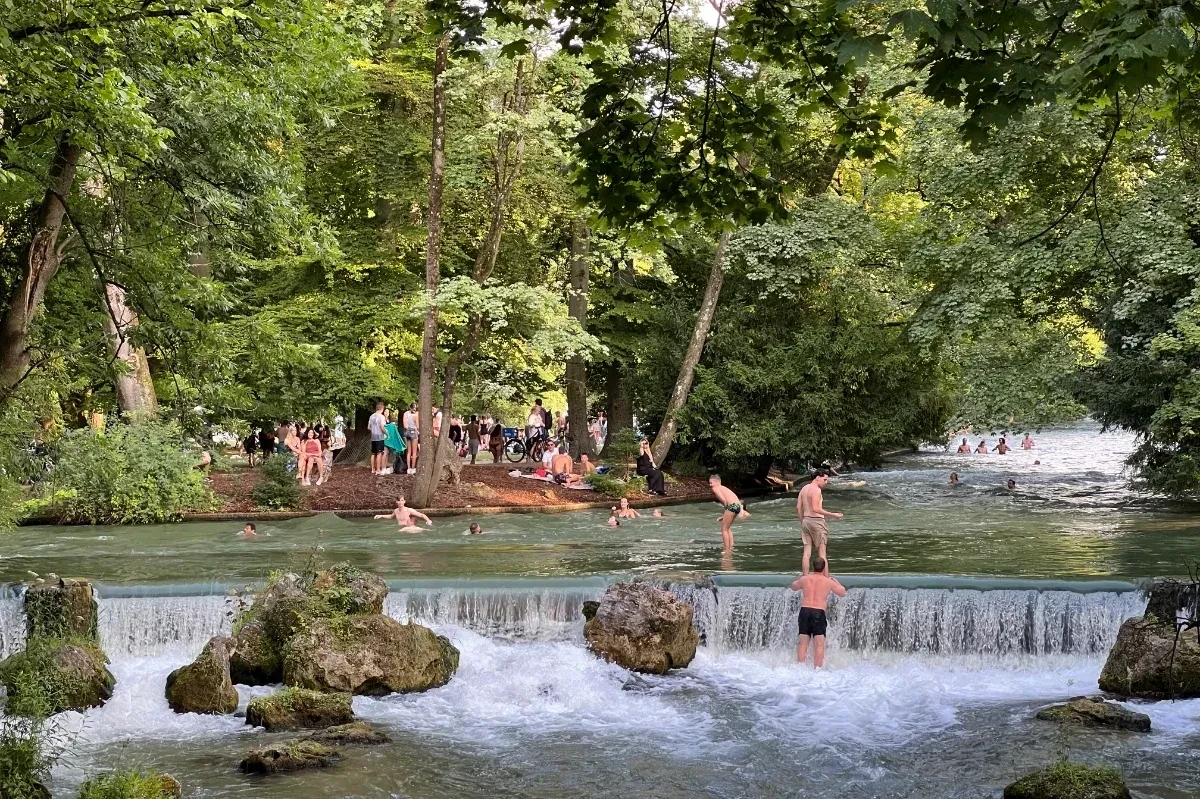
The Englischer Garten stretches through a large portion of central Munich. On warm days you’ll find people reading under trees, cycling through the park, playing volleyball or having picnics. The park is much larger than most first-time visitors expect — paths continue far north where things become noticeably quieter.
Best for: Walking, cycling, beer gardens and a genuine slice of Munich daily life
URBAN SURFING
Eisbachwelle
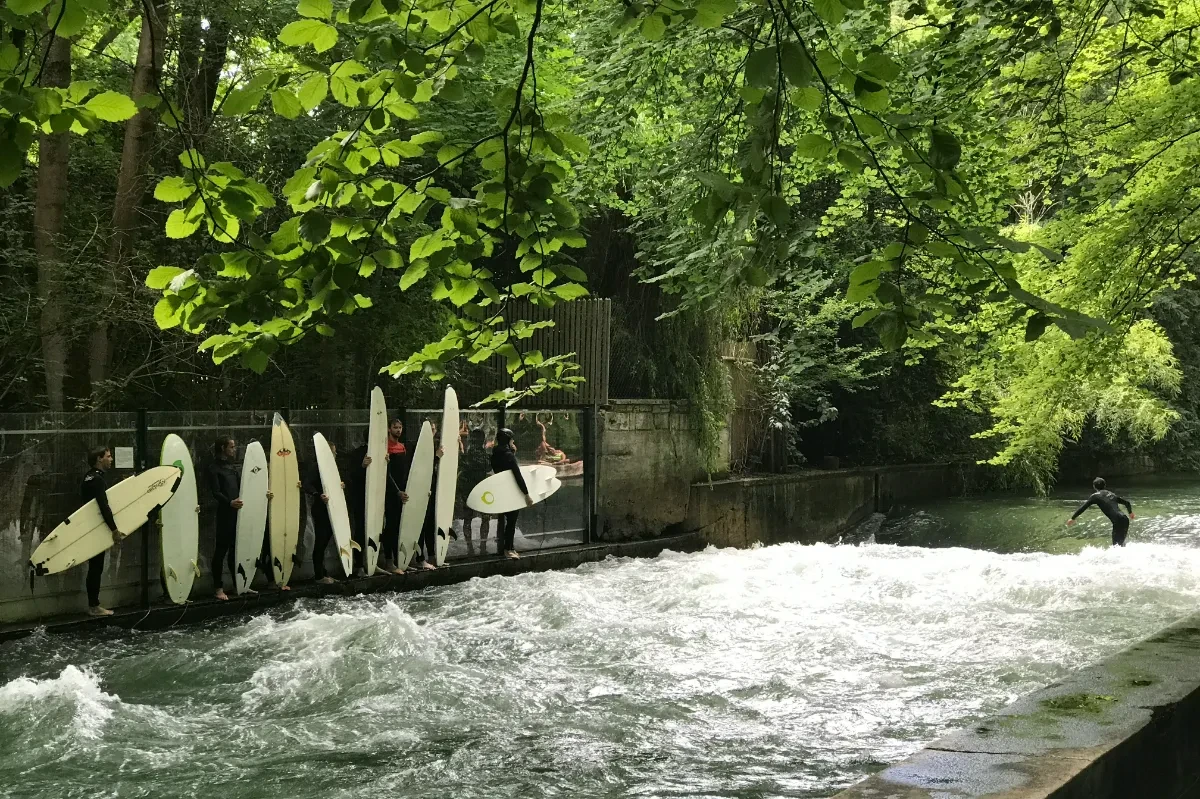
The Eisbachwelle is one of those Munich sights that feels almost impossible until you see it. Just inside the Englischer Garten, surfers take turns riding a standing wave beneath a bridge while crowds watch from the banks. The contrast makes it memorable: you can leave Munich’s historic streets and suddenly find year-round surfing in the middle of a city park.
Best for: People-watching, photography and one of Munich’s most unusual sights
RIVER & PATHS
The Isar
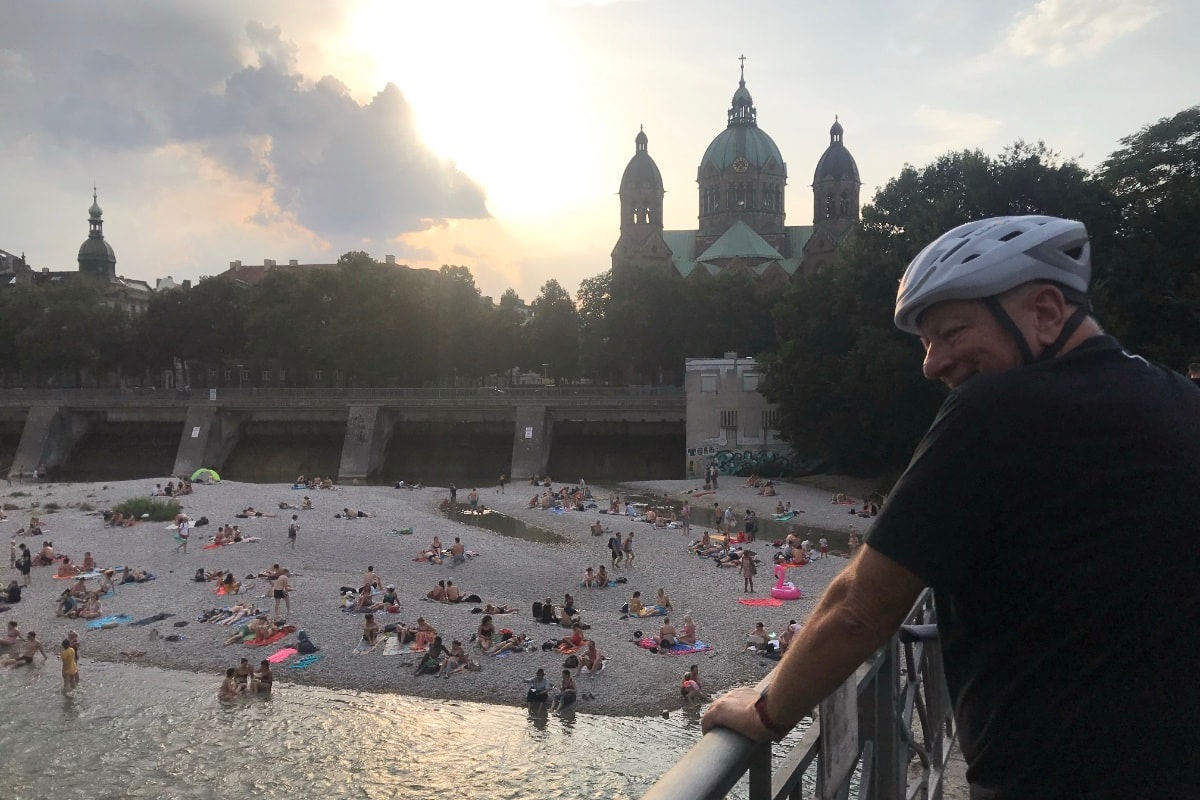
The Isar is one of my favorite ways to experience Munich outdoors. The paths along the river seem almost endless and are fantastic for cycling, while the Flaucher in the south feels surprisingly wild for such a large city and becomes a popular place for swimming and sunbathing in summer. I also love the little kiosks and beer gardens scattered along the southern stretches of the river.
Best for: Cycling, swimming, sunbathing, riverside walks and summer afternoons
A Very Bavarian Way to Travel the Isar
One of Munich's more unusual summer experiences is taking a traditional wooden raft down the Isar from outside the city into southern Munich. These full-day Floßfahrten are anything but quiet sightseeing trips: there is beer, food and live Bavarian music on board, and the rafts even plunge down several purpose-built chutes along the way. They are very popular and can sell out well in advance.
HISTORIC GARDEN
Hofgarten
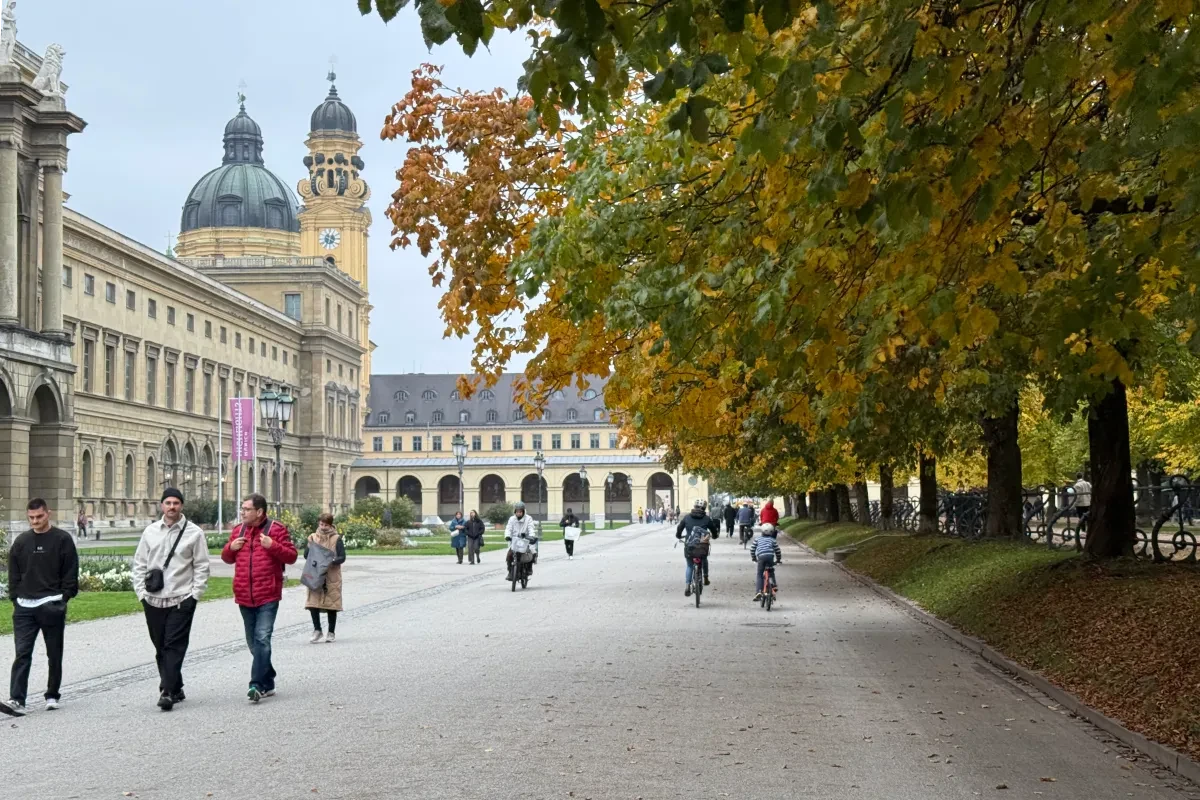
The Hofgarten is one of my favorite small green spaces in central Munich. The formal garden has beautiful views toward the Residenz and Theatinerkirche, while the distinctive Bayerische Staatskanzlei rises behind it. I especially like the relaxed atmosphere around the central pavilion, where you may even come across groups gathering for public tango dancing.
Best for: A quiet break, formal gardens and walking between central sights
PARK & ARCHITECTURE
Olympic Park
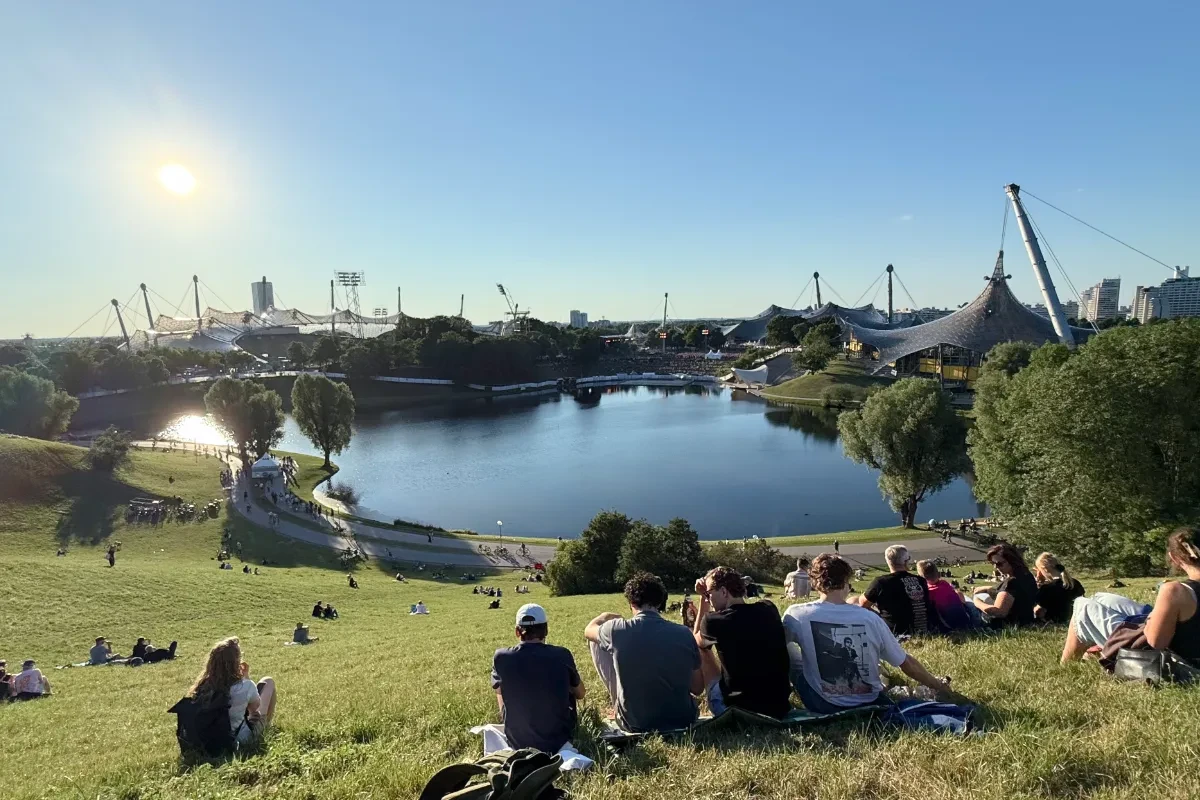
Olympic Park is one of my favorite places in Munich, above all for the extraordinary architecture created for the 1972 Olympics. The sweeping tent roofs still look remarkably modern, while the surrounding hills and green spaces make the entire complex enjoyable to explore. In summer, I especially like the free concerts at the Theatron, and events take place throughout the year.
Best for: Architecture, events, walking, cycling and views across Munich
HISTORIC SQUARE & GREEN SPACE
Königsplatz
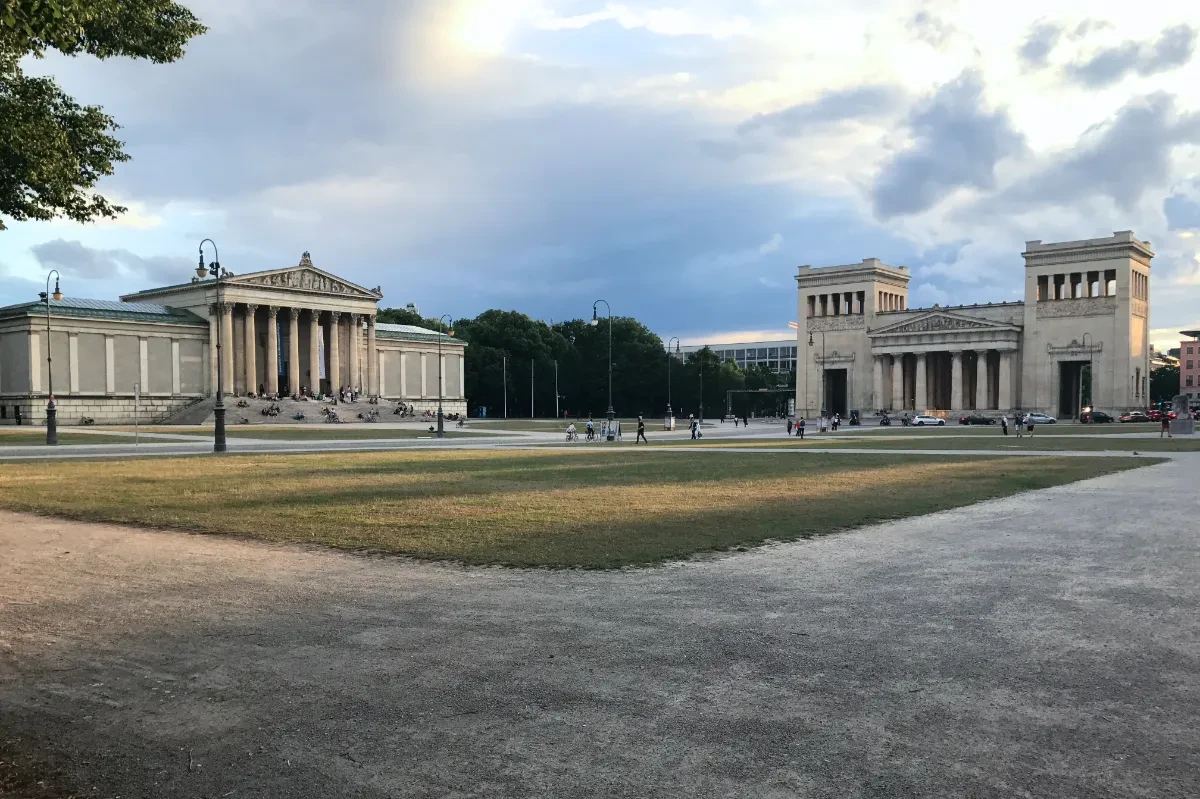
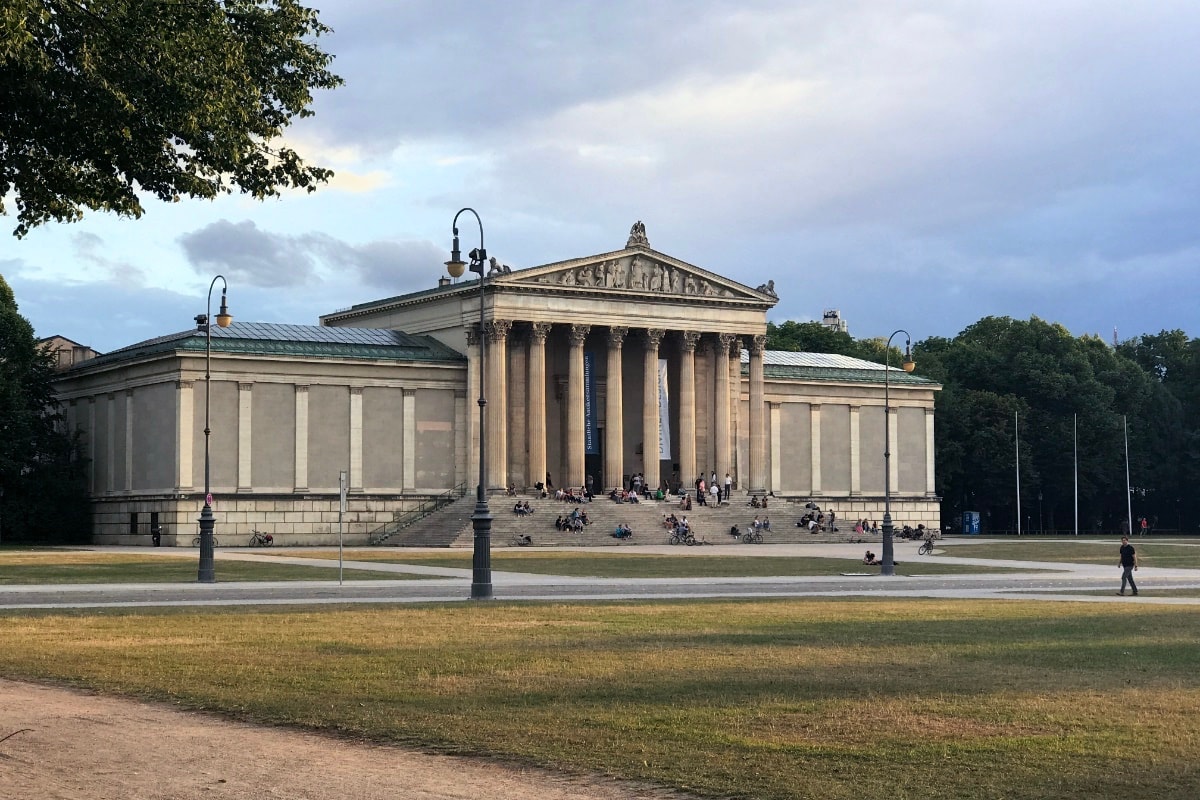
Königsplatz is one of Munich’s most impressive public spaces, combining monumental classical architecture with broad lawns and several major museums. I like that it changes character with the seasons: on ordinary days it is a place to sit or walk, while in summer the square is also used for concerts and large events. Its twentieth-century history adds a more complicated layer to an otherwise beautiful setting.
Best for: Architecture, museums, summer events, history and relaxing outdoors
GARDENS
Botanical Garden
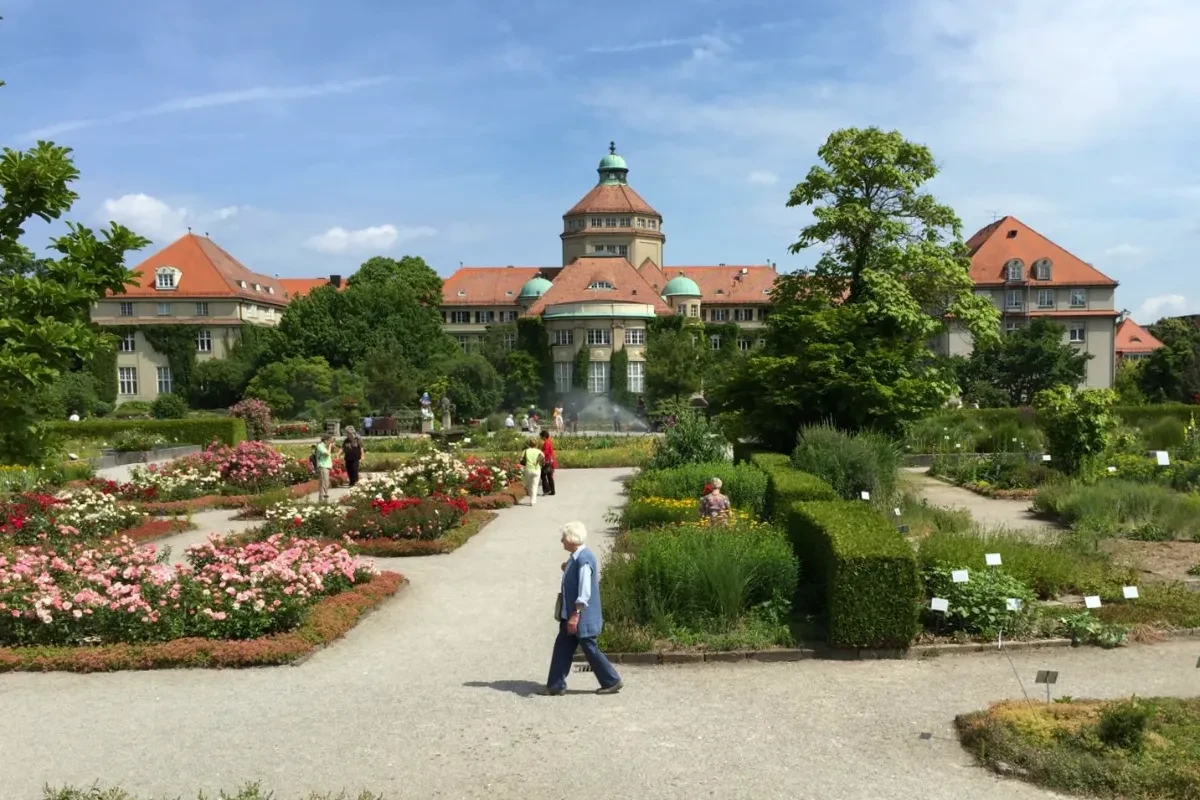
The Botanical Garden beside Nymphenburg Palace is an easy place to slow the pace of a sightseeing day. Its outdoor gardens and greenhouses contain plants from many climates and regions, and the setting feels removed from the busy center. I particularly like combining it with the palace grounds, since together they make an easy and varied half-day excursion.
Best for: Gardens, plants, a quiet break and combining with Nymphenburg
ZOO & NATURE
Hellabrunn Zoo
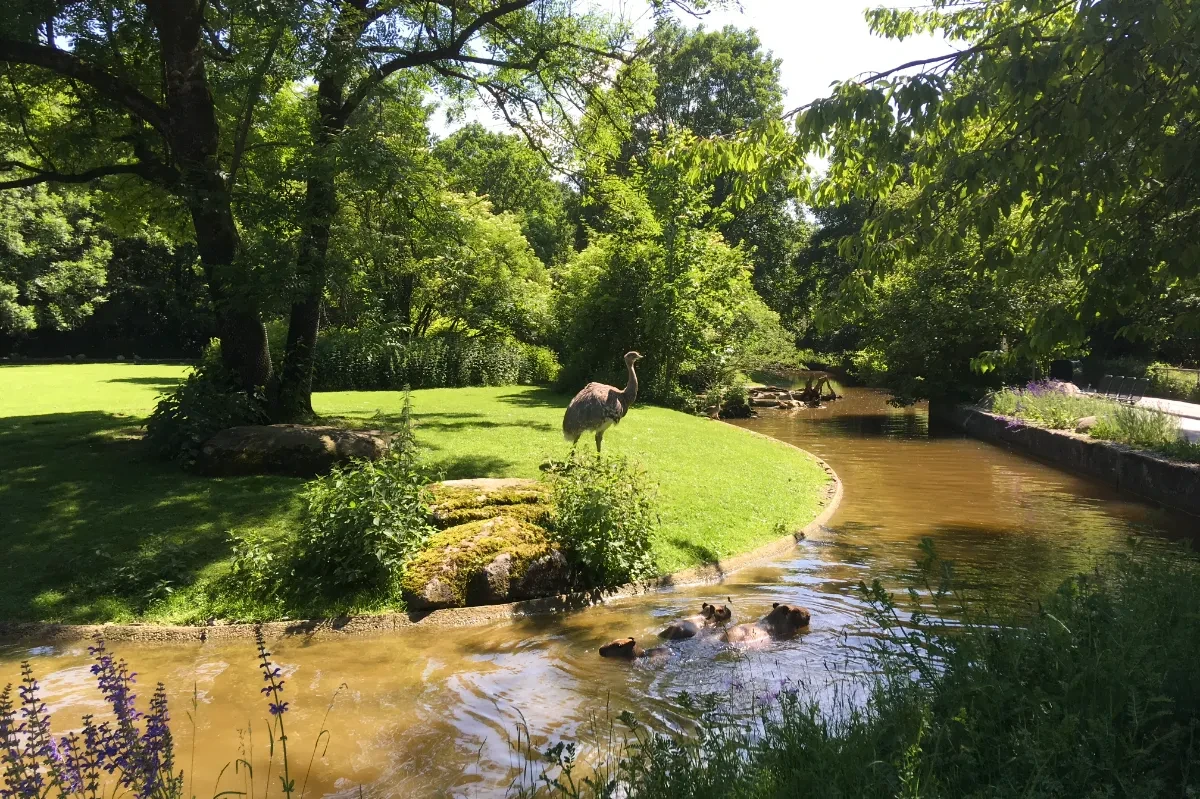
Hellabrunn is one of the zoos I remember from childhood and still find especially impressive. It was the world’s first geozoo, grouping animals by geographic region rather than simply by species. Many enclosures feel unusually open, with streams, canals and water channels helping separate visitors from the animals. The grounds are expansive, beautifully landscaped and also include excellent playgrounds for children.
Best for: Families, animals, landscaped grounds and a relaxed half-day outdoors
Food & Drink
Eating & Drinking in Munich
Munich is a wonderful city for eating, with everything from Michelin-starred restaurants and traditional family-run Wirtshäuser to bakeries, cafés, markets and casual international food. Bavarian cooking is naturally part of the experience, but I also regularly eat Vietnamese, Afghan, Italian, Greek and other cuisines here. Having grown up in Bavaria, I have eaten most of the regional specialties since childhood and have cooked or baked many of them myself. I would definitely try some traditional dishes while visiting, but there is no reason to limit yourself to Bavarian food.
Traditional Bavarian Food
Bavarian food tends to be hearty, uncomplicated and closely tied to local traditions. Some dishes are full meals, while others are snacks, desserts or foods you might pick up from a bakery or butcher. These are specialties I grew up with and think are particularly worth trying while you are in Munich.
Weißwurst
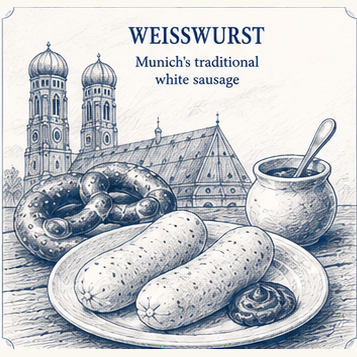
Munich’s classic white sausage is gently heated rather than grilled. I peel off the casing, then eat the sausage with sweet mustard and a Breze. Traditionally eaten before noon, Weißwurst is one of the most distinctly Munich foods to try.
Schweinekrustenbraten
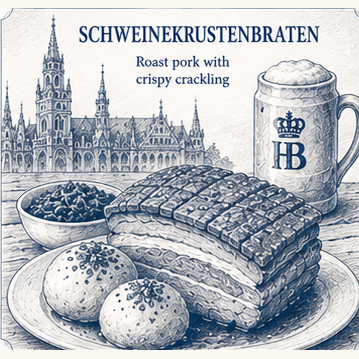
Slow-roasted pork with a crisp, crackling crust is one of my favorite traditional Bavarian dishes. It is usually served with gravy and dumplings, but I also love the pork and crispy crust tucked into a fresh roll with some coleslaw and mustard.
Obatzda
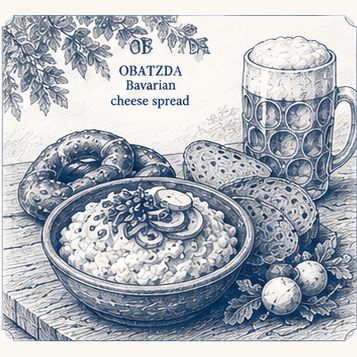
Obatzda is a creamy Bavarian cheese spread traditionally made with ripe Camembert, butter and paprika. It is a beer-garden classic served with Brezen, often accompanied by onions and radishes, and particularly good as a shared snack.
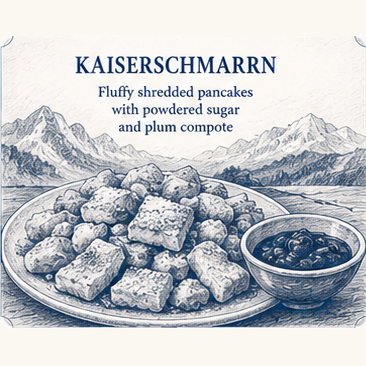
Kaiserschmarrn
One of my favorite desserts. Kaiserschmarrn is a thick, fluffy pancake torn into pieces, caramelized and dusted with powdered sugar. Usually served with fruit compote, it is technically a dessert but substantial enough to be a main.
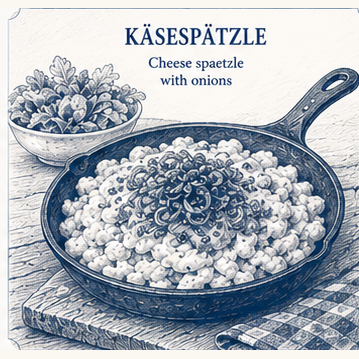
Käsespätzle
Bavaria’s version of comfort food. Soft egg noodles are mixed with plenty of melted cheese and topped with crispy fried onions. Rich, filling and satisfying, it makes a great vegetarian alternative when you want something hearty.
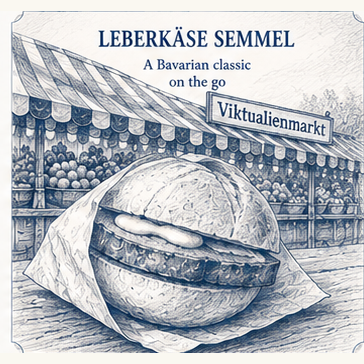
Leberkäse
Despite the name, traditional Bavarian Leberkäse contains neither liver nor cheese. It is a finely ground baked meat loaf, best eaten warm in a crusty roll with sweet or medium-hot mustard—a classic quick Bavarian lunch.
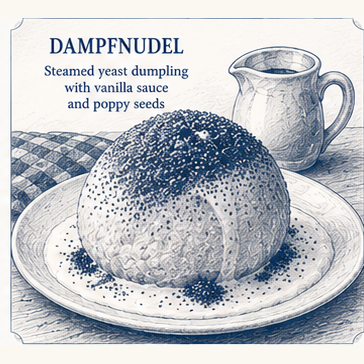
Dampfnudel
Dampfnudeln are large, fluffy yeast dumplings steamed until soft, often with a lightly caramelized base. Usually served warm with vanilla sauce, they are an old-fashioned Bavarian comfort food that can easily feel like a meal.
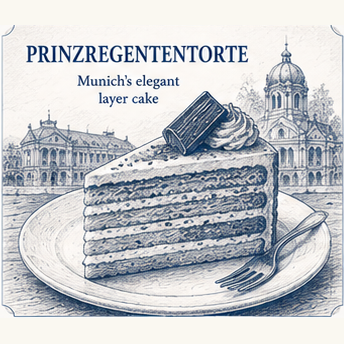
Prinzregententorte
Named for Bavaria's Prince Regent Luitpold, this Munich cake is built from thin layers of sponge and chocolate buttercream beneath a chocolate glaze. It is rich, elegant and worth seeking out in a traditional café.
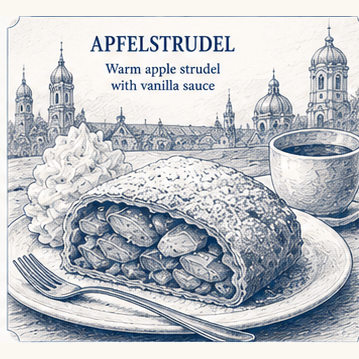
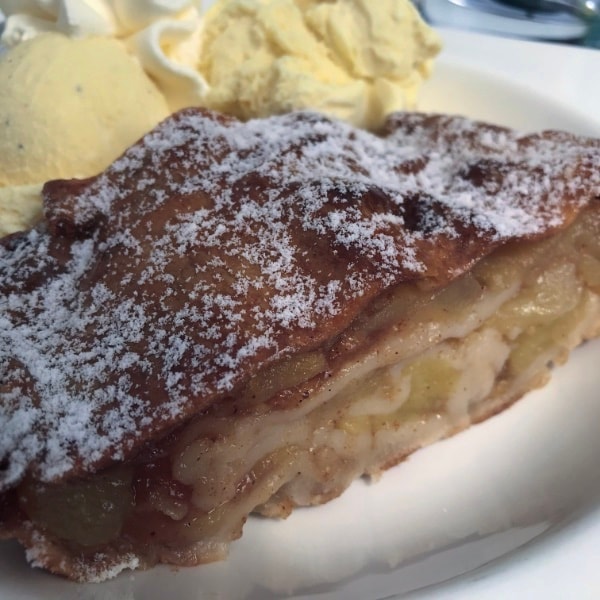
Apfelstrudel
Thin pastry wrapped around apples, raisins and warm spices makes Apfelstrudel one of the region's classic desserts. I like it served warm, ideally with vanilla sauce, ice cream or whipped cream alongside it.
Food Experiences I Personally Enjoy
I don't think of Munich's food scene as a list of restaurants to check off. Some of my favorite experiences involve a market, bakery, delicatessen, café or beer garden rather than a formal meal. These are places I have personally enjoyed over the years, ranging from inexpensive everyday stops to special-occasion restaurants. They also show how much broader eating in Munich can be than traditional Bavarian cuisine.
FOOD MARKET·ALTSTADT·€–€€
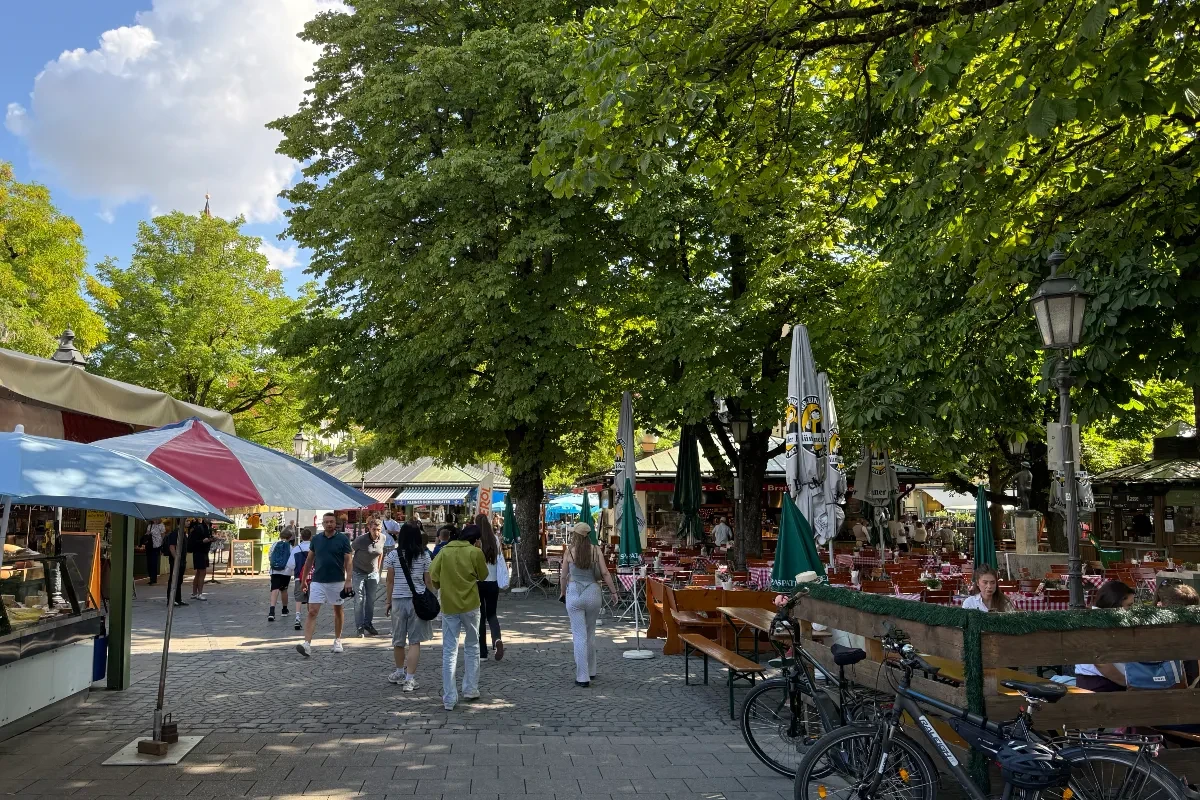
Viktualienmarkt
Viktualienmarkt remains one of my favorite food experiences in central Munich because it is still a real market rather than simply a tourist attraction. I like grabbing a Leberkässemmel or Schweinekrustenbraten in a roll, but I also browse the Mediterranean stalls for olives and dips. There is even an excellent, if expensive, baklava stand.
Tip: Come hungry and browse before deciding what to eat.
HISTORIC BEER HALL·ALTSTADT·€€
Hofbräuhaus
Hofbräuhaus is impossible to ignore when talking about Munich food culture. It is touristy, loud and enormously famous, but the historic beer hall is also visually impressive and people clearly love the music and atmosphere. I haven't included it as a personal food recommendation, but I do think first-time visitors curious about the classic Munich beer-hall experience should see it. Think Oktoberfest all year long.
Tip: Go for the atmosphere and spectacle rather than expecting a quiet meal.
DELICATESSEN·ALTSTADT·€€€
Dallmayr
Dallmayr is a beautiful historic delicatessen with two restaurants that I enjoy visiting even when I have no intention of buying anything. The displays and food counters make browsing part of the experience, and its location makes it an easy stop while exploring the Altstadt. It becomes particularly busy and atmospheric in the weeks before Christmas.
Tip: Go in just to browse—the food displays alone are worth seeing.
MEDITERRANEAN / ITALIAN·ALTSTADT·€€€
Brenner
Brenner has the energetic feel of a big-city restaurant, with a striking interior and a central location near the Residenz and Nationaltheater. I like it when I want something more polished than a neighborhood restaurant without committing to formal fine dining. It also works particularly well for dinner before or after a performance.
Tip: A convenient choice when attending the opera nearby.
JAPANESE·ALTSTADT·€€€€
Matsuhisa Munich
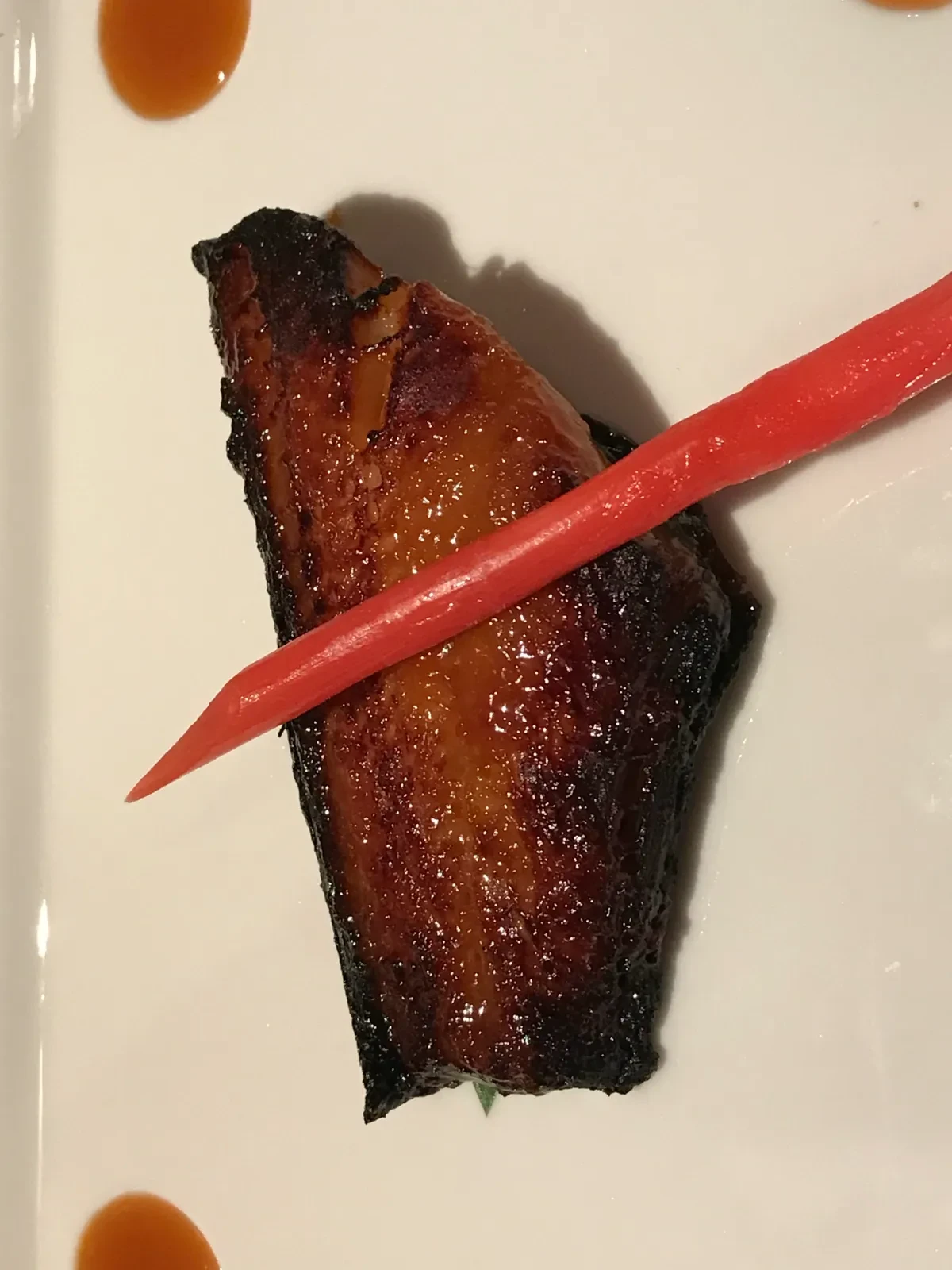
Matsuhisa inside the Mandarin Oriental is firmly in the special-occasion category rather than somewhere I would eat casually. I include it because sometimes the restaurant itself is part of the evening: high-end Japanese food, polished service and a setting that feels distinctly different from Munich's more traditional dining experiences.
Tip: Reserve this one for a special evening.
BAKERY·MAXVORSTADT·€
Julius Brantner
Munich has excellent bread and bakeries in general, and Julius Brantner is one of the places I enjoy for that side of the city's food culture. The breads, Brezen and pastries are good, but I have a particular weakness for the cardamom bun. It makes an easy stop while exploring Maxvorstadt and the museum district.
Tip: Try the cardamom bun—it's a personal favorite.
ICE CREAM·MAXVORSTADT·€
Der Verrückte Eismacher
Near the university, Der Verrückte Eismacher is known for flavors that can range from intriguing to downright questionable. That's part of the fun. I've found that many of the unusual combinations are genuinely good, and it makes for an entertaining stop while walking through Maxvorstadt or the university district.
Tip: Be adventurous; the strangest-sounding flavor may surprise you.
CAFÉ·SCHWABING·€€
Café Münchner Freiheit
I enjoy Café Münchner Freiheit less as a culinary destination than as a place to sit with a large piece of cake or an ice cream and watch Schwabing go by. Its location directly on Münchner Freiheit is the attraction for me. Sometimes a good café experience is as much about where you're sitting as what you're eating.
Tip: Order cake, sit outside when possible and watch the square.

AFGHAN·SCHWABING·€€
Chopan
Chopan is one of the places I recommend when someone wants to see how international Munich's restaurant scene has become. I enjoy the richly flavored Afghan food and attractive atmosphere, and it makes a particularly good dinner choice around Schwabing when you've already had your fill of traditional Bavarian cooking.
Tip: A great alternative after several days of Bavarian food.
DELICATESSEN & RESTAURANT·BOGENHAUSEN·€€€€
Käfer
Käfer is one of Munich's classic upscale food destinations. I particularly associate it with excellent Fleischsalat, but I also enjoy simply browsing the delicatessen, where the counters and displays are part of the experience. It is polished and expensive, but worth seeing even if you aren't planning a full restaurant meal.
Tip: Browse the delicatessen counters even if you're not dining.
VIETNAMESE·HAIDHAUSEN·€€
Saigon Deli
Vietnamese food is extremely popular in Munich, and Saigon Deli is one of the places I enjoy in Haidhausen. It works especially well when I want something fresher and lighter after heavier Bavarian meals. The location is another advantage, since dinner can easily be combined with a walk around one of Munich's most attractive neighborhoods.
Tip: Combine dinner with an evening walk through Haidhausen.
BAVARIAN·AU·€€
Paulaner am Nockherberg
I particularly like Paulaner am Nockherberg for its Kaiserschmarrn, which is one of my favorites in Munich. The brewery, large beer garden and traditional setting also make this a good choice when you want a recognizably Bavarian experience without eating directly in the tourist-heavy historic center.
Tip: Save room for the Kaiserschmarrn.
Events
Festivals & Events Throughout the Year
Munich always seems to have something happening, which is one reason I never get tired of returning. Major festivals fill the Olympic Park and Theresienwiese, classical music moves outdoors in summer, and seasonal traditions transform the city throughout the year. These are some of the events I particularly enjoy or recommend.
Summer · Olympic Park
Tollwood Summer Festival
Tollwood is one of the events I always enjoy seeing return each summer. The festival fills part of Olympic Park with international food, concerts, cultural performances, arts and crafts, and interesting market stalls. It began with a more alternative spirit but has grown into a large, diverse festival that attracts a very broad audience.
Tip: Come hungry and allow time to wander rather than attending only a concert.
Summer · Odeonsplatz
Klassik am Odeonsplatz
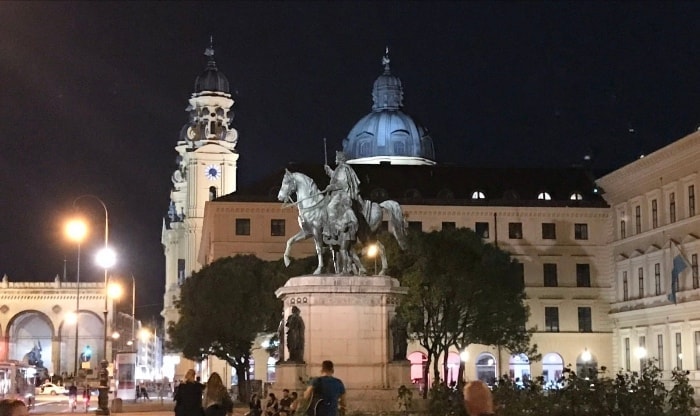
Klassik am Odeonsplatz turns one of Munich’s most beautiful squares into an outdoor concert venue for two summer evenings. Major orchestras, conductors and soloists perform surrounded by the Theatinerkirche, Feldherrnhalle and Residenz. Even in a city with excellent classical music, the setting makes these performances particularly special.
Tip: Book early; the spectacular setting is a major part of the experience.
Summer · Nationaltheater
Opera Festival
The heat aside, July is one of my favorite times for opera in Munich because the Bavarian State Opera ends its season with the annual Opera Festival. Major productions and internationally known performers attract audiences from around the world, and the atmosphere around the Nationaltheater feels especially lively. Popular performances can sell out well ahead of time.
Tip: Check the program early if your Munich visit falls in July.
Mid-September – Early October · Theresienwiese
Oktoberfest
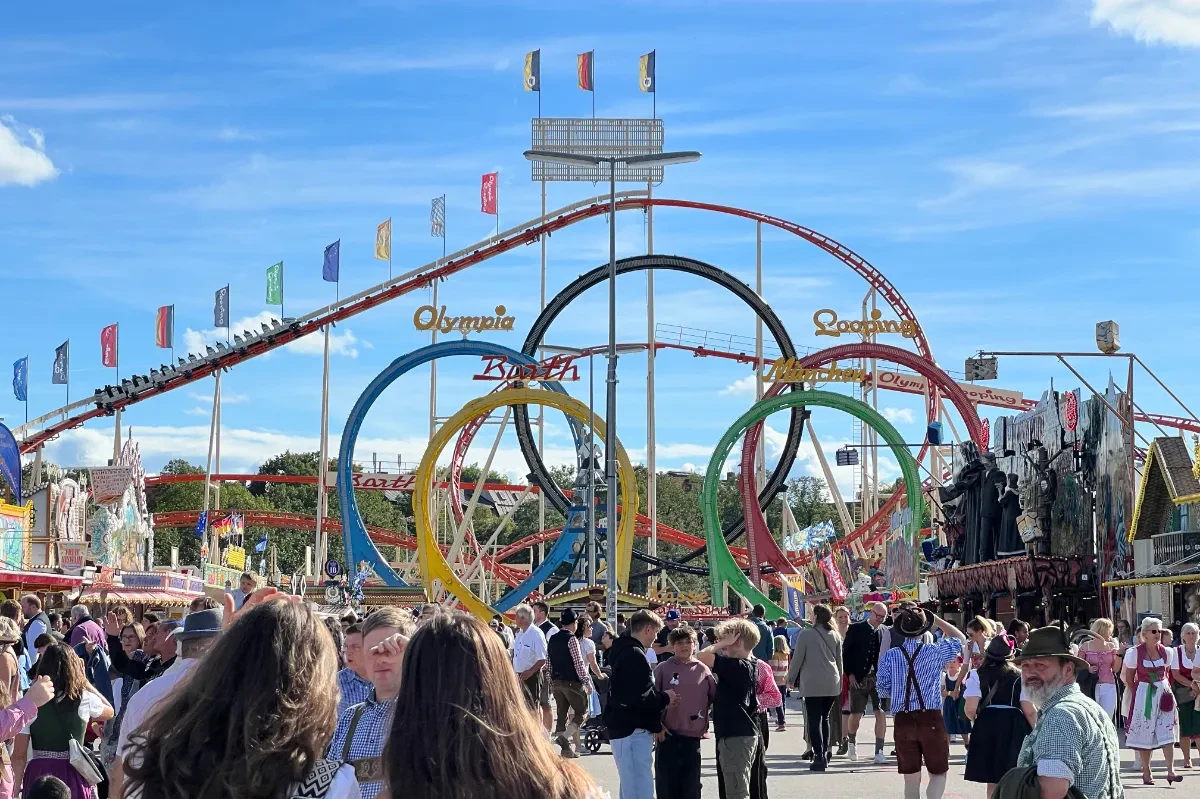
Oktoberfest has been part of my life since childhood, first with my family and later with friends for evenings of roller coasters and fairground rides. That is why I still see it as much more than a beer festival. It is an enormous traditional fair filled with music, food, historic beer tents, elaborate rides and Bavarian traditions.
Tip: Book accommodation early and experience the fairgrounds beyond the beer tents.
December · Multiple locations
Christmas Markets
December transforms Munich, and what I particularly enjoy is the variety of Christmas markets rather than one dominant event. Marienplatz is the traditional center, while the Residenz courtyard, medieval market at Wittelsbacherplatz and neighborhood markets each feel different. Exploring several is one of my favorite ways to experience Munich in winter.
Tip: Visit several markets; their atmosphere and specialties vary considerably.
February · Altstadt
Fasching
Munich’s Fasching receives far less international attention than Oktoberfest but remains an important local tradition. The best-known event is the Tanz der Marktfrauen at Viktualienmarkt, when market vendors perform their annual costumed dance before large crowds. Parties, costumes and celebrations also appear throughout the city during the season.
Tip: Check the Fasching calendar if you are visiting Munich in February.
How to Spend Your Time
Suggested Itineraries
These itineraries are how I would show Munich to someone visiting for the first time. Rather than racing through a checklist of attractions, each day combines major sights with neighborhoods, food and time to experience the city itself. If you have several days, simply follow them in order and adjust the museums and activities to your interests.
One Day
The Essential Munich
Experience Munich’s historic heart on foot, combining Marienplatz and the Residenz with panoramic views, Viktualienmarkt, elegant city streets and a relaxed Bavarian dinner.
Morning
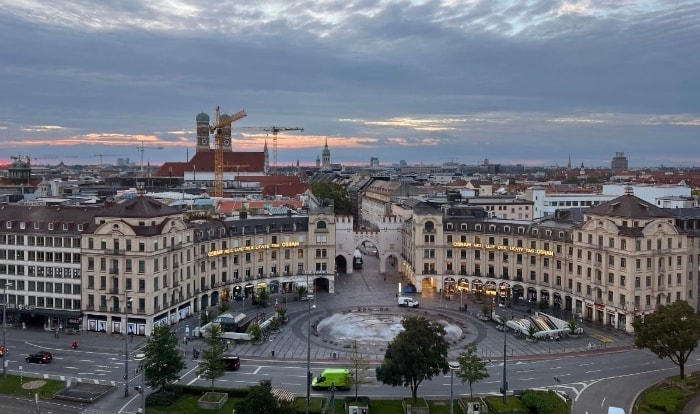
Start at Stachus and walk along Kaufingerstraße to Marienplatz. See the Neues Rathaus, then climb Alter Peter for wonderful views across the rooftops of the old town. Continue to Viktualienmarkt for a Leberkäse or Schweinekrustenbraten sandwich, with some time for shopping along the pedestrian streets if you like.
Afternoon
Walk past the Hofbräuhaus to Maximilianstraße, Munich's grand avenue of luxury shops, and look toward the Maximilianeum at its far end. Continue to the Nationaltheater and Max-Joseph-Platz before visiting the Residenz. Afterwards, walk through Odeonsplatz to see the Theatinerkirche and finish in the Hofgarten.
Evening
Enjoy a traditional Bavarian dinner at one of Munich's breweries, Wirtshäuser or beer gardens. After a full day of sightseeing, I would keep the evening relaxed rather than trying to squeeze in another attraction.
Two Days
Parks, Architecture & Neighborhoods
Discover Munich’s greener and more modern side, from the Englischer Garten and Eisbach surfers to Olympic Park, BMW, Schwabing and the atmosphere of local neighborhoods.
Morning
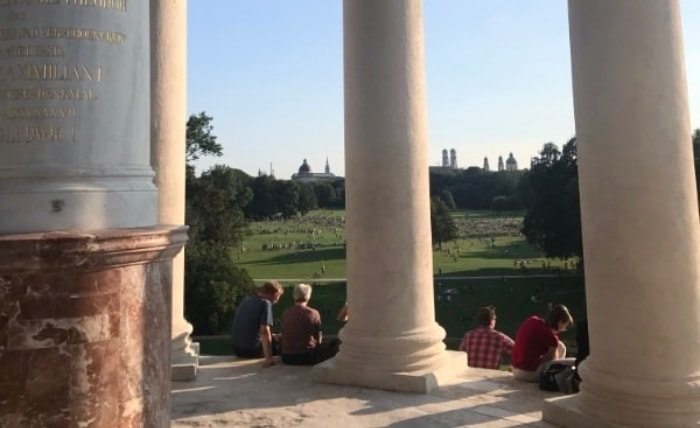
Head into the Englischer Garten, weather permitting, and watch the surfers at the Eisbachwelle. In summer, you may also see young people floating down the Eisbach and emerging in their swimsuits before hopping onto a tram. Continue through the park to the Chinesischer Turm for lunch and classic Bavarian beer-garden atmosphere.
Afternoon
Head to Olympic Park to explore the remarkable architecture of the 1972 Olympics. Combine it with the BMW Museum and BMW Welt, or go up the Olympic Tower once it reopens. Afterwards, continue into Schwabing, wander the neighborhood and stop around Münchner Freiheit for coffee and cake.
Evening
Stay outside the historic center for dinner. Schwabing, Glockenbachviertel and Haidhausen all offer plenty of restaurants and give you an opportunity to experience neighborhoods where everyday Munich becomes more apparent.
Three Days
History, Art & Culture
Explore Munich’s complex history and extraordinary cultural collections around Königsplatz and Maxvorstadt, then experience the historic center after dark and enjoy a performance.
Morning
Start at Königsplatz and visit the NS-Dokumentationszentrum to understand Munich's central role in the rise of National Socialism. Afterwards, walk around Königsplatz and nearby Karolinenplatz before stopping for lunch somewhere in Maxvorstadt and the museum district.
Afternoon
Spend the afternoon with art and culture. Choose according to your interests from the Pinakotheken, Lenbachhaus or Egyptian Museum rather than trying to rush through several museums. They are all close enough together that you can decide how much museum time you want once you are there.
Evening
Return to the center and see Munich's historic buildings illuminated after dark. Consider an opera, ballet, musical, concert or theater performance, followed by dinner at one of the more upscale restaurants in or around the Altstadt.
Four Days
Digging Deeper
Go deeper with the Deutsches Museum, then choose between discovering more of the historic center or exploring Nymphenburg and its gardens before a final evening stroll.
Morning
Spend the morning at the Deutsches Museum. It is a spectacular museum and one I recommend even while parts of the enormous complex remain under renovation. There is far too much to see in a single visit, so concentrate on the areas that interest you rather than trying to cover everything.
Afternoon
Explore the center more closely, including its pedestrian streets, historic churches, smaller lanes and shopping passages. Alternatively, if you are comfortable cycling, rent a bike and head to Nymphenburg Palace, or take a tram there. Explore the extensive palace grounds and, if time allows, the nearby Botanical Garden.
Evening
Spend your final evening back in central Munich. Have dinner somewhere you discovered during your stay, then take an evening stroll from Odeonsplatz past Wittelsbacherplatz and through the pedestrian zone as the historic center winds down for the night.
Beyond Munich
Day Trips & Onward Journeys
Munich is an excellent base for exploring Bavaria and the nearby Alps, with historic cities, lakes and mountain landscapes all within easy reach. These are places I have personally visited and would recommend either as day trips or as onward journeys. Some deserve more time if your schedule allows, but all can be reached easily from Munich.
Salzburg, Austria
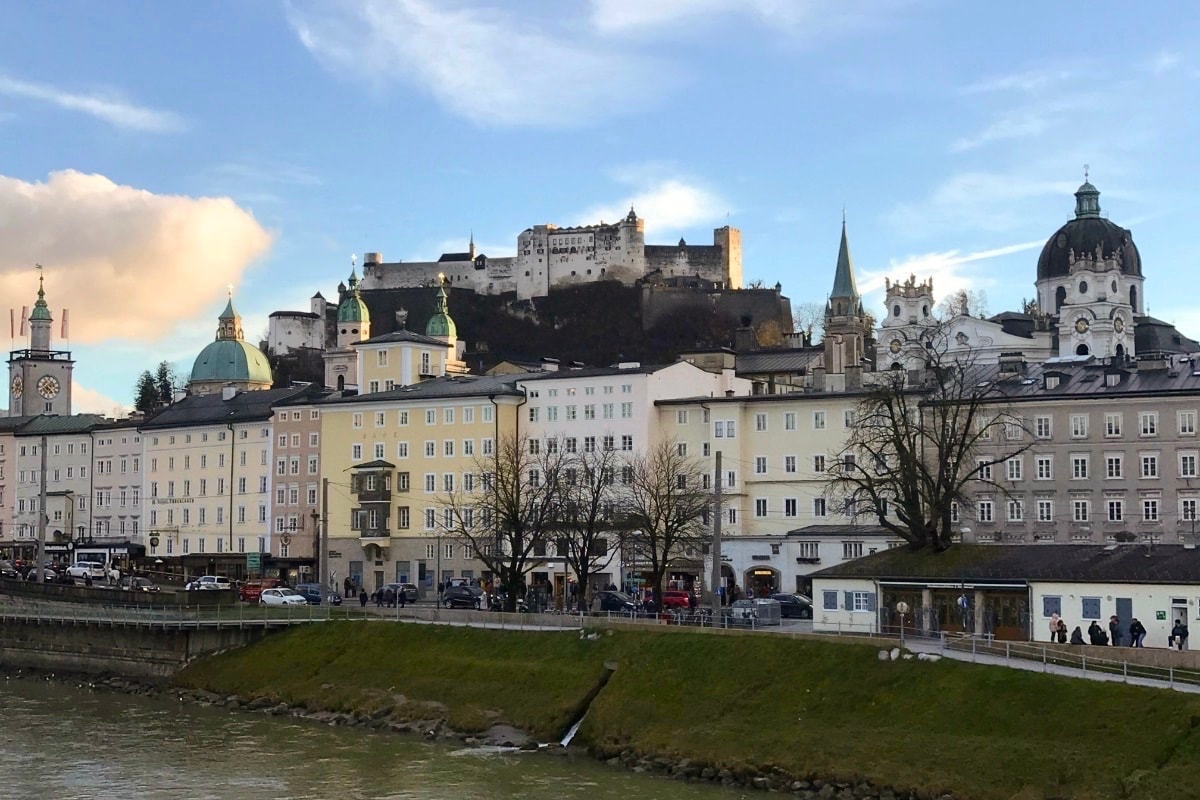
Salzburg is one of Europe’s most beautiful smaller cities, combining baroque architecture, Mozart, mountain scenery and an exceptionally attractive old town. Walk the historic center, explore Hohensalzburg Fortress and Mirabell Gardens, and allow time simply to wander. It works as a day trip, although I think the city easily deserves an overnight stay.
Highlights
- Hohensalzburg Fortress
- Getreidegasse
- Mozart's Birthplace
- Mirabell Gardens
- Salzburg Cathedral
- Schloss Hellbrunn
Lake Starnberg
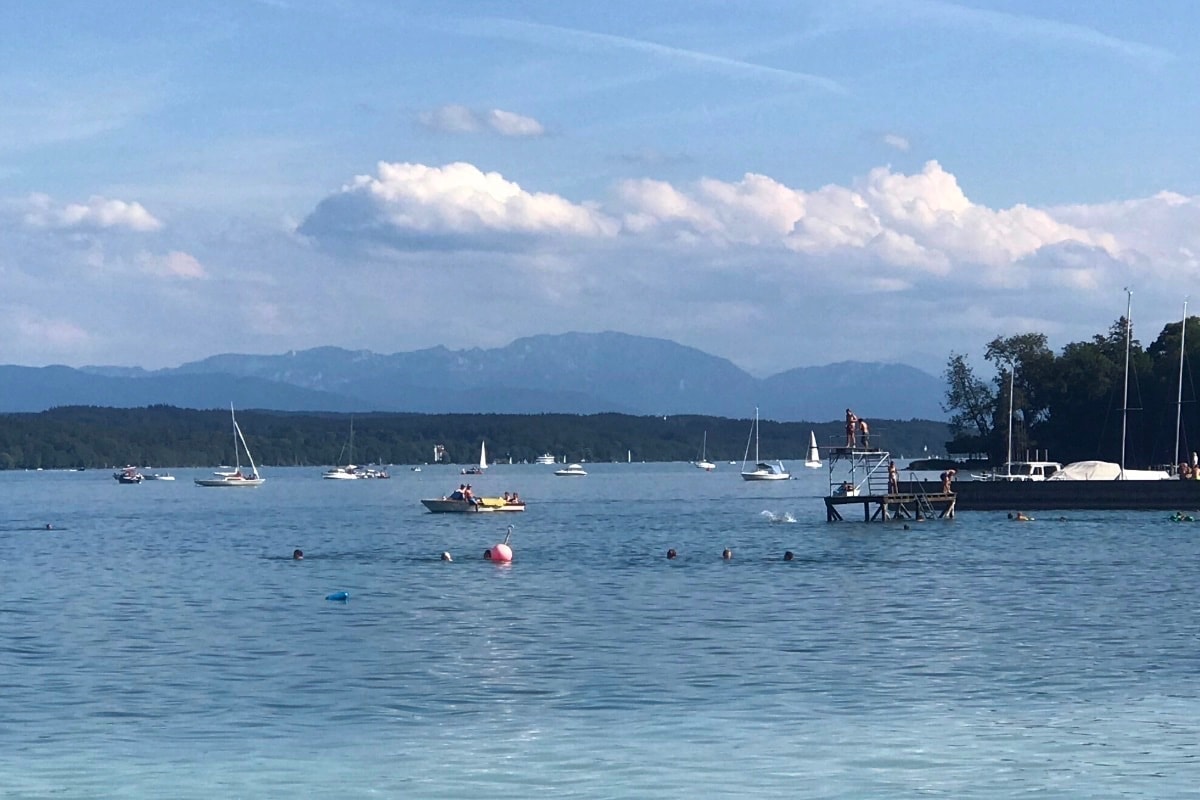
Lake Starnberg is one of my favorite active escapes from Munich. I particularly enjoy bringing a bicycle on the train and riding around the lake, with Alpine views, swimming spots, small towns and places to stop for food along the way. A full circuit is roughly 50 km, but boats and regional trains make it easy to shorten the route.
Highlights
- Cycle around Lake Starnberg
- Buchheim Museum
- Kloster Bernried
- Lakeside swimming
- Smoked fish at Fischerei Sebald
- Boat cruise options
Regensburg
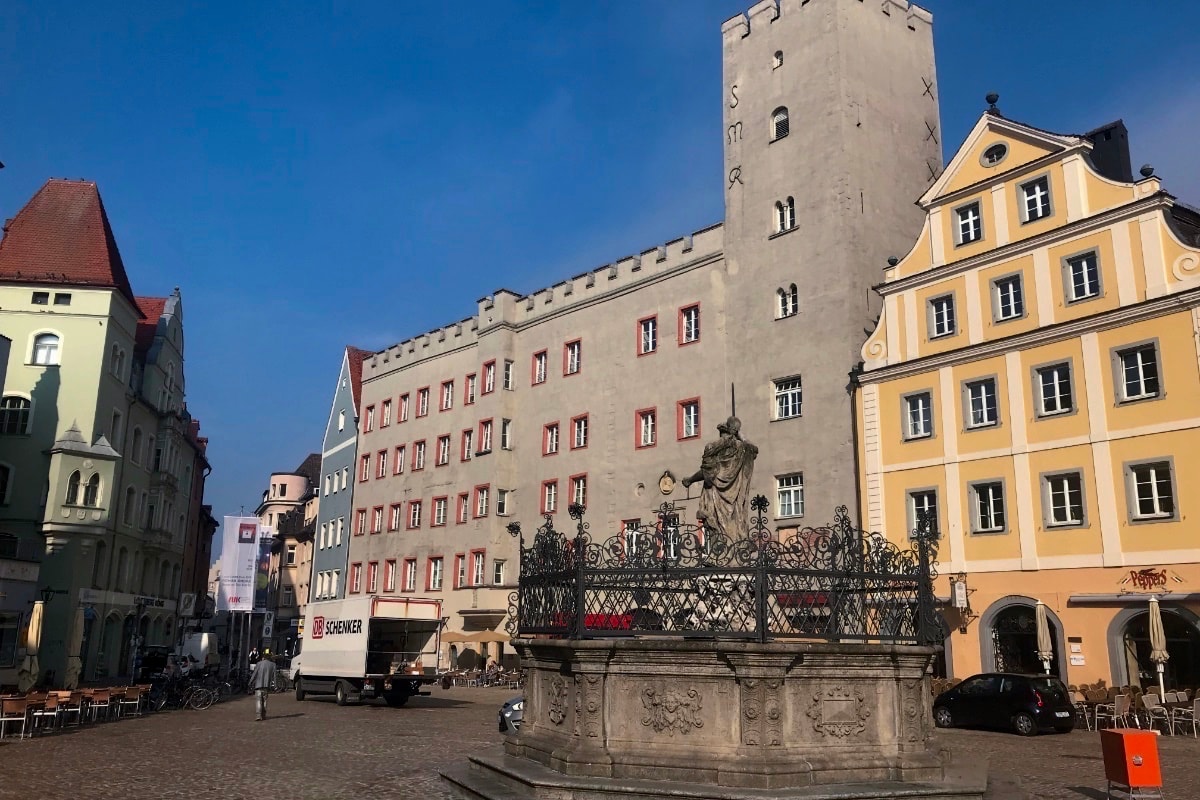
Regensburg is one of Germany's best-preserved medieval cities and a UNESCO World Heritage Site. Walking through its narrow lanes, historic squares and along the Danube feels like stepping back in time. I especially enjoy sitting at Haidplatz with coffee and cake before crossing the Stone Bridge for one of Bavaria's classic city views.
Highlights
- St. Emmeram Palace
- Regensburg Cathedral
- Stone Bridge
- Porta Praetoria
- Danube boat cruises
- Historic Wurstkuchl
Garmisch & Zugspitze
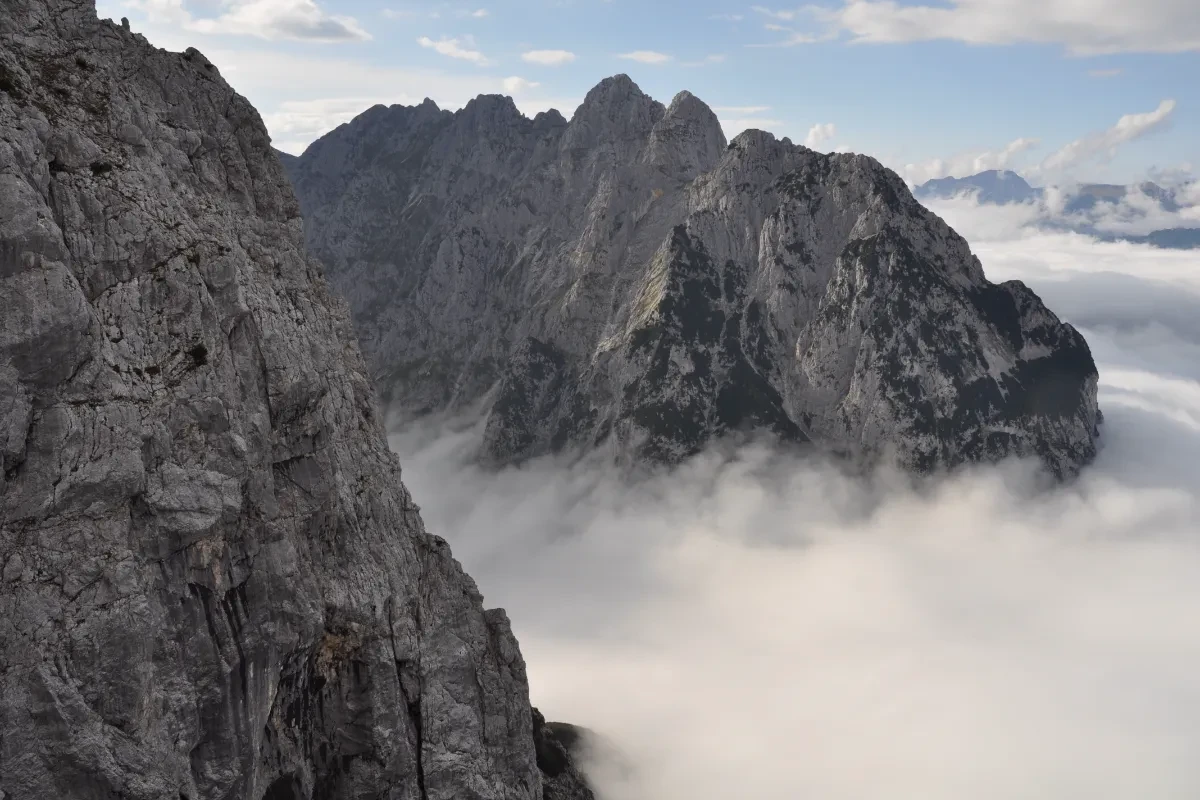
On a clear day, this is one of the most spectacular trips you can make from Munich. Head into the Alps for the Zugspitze and its extraordinary mountain views, then spend time around Eibsee or Garmisch-Partenkirchen. Weather matters enormously here, so I would keep the day flexible rather than committing to the mountain when visibility is poor.
Highlights
- Zugspitze summit
- Eibsee Cable Car
- Eibsee
- Partnach Gorge
- Garmisch town centre
- KRÖNNER Café
Nuremberg
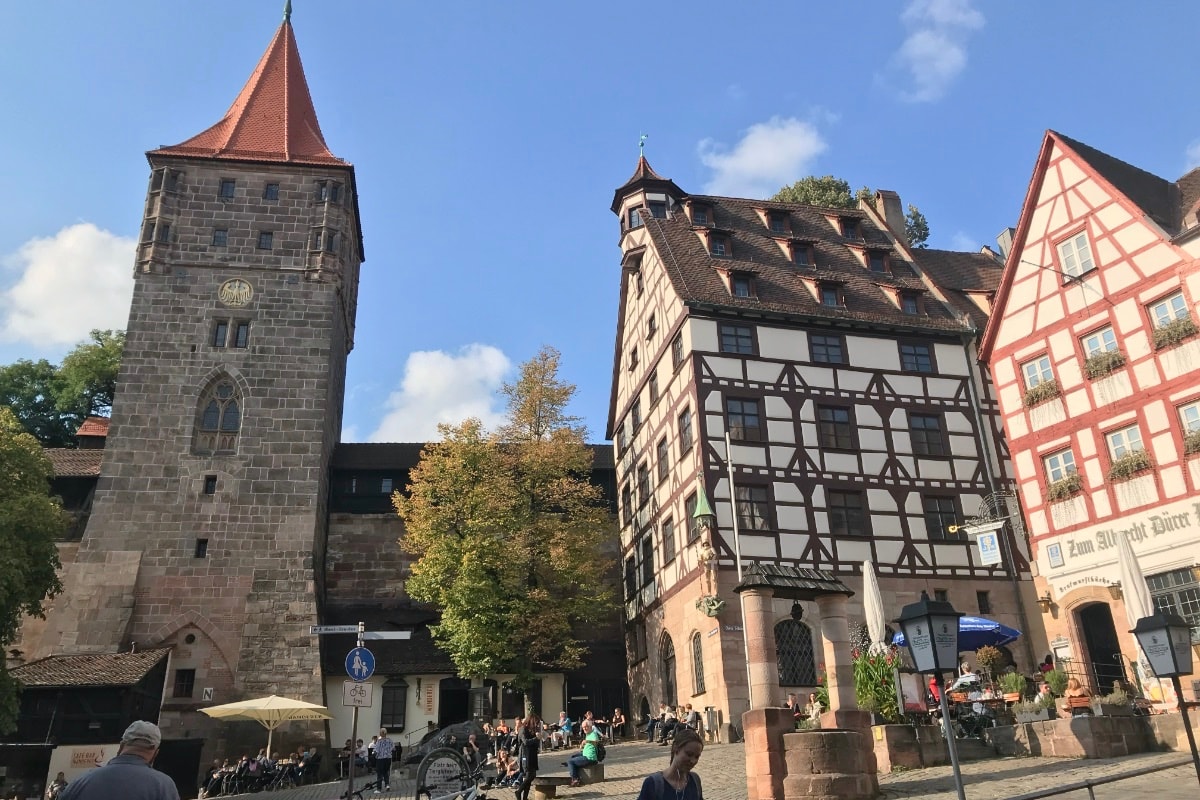
Nuremberg has one of Germany’s finest historic centers, surrounded by medieval walls and filled with churches, museums and lively streets. Having lived here for several months, I still enjoy walking from Frauentor through the old town toward the Imperial Castle, then wandering back along the Pegnitz and its historic bridges.
Highlights
- Imperial Castle
- St. Lorenz Church
- Hauptmarkt
- Germanisches Nationalmuseum
- Albrecht Dürer House
- Historic bridges and fountains
Herrenchiemsee Palace
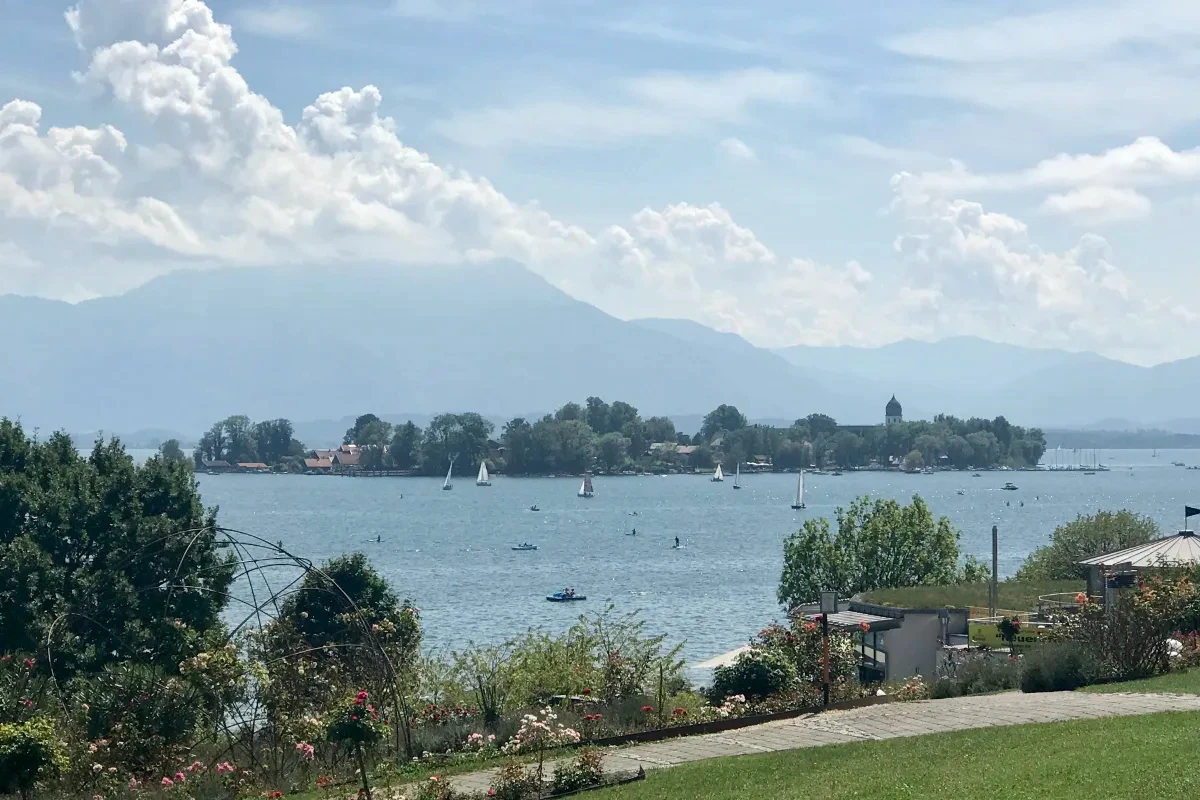
Chiemsee combines several things I love about Bavaria: Alpine scenery, boats, islands and royal history. Take the historic railway from Prien to the lake, continue by boat to Herrenchiemsee Palace and, if time allows, stop at Fraueninsel. On a clear day, the combination of water and mountains makes the journey particularly beautiful.
Highlights
- Chiemsee steam railway
- Ferry cruises
- Herrenchiemsee Palace
- Fraueninsel
- Lakeside restaurants
- Alpine views
Final Thoughts
One mistake I see many visitors make is trying to see too much. Munich isn't a city that rewards rushing. Some of the experiences I remember most vividly aren't famous attractions at all. They're sitting outside with a coffee in Schwabing, spending an afternoon beside the Isar, browsing through the Viktualienmarkt without buying very much, or cycling across town simply because it was a beautiful day. If you leave Munich feeling as though you've experienced how people actually live here, rather than simply photographing its landmarks, I think you've experienced the city well.


