
Introduction
Why Visit Nuremberg
Nuremberg has been part of my life since childhood. Growing up about 90 minutes south of the city, I came here with my family to visit the zoo, go shopping and wander through the Christmas market. Entering the walled Old Town felt a little like stepping into a fairy tale. I returned as a teenager for shopping trips with friends, later spent several days camping at Rock im Park, and in 2017 finally experienced Nuremberg as a temporary home when I lived here from late summer into fall.
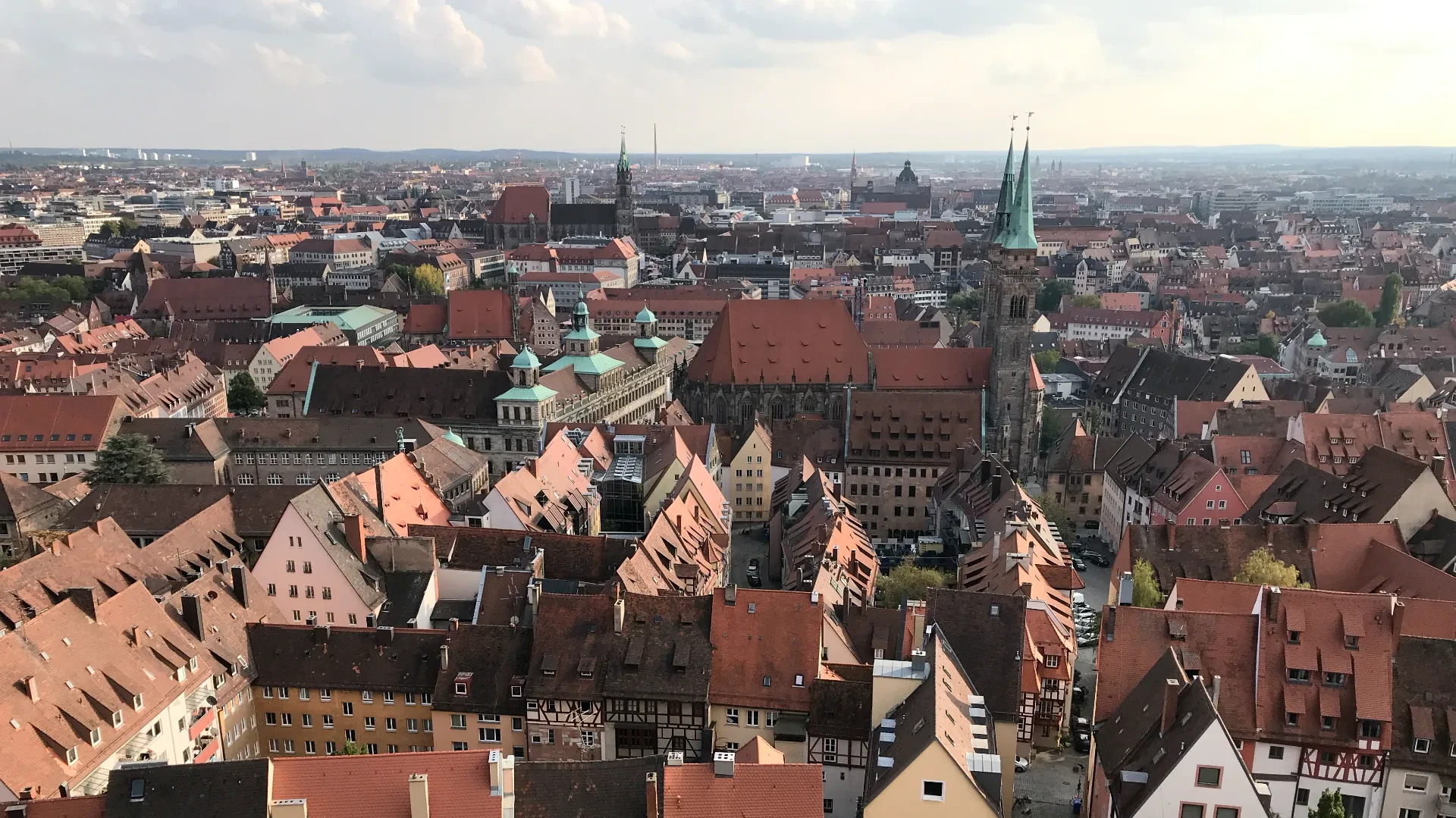
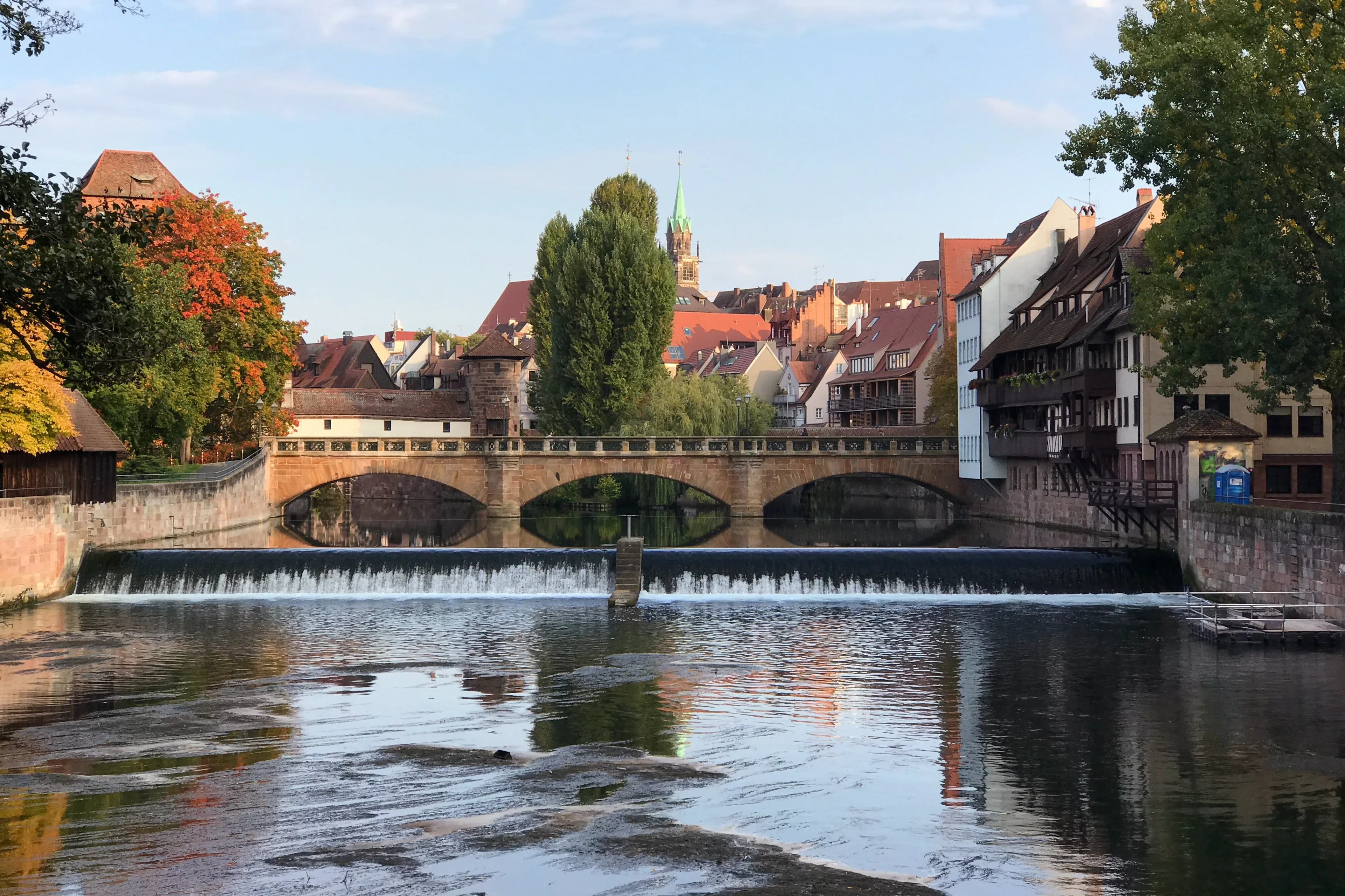
What I still love most is simply being in the Old Town. The Kaiserburg rises above a maze of historic streets, churches and squares, while the Pegnitz winds through the center beneath bridges such as Henkersteg and Kettensteg. Some of my favorite time here has been spent without much of a plan: following narrow lanes, walking along the river, stopping somewhere for a coffee or looking across the rooftops from the castle.
Nuremberg has enough history, culture and things to do to fill several days, but it remains compact and approachable. You can explore much of it on foot and still leave time to wander rather than rushing from sight to sight.
The medieval setting is only one layer of the city. Nuremberg was closely connected to the Holy Roman Empire, later became an important center of industry and railway history, and today has excellent museums and a lively cultural scene. Its role during National Socialism also makes places such as the former Nazi Party Rally Grounds and the courtroom used for the Nuremberg Trials essential for understanding a much darker chapter of German history.
That combination is what makes Nuremberg so rewarding to me. It can be beautiful and atmospheric, particularly along the Pegnitz and around the castle, but it is not a city preserved simply for visitors. People shop, work, study and live within and around the historic center. Give Nuremberg several days and there is time to appreciate both the postcard views and the much more complicated city behind them.
Whether you're interested in architecture, history, museums, food or simply wandering beautiful streets, Nuremberg offers something for almost everyone.
Seasons
When to Visit Nuremberg
Nuremberg works well throughout the year, with each season giving the city a different atmosphere. Spring and autumn are particularly pleasant for exploring on foot, while summer brings festivals and long evenings. December is in a category of its own, when the Christkindlesmarkt transforms the Old Town.
March – May
Spring
Spring is a pleasant time to explore Nuremberg before the busier summer months. As temperatures warm, outdoor cafés return and the parks and Pegnitz riverbanks become greener. It is a good season for spending much of the day walking through the Old Town without the heat or larger summer crowds.
- ✦ Pleasant weather and fewer crowds
- ✦ Return of outdoor cafés and beer gardens
- ✦ Blaue Nacht art festival in May
June – August
Summer
Summer brings long days, warmer temperatures and plenty of activity outdoors. Cafés and restaurant terraces fill up, and events take place across the city. Rock im Park, which I attended when I was younger, turns the area around the former Rally Grounds into one of Germany's major music festivals.
- ✦ Rock im Park festival in June
- ✦ Long warm days for exploring the Altstadt
- ✦ Outdoor dining along the Pegnitz
September – November
Autumn
Autumn is one of my favorite times in Nuremberg, particularly around the castle, parks and Pegnitz. I lived here from late summer into fall and enjoyed watching the city gradually change seasons. Temperatures become cooler and the summer crowds ease, making this an excellent time for exploring on foot.
- ✦ Colourful foliage around the Kaiserburg
- ✦ Michaelis-Kirchweih folk festival
- ✦ Quieter streets after summer crowds
December – February
Winter
Winter can be cold, gray and occasionally snowy, but December is completely different from the quieter weeks that follow. The Christmas season fills the Old Town with lights, decorated stalls and visitors. January and February are much calmer and better suited to museums, churches and indoor attractions.
- ✦ One of Europe's finest Christkindlesmarkt
- ✦ Atmospheric medieval streets in snow
- ✦ Fewer tourists at the major museums
Late November – December 24
Christkindlesmarkt
The Christkindlesmarkt is one of the experiences I have associated with Nuremberg since childhood. The Hauptmarkt and surrounding streets fill with wooden stalls, lights and the scents of Lebkuchen, grilled sausages and Glühwein. It is wonderfully atmospheric, but also one of the busiest times of the year.
- ✦ A Nuremberg tradition since 1628
- ✦ Handcrafted gifts and Lebkuchen stalls
- ✦ Worth experiencing despite the crowds
Late September - October
Michaelis-Kirchweih
Held in neighboring Fürth, just minutes from Nuremberg by U-Bahn, the Michaelis-Kirchweih is one of the region's great traditional festivals. The streets of central Fürth fill with rides, food stalls and beer stands, creating a lively local celebration that feels quite different from Munich's more internationally known Oktoberfest.
- ✦ A major Franconian folk festival
- ✦ Just minutes from central Nuremberg
- ✦ Traditional rides, food and Franconian beer
Before You Go
Essential Planning
Nuremberg is an easy city to explore independently. Much of what you will want to see is concentrated in and around the walled Old Town, while an excellent public transport network makes it simple to reach sights farther out. English is widely understood in visitor-facing businesses, but knowing a few German phrases and carrying some cash can still be useful. The biggest practical consideration is often the season: a quiet autumn weekend and the weeks around the Christkindlesmarkt can feel like visits to two very different cities.
Getting Around
Nuremberg is exceptionally walkable, and I think walking is also the best way to experience it. Much of the historic center lies within the medieval walls, with the Kaiserburg, Hauptmarkt, major churches, museums, shopping streets and Pegnitz all relatively close together. Distances are short enough that you can wander rather than constantly thinking about transportation.
Don't underestimate the hills and cobblestones, however. The Old Town rises noticeably toward the castle, and some historic streets can be tiring if you have limited mobility or spend an entire day sightseeing.
For longer distances, Nuremberg has an excellent combination of U-Bahn, trams and buses. The U-Bahn is the subway system and is particularly useful for reaching the airport, main railway station and neighboring Fürth. One thing I have always found impressive is that much of the system operates automatically without drivers, including the convenient connection between the city center and Albrecht Dürer Airport.
Trams, or Straßenbahnen, are useful for destinations outside the immediate center, including the area around Dutzendteich and the former Nazi Party Rally Grounds. The network is integrated, so the same local transport system covers U-Bahn, trams and buses.
Fürth is technically a separate city, but from a visitor's perspective the urban area largely flows together. The U1 connects the centers directly, making events such as the Michaelis-Kirchweih very easy to incorporate into a Nuremberg stay.
Good to know
- Most Old Town sights are easily reached on foot.
- U-Bahn, tram and bus services operate as one integrated network.
- The airport is only a short U-Bahn ride from the center.
- Cobblestones and the climb toward the Kaiserburg can affect mobility.
- Check whether the Nürnberg Card makes sense for your planned museums and transport use.
Money & Payments
Germany has become considerably more card-friendly, and most museums, larger shops, hotels and restaurants in Nuremberg accept Visa and Mastercard. Contactless payment is also widespread, so visitors no longer need to rely on cash as heavily as they once did.
I would still carry some euros, particularly for market stalls, bakeries, smaller cafés, traditional restaurants and seasonal events. The Christkindlesmarkt is one place where having cash is particularly useful. ATMs are easy to find, but I prefer machines operated by established banks rather than independent tourist-area ATMs that may charge higher fees.
ATMs are easy to find throughout the city center. Tipping is appreciated but not obligatory — rounding up the bill or leaving around ten percent is the norm.Tipping is customary but less formal than in the United States. Rounding up or leaving roughly 5–10 percent for good restaurant service is generally appropriate. When paying, tell the server the total amount you want charged, including the tip, rather than automatically leaving money on the table afterward.
Weather
Nuremberg has four distinct seasons. Summers are generally warm and pleasant, with long daylight hours that are ideal for outdoor cafés, parks and evening walks along the Pegnitz. Hot spells do occur, however, and air-conditioning is not as universal as American visitors might expect, so check your hotel's amenities if visiting during particularly warm weather.
Spring can range from chilly and wet to surprisingly warm, making layers useful. By May, outdoor cafés and the riverbanks become much more inviting. Autumn brings the same variability in reverse. I lived in Nuremberg from late summer into fall and particularly enjoyed watching the city change as temperatures cooled and the foliage around the castle, parks and river began to turn.
Winters are cold, with temperatures sometimes falling below freezing and relatively short daylight hours. December compensates with the atmosphere of the Christmas season, but you may spend hours outside at the markets. A warm coat, gloves and comfortable waterproof shoes make a significant difference, especially after dark or during damp weather.
Whatever the season, bring comfortable shoes suited to considerable walking. Nuremberg's compact size makes it easy to cover more distance than you realize, while cobblestones, hills and wet pavement can make impractical footwear particularly uncomfortable. An umbrella or lightweight rain jacket is also useful throughout much of the year.
Local Customs
Nuremberg is relaxed and welcoming, and visitors should find it easy to navigate socially. A simple Hallo or Guten Tag when entering a smaller shop, café or restaurant is customary, while Danke is always appreciated. English is widely understood in tourism-related settings, but making even a small effort to use German is generally well received.
It is worth remembering that Nuremberg is in Franconia. Although Franconia is politically part of Bavaria, its food, beer, dialect and traditions have their own identity and are quite different from those associated with Munich and Upper Bavaria. Locals are often proud of that distinction, and asking about Franconian traditions can lead to interesting conversations.
Sundays are noticeably quieter because most shops are closed, although restaurants, museums and many attractions remain open. Pedestrians also tend to respect red lights even when streets appear empty. In traditional restaurants and beer gardens, sharing a larger table with strangers is perfectly normal; simply ask Ist hier noch frei? before taking an open seat.
Restaurant service may feel less attentive than in the United States because staff generally leave guests alone until they are needed. The check will not necessarily appear when you finish eating, so catch the server's attention and ask Zahlen, bitte when you are ready. These small differences quickly become familiar and are simply part of experiencing the city on its own terms.
Where to Stay and Explore
Nuremberg Neighbourhoods
For me, Nuremberg's Altstadt is easily the most appealing part of the city and where I would choose to stay. Beyond the walls, the city becomes much more varied: some districts are dominated by fairly ordinary postwar development, while others have real character. These six areas are the ones I think offer visitors the most interesting reasons to explore beyond the obvious sights.
Neighbourhood
St. Lorenz Quarter
Shopping, churches and city life south of the Pegnitz
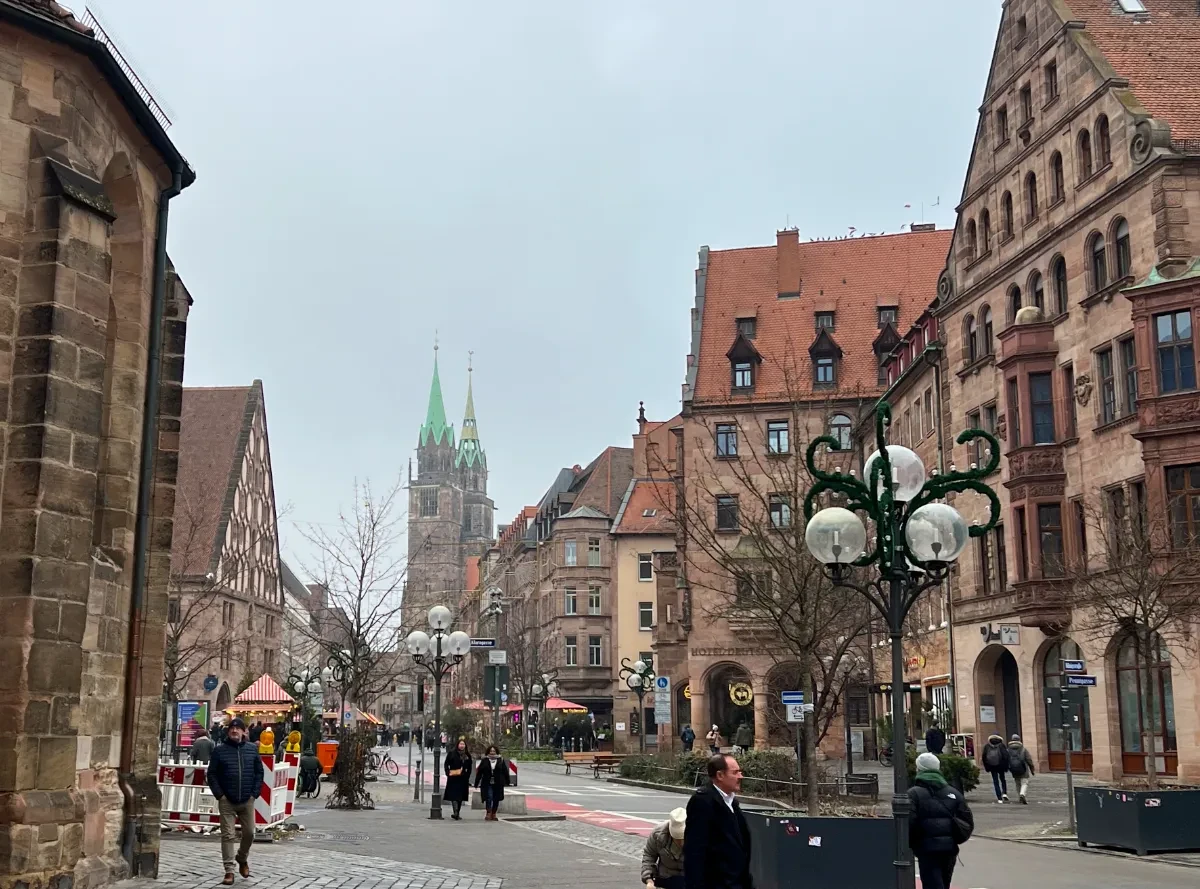
The southern half of the Altstadt is where many visitors first encounter Nuremberg, walking from the Hauptbahnhof through the Frauentor and Handwerkerhof toward St. Lorenz. It combines beautiful historic architecture with the city's main pedestrian shopping streets, cafés and restaurants. I particularly enjoy the mix of medieval Nuremberg and a lively modern city.
Best for: First-time visitors, shopping, restaurants and historic architecture
Neighbourhood
St. Sebald Quarter
Historic streets between the Pegnitz and Kaiserburg
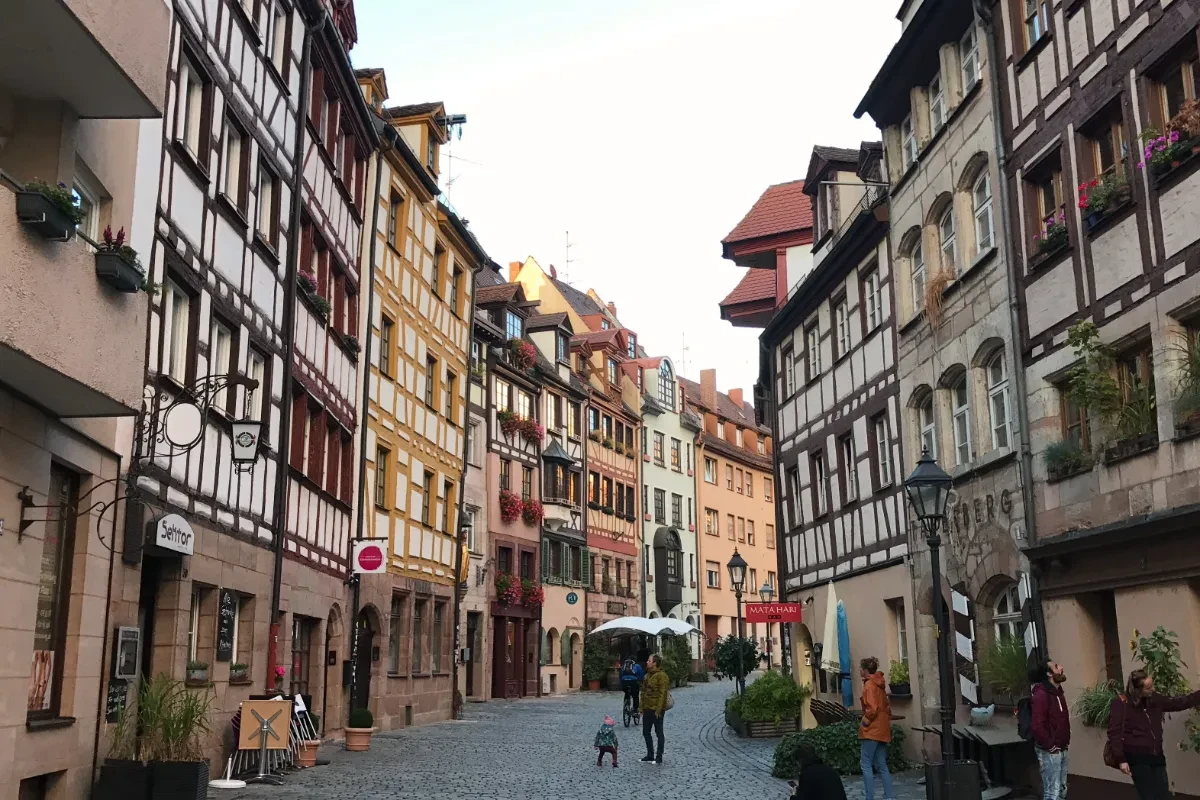
North of the Pegnitz is my favorite part of the Altstadt. The streets become more atmospheric as they climb past St. Sebald toward the Kaiserburg, Albrecht-Dürer-Haus and Tiergärtnertor. I love wandering the smaller lanes, crossing Henkersteg and Kettensteg and eventually heading uphill for views across the rooftops. This is Nuremberg at its most picturesque.
Best for: Medieval atmosphere, museums, castle views and wandering on foot
Neighbourhood
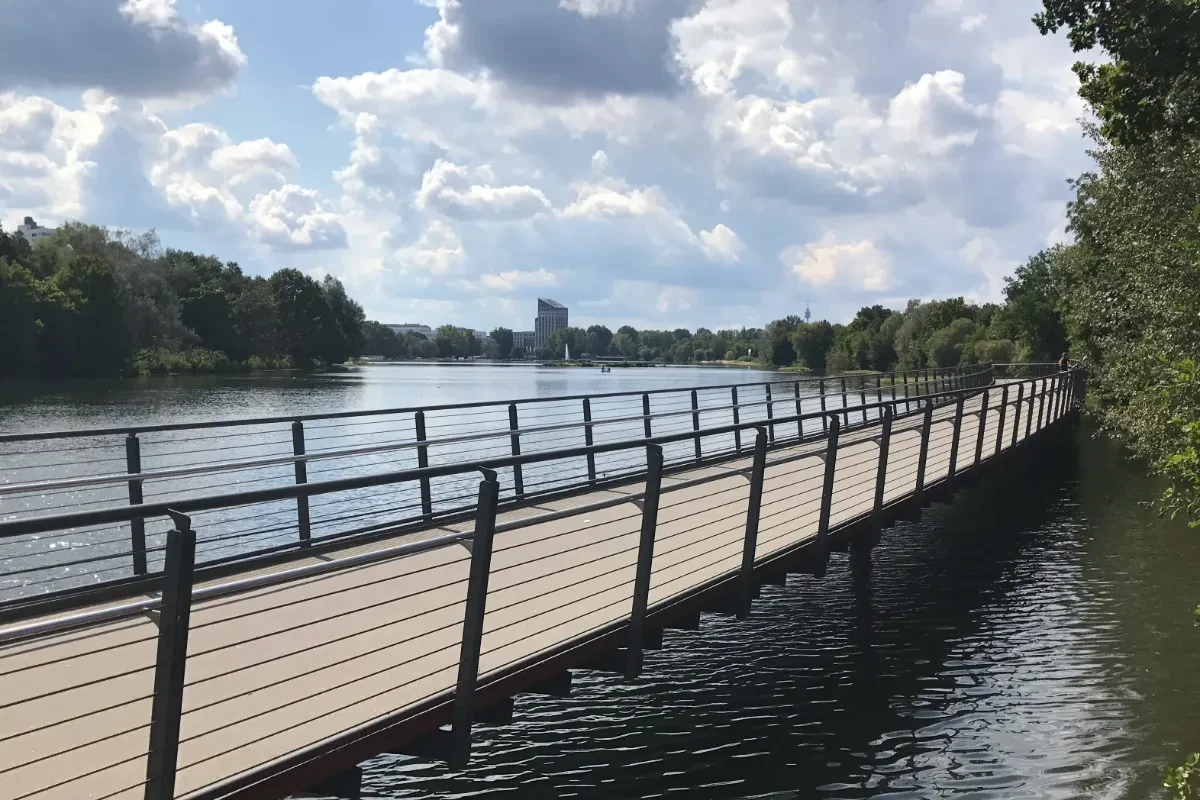
Wöhrd & Wöhrder See
Green space and everyday life just east of the Old Town
Around Wöhrder See, Nuremberg feels much greener and more residential than it does inside the walls. The lake, Pegnitz and surrounding paths provide plenty of space for walking, running and cycling, and I have spent time here both exercising and simply enjoying the park. It is a good area for seeing how outdoor life fits into everyday Nuremberg rather than focusing entirely on sightseeing.
Best for: Walking, cycling, green space and a more residential atmosphere
Neighbourhood
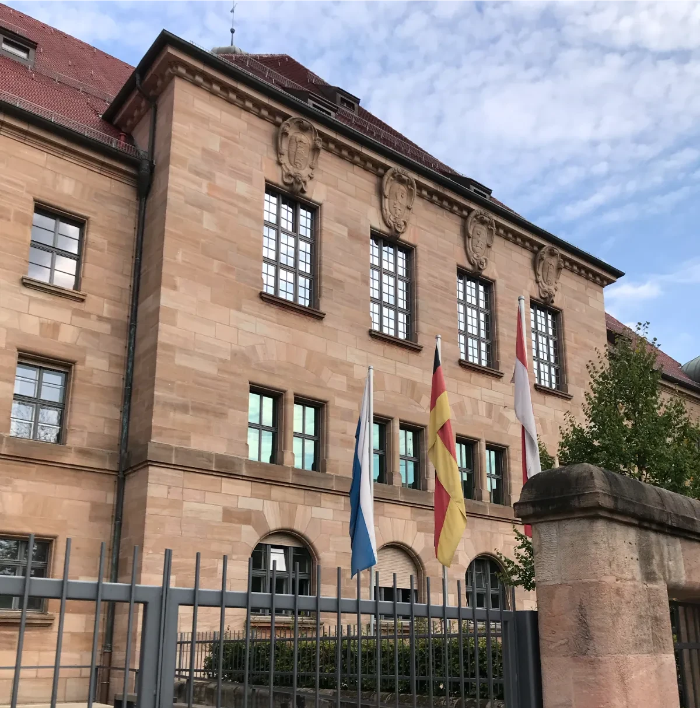
Bärenschanze
Historic townhouses and the legacy of the Nuremberg Trials
West of the center, Bärenschanze combines attractive residential streets and older townhouses with one of Nuremberg's most important historic sites. The Palace of Justice and Memorium Nuremberg Trials are the main reasons most visitors come here. It is easily reached by U-Bahn and provides a very different perspective on the city from the medieval history of the Altstadt.
Best for: Nuremberg Trials history, architecture and exploring beyond the walls
District
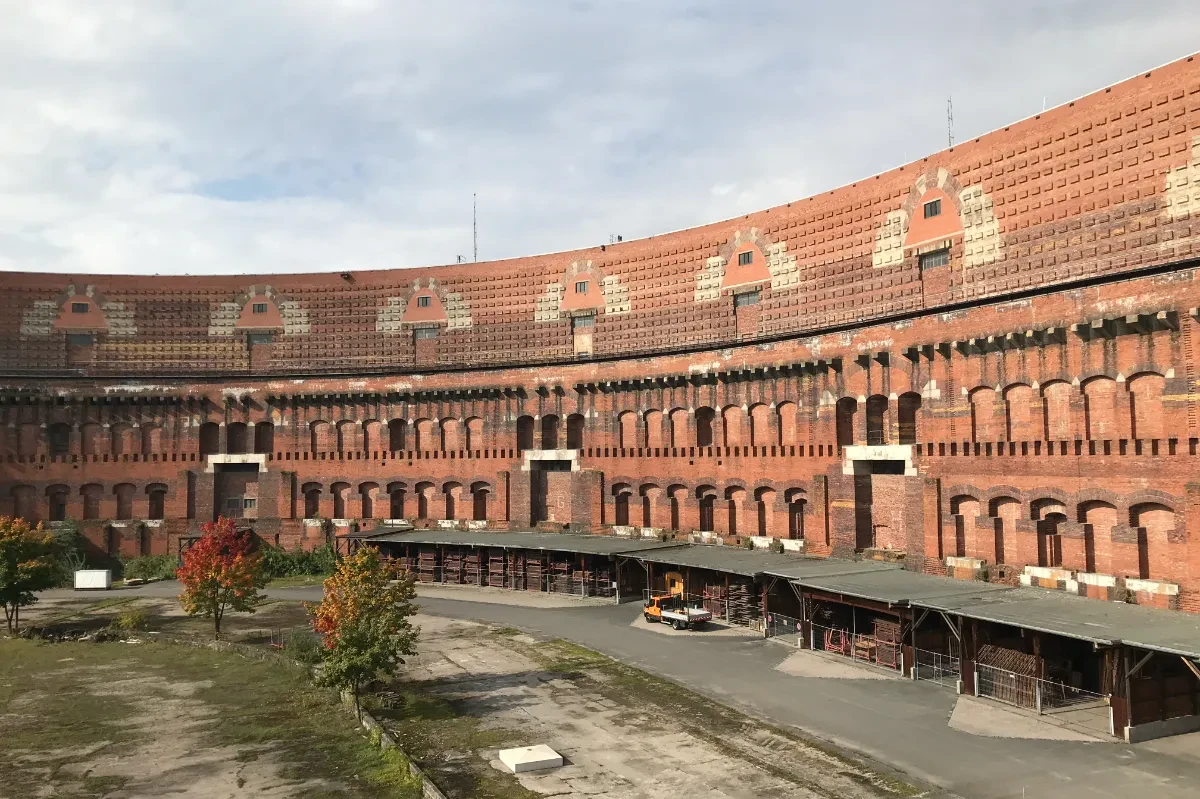
Dutzendteich & Luitpoldhain
Parks, culture and some of Nuremberg's most difficult history
South-east of the center, Dutzendteich and Luitpoldhain combine lakes, walking paths and large green spaces with the monumental remains of the former Nazi Party Rally Grounds. The area is also home to major events such as Rock im Park and Klassik Open Air, while the nearby Meistersingerhalle adds another cultural dimension. It is an unusual but important part of Nuremberg.
Best for: 20th-century history, parks, concerts and major outdoor events
Neighbouring City
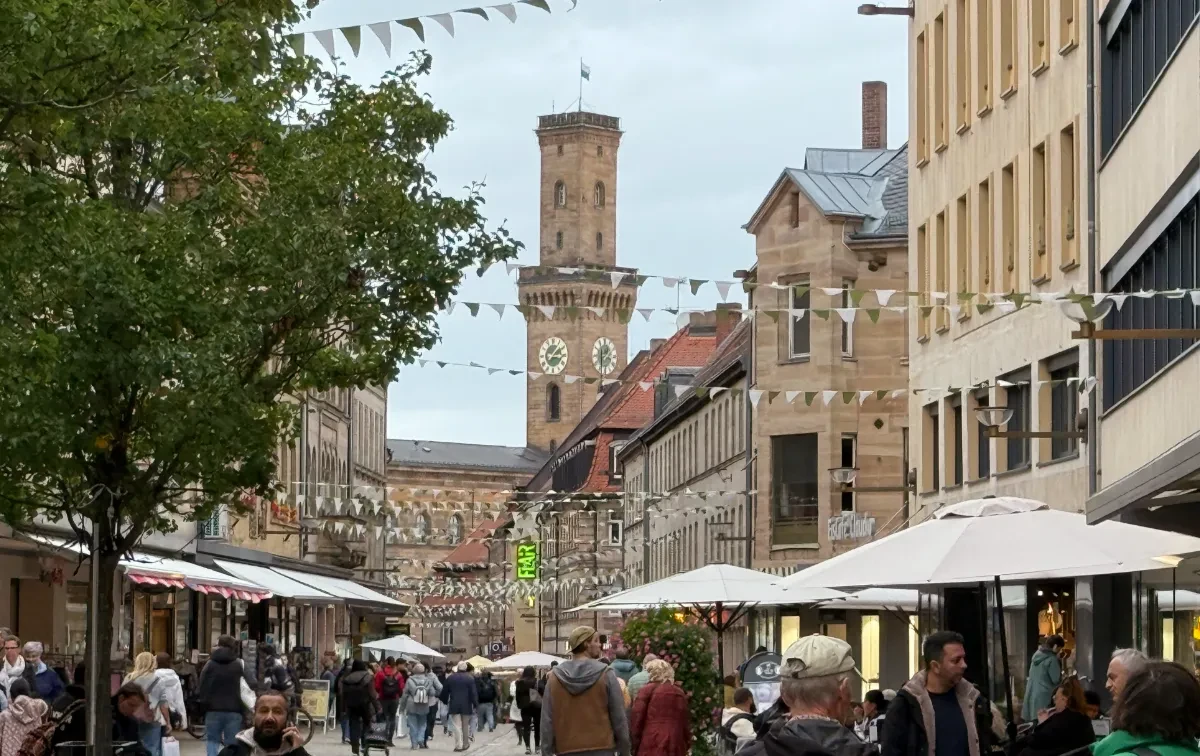
Fürth City Center
An overlooked historic center only minutes from Nuremberg
Fürth is a separate city, but Nuremberg and Fürth have effectively grown together and are directly connected by U-Bahn. I think its historic center deserves far more attention than it receives, with handsome old townhouses, attractive streets and a relaxed local atmosphere. Germany's first railway connected the two cities in 1835, and their histories have been intertwined ever since.
Best for: Historic architecture, local atmosphere and exploring beyond Nuremberg
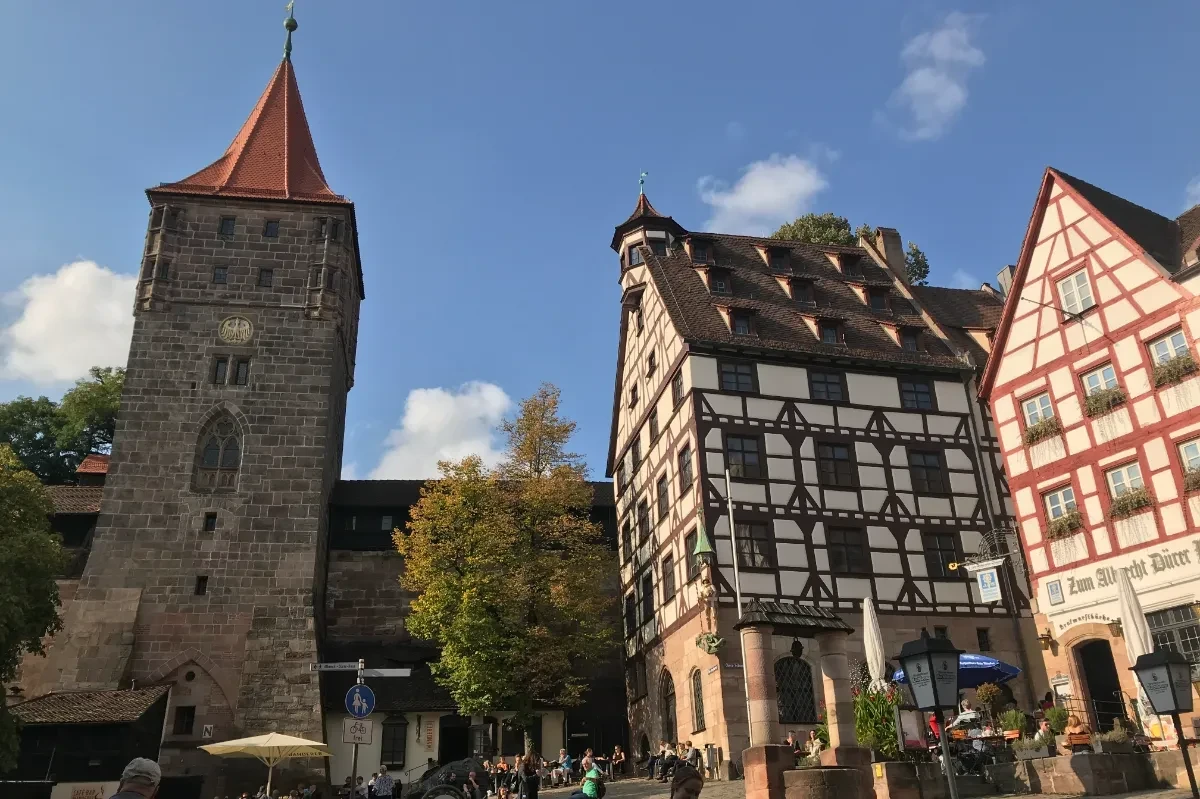
Sightseeing
Historic Sights & Landmarks
Nuremberg's historic center is surrounded by some of Germany's most complete medieval fortifications. Most major landmarks are within comfortable walking distance of each other, making the old town easy to explore on foot.
Imperial Castle
Kaiserburg
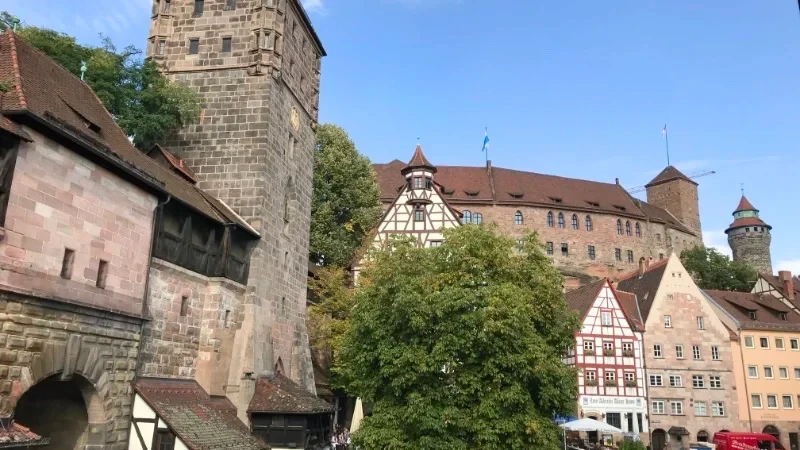
The Kaiserburg dominates Nuremberg's skyline and is the landmark I most associate with the city. Holy Roman Emperors stayed here as they traveled through the empire, but you don't need to be fascinated by medieval history to enjoy it. I particularly love climbing to the castle and looking across the red rooftops, especially in autumn when the trees below begin changing color. There's also a lovely cafe for a light lunch.
Historic Square
Hauptmarkt
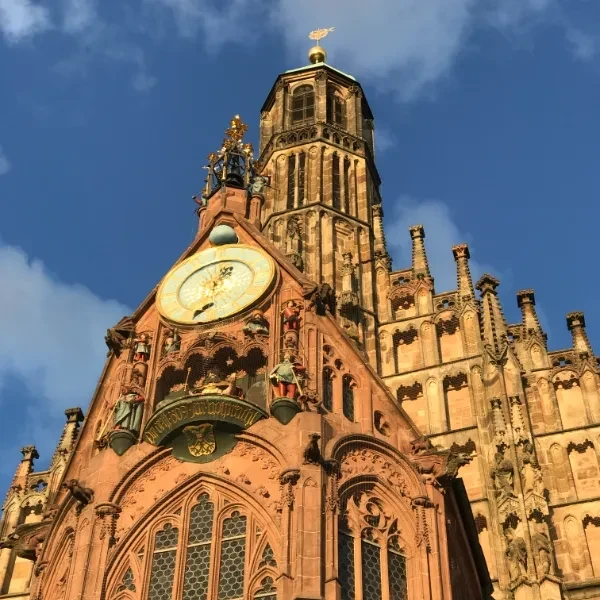
Hauptmarkt has been at the center of Nuremberg life for centuries and remains one of the Old Town's essential stops. Frauenkirche overlooks the square, while the elaborate Schöner Brunnen rises beside it. I have seen the square in many seasons, but December is unforgettable when the Christkindlesmarkt takes over, even if the enormous crowds now make me appreciate quieter visits too.
Gothic Church
St. Lorenz Church
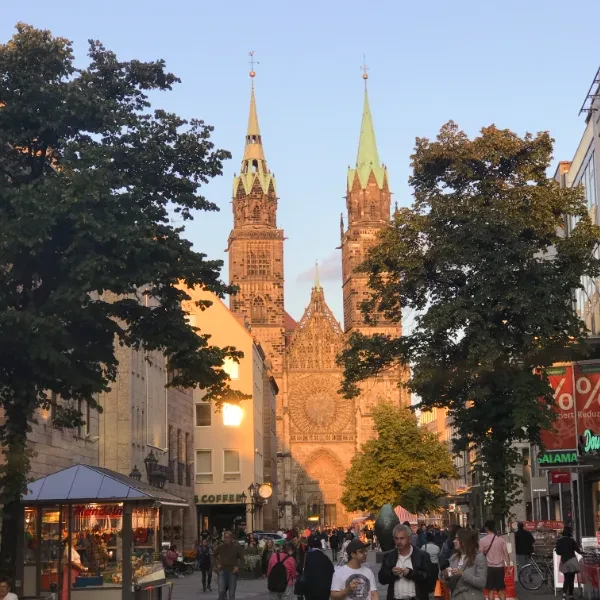
Walking from the Hauptbahnhof through Frauentor, St. Lorenz is one of the first great landmarks you encounter. The immense Gothic church was badly damaged during World War II but beautifully reconstructed. I like how naturally it fits into everyday city life: you can be shopping along Königstraße one moment and step inside this extraordinary medieval space for quiet and solitude.
Parish Church
St. Sebald Church
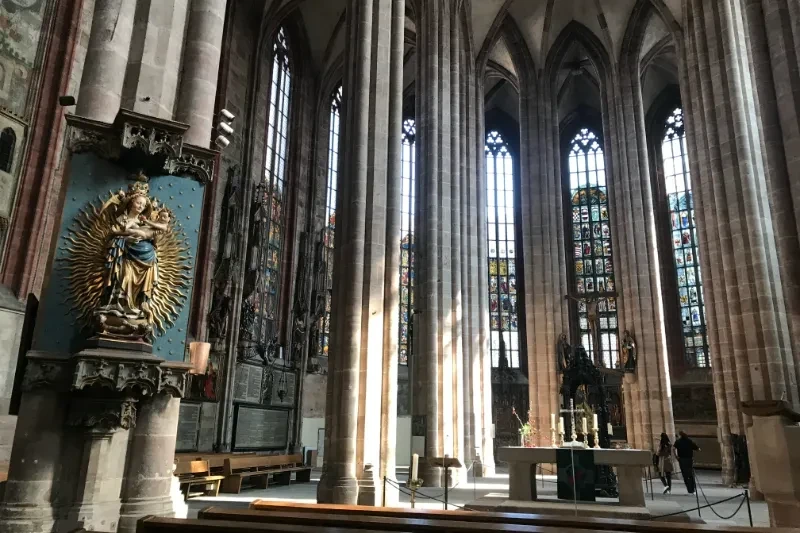
St. Sebald is Nuremberg's oldest parish church and one of the landmarks that gives the northern Altstadt so much atmosphere. One of my strongest memories is standing outside on a snowy December evening while choir music came from inside the church. Moments like that are part of why Nuremberg has always felt more personal to me than simply another historic German city.
Historic House Museum
Albrecht Dürer House
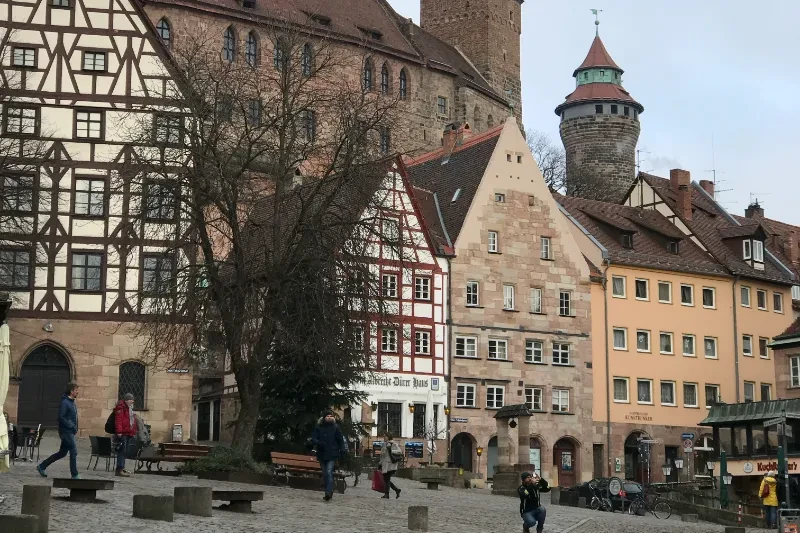
Albrecht Dürer is one of Nuremberg's most famous sons, and his timber-framed home survived the destruction of World War II remarkably well. The museum introduces his life, woodcuts and engravings, but I enjoy the setting just as much. The surrounding streets below the Kaiserburg and around Tiergärtnertor are among the most atmospheric corners of the entire Old Town.
Historic Bridges
Henkersteg & Kettensteg
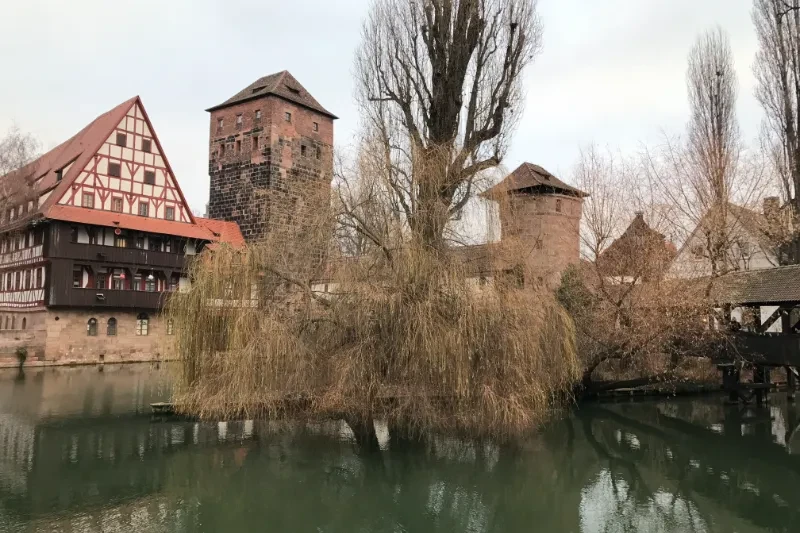
The Pegnitz is one of the features I love most about Nuremberg. Henkersteg crosses through an exceptionally picturesque collection of historic buildings, while nearby Kettensteg is Germany's oldest surviving iron chain suspension bridge. I have walked and biked this area countless times and still enjoy crossing the bridges, following the river and seeing where the smaller lanes lead.
Medieval Fortifications
City Walls
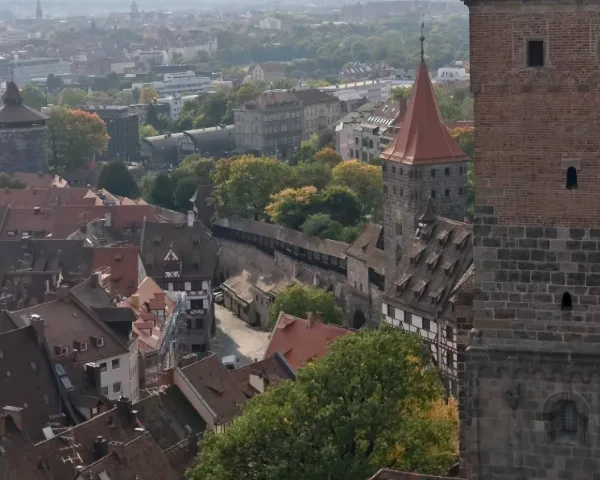
Nuremberg's extensive fortifications help make entering the Altstadt feel like entering a different city. From the Hauptbahnhof, you can cross toward Frauentor and almost immediately pass through the walls beside the Handwerkerhof. The green Stadtgraben follows much of the perimeter, making the walls more than a historic monument: they also create an enjoyable route for walking around the center.

Underground History
Historische Felsengänge
Beneath Nuremberg's Altstadt lies an extensive network of sandstone cellars that adds another layer to the city's history. Originally excavated for storing beer at cool, stable temperatures, the tunnels were later used as air-raid shelters during World War II. I found exploring these hidden passages fascinating, especially knowing that an entire underground world exists beneath streets I had walked so many times.
Culture & History
Museums, Culture & Performing Arts
Nuremberg's cultural side reaches far beyond its medieval appearance. Its museums explore German art, railways, industry, technology and some of the most difficult chapters of the country's history, while theaters and concert venues keep culture very much alive today. I particularly like how easily you can move from centuries of history to surprisingly forward-looking experiences.

Art & Cultural History
Germanisches Nationalmuseum
The Germanisches Nationalmuseum is one of Nuremberg's museums I would genuinely make time for. Its enormous collection explores the art and cultural history of the German-speaking world through paintings, sculpture, decorative arts, musical instruments and everyday objects. I also love the setting, where parts of the museum incorporate historic monastery buildings and architecture becomes part of the experience.
Tip: Don't try to see everything. Choose the collections that interest you and allow several hours.

Science & Technology
Deutsches Museum Nürnberg
This newer branch of Munich's Deutsches Museum looks toward the future rather than Nuremberg's past. I particularly enjoyed its exhibits on artificial intelligence and robotics, including robotic flying fish moving above and around visitors. The interactive displays make complex ideas approachable and provide a fascinating contrast after spending hours surrounded by Nuremberg's medieval architecture.
Tip: A great change of pace after several hours of churches, castles and historic streets.

Transportation History
DB Museum Nürnberg
Nuremberg has an important place in railway history: Germany's first passenger railway began operating between Nuremberg and Fürth in 1835. The DB Museum uses historic locomotives, railway cars and exhibitions to trace the development of rail travel in Germany. It adds an important industrial dimension to a city that visitors can otherwise too easily associate only with its medieval and 20th-century past.
Tip: Particularly worthwhile for families, railway enthusiasts and industrial-history fans.

20th-Century History
Documentation Center Nazi Party Rally Grounds
If you have more than a day in Nuremberg, this is one of the places I think you should make time for. Located within the unfinished Nazi Congress Hall, the Documentation Center examines National Socialism, propaganda and the enormous rallies staged here. Afterwards, walk through the surrounding Rally Grounds. Their physical scale communicates something that photographs and exhibits alone simply cannot.
Tip: Allow time for both the museum and the surrounding Rally Grounds.

Legal History
Memorium Nuremberg Trials
The Palace of Justice tells another essential part of Nuremberg's 20th-century history. The exhibition examines the trials of leading representatives of the Nazi regime and their lasting influence on international criminal law. Courtroom 600 is particularly significant when accessible. The museum is outside the Altstadt but easy to reach by U-Bahn, followed by a short walk from Bärenschanze station.
Tip: Check whether Courtroom 600 will be accessible on the day of your visit.

Art & Design
Neues Museum Nürnberg
Just inside the medieval walls near the Hauptbahnhof, the Neues Museum focuses on contemporary art and design within a striking modern building. Its architecture and collections provide an intentional contrast to the historic city outside. Including something contemporary in your visit also helps reveal Nuremberg as a living city rather than somewhere defined entirely by its medieval and 20th-century history.
Tip: Its location makes it easy to visit when arriving at or departing from the Hauptbahnhof.

Industrial History
Museum Industriekultur
Nuremberg developed into an important center of manufacturing and industry, something that is easy to overlook while exploring the picturesque Altstadt. The Museum Industriekultur examines that transformation through technology, transportation, manufacturing and everyday working life. It helps explain how the historic imperial city developed into the much larger modern Nuremberg that surrounds the Old Town today.
Tip: Visit if you want to understand the city beyond its medieval postcard image.

City History
Stadtmuseum im Fembo-Haus
Housed in a Renaissance merchant's residence below the Kaiserburg, Fembo-Haus focuses specifically on Nuremberg and its development through the centuries. The historic building itself adds considerably to the experience. Its location also makes the museum easy to combine with the Kaiserburg, St. Sebald and Albrecht Dürer House while exploring the atmospheric northern half of the Altstadt.
Tip: An easy museum to incorporate into a day exploring the northern Altstadt.

Opera & Theater
Staatstheater Nürnberg
One thing I would encourage visitors to consider is spending an evening at the Staatstheater. I have attended opera here and appreciate being able to see high-quality performances at prices that can be surprisingly reasonable compared with major international opera houses. It is also a completely different way to experience Nuremberg after a day of museums, churches and walking through the Old Town.
Tip: Check the program before your trip and consider building an evening around a performance.

Concert Hall
Meistersingerhalle
Beside Luitpoldhain, the Meistersingerhalle is one of Nuremberg's principal concert venues, hosting classical music, orchestras, prominent singers and other touring performers. Its location connects the city's cultural life with the green spaces around Luitpoldhain and Dutzendteich, making it possible to combine time outdoors with an evening performance if something interesting is scheduled during your stay.
Tip: Check the concert calendar before your trip for orchestras and visiting performers.

Green Spaces
Parks, Gardens & Outdoor Life
Nuremberg is greener than its medieval image might suggest. When I lived here, walking and biking along the Pegnitz became part of everyday life, and the river connects the center with parks, lakes and trails extending well beyond the city walls. These spaces offer a completely different perspective on Nuremberg and are particularly enjoyable when you have more than a day to explore.

Lake & Parkland
Wöhrder See
Just east of the center, Wöhrder See provides a large stretch of water and green space along the Pegnitz. I spent time around the lake while living in Nuremberg, walking, exercising and occasionally stopping at the park café. It feels much more residential and relaxed than the Altstadt and is an easy place to escape the historic center without actually going very far.
Best for: Walking, running, relaxing by the water and experiencing everyday Nuremberg

River & Bike Trail
Pegnitztal Ost
Following the Pegnitz east from the city, the urban landscape gradually gives way to long stretches of green river valley. I have biked along the Pegnitz in both directions from Nuremberg and particularly enjoy how quickly you can leave busy streets behind. The trails are also excellent for walking and running and connect naturally with Wöhrder See and areas farther east.
Best for: Cycling, longer walks, running and following the Pegnitz beyond the center

City Wall Greenbelt
Stadtgraben
One of Nuremberg's most unusual green spaces follows the medieval fortifications themselves. The Stadtgraben, or city moat, creates a largely green corridor around the Altstadt beneath the walls and towers. I like it because you experience the fortifications from a completely different angle while getting away from the busy pedestrian streets just inside them.
Best for: Walking, medieval walls, photography and seeing the Altstadt from outside

Historic Cemetery
St. Johannis Cemetery
I often visit historic cemeteries when exploring a city. They can reveal local history through monuments, family names and the people buried there while also providing surprisingly beautiful places to walk. St. Johannis is particularly worthwhile in Nuremberg, with centuries-old graves and carefully maintained plantings. We came here in part to see the grave of Albrecht Dürer.
Best for: Local history, Albrecht Dürer, historic monuments and a peaceful walk

River Meadows & Bike Trail
Pegnitzauen toward Fürth
West of the center, the Pegnitz continues through broad green spaces toward neighboring Fürth. I have cycled this route and think it is one of the nicest ways to understand how closely the two cities are connected. Instead of taking the U-Bahn, you can follow the river through parks and meadows before eventually reaching Fürth and its attractive historic center.
Best for: Cycling to Fürth, river walks, green space and a longer outdoor excursion

Parks & Historic Landscape
Luitpoldhain & Dutzendteich
Luitpoldhain and Dutzendteich combine large lawns, trees, paths and water with some of Nuremberg's most difficult history. I know the area from visits as well as Rock im Park, which takes over much of this part of the city. Today people walk, exercise and attend concerts here, while the surviving Rally Grounds remain an unavoidable reminder of how the landscape was once used.
Best for: Walking, concerts, open green space and understanding Nuremberg's layered history

Forest & Wildlife
Tiergarten & Lorenzer Reichswald
The Tiergarten was one of my earliest reasons for coming to Nuremberg. My parents brought me here as a child, and I remember enjoying it long before I appreciated the historic city center. Its wooded setting is a large part of its appeal, with forests, paths and water around the zoo creating a much more natural environment than you might expect from a major city attraction.
Best for: Families, woodland walks, wildlife and a greener day away from the Altstadt
Food & Drink
Eating & Drinking in Nuremberg
Nuremberg has a distinctly Franconian food culture, and that is an important part of experiencing the city. Sausages may be the best-known specialty, but traditional cooking also includes slow-roasted meats, dumplings, carp, gingerbread and regional beer and wine. I have always enjoyed how naturally these foods fit into the historic restaurants, bakeries and markets of the Old Town.
Franconian Food Is Not Bavarian Food
Visitors arriving from Munich sometimes expect more of the same, but Nuremberg belongs culturally to Franconia, a region with its own identity, dialect and culinary traditions. Local pride in that distinction runs deep. Nürnberger sausages may be the obvious starting point, but dishes such as Schäufele, regional carp, Franconian beer and wine reveal a much broader food culture.
Franconian Specialties
Nuremberg's food traditions combine specialties unique to the city with dishes found throughout Franconia. Some are hearty restaurant meals, while others are simple foods I associate with walking through the Old Town. These nine specialties provide a good introduction to what makes eating and drinking here different from southern Bavaria.
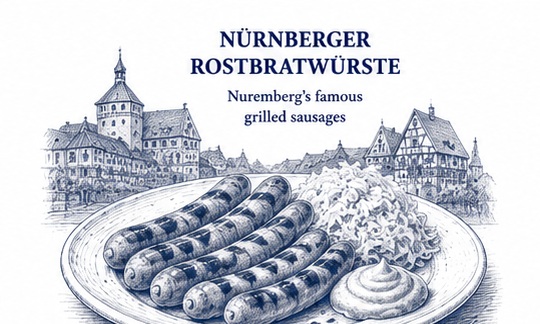
Nürnberger Rostbratwürste
Nuremberg's signature sausages are much smaller than most German bratwurst and traditionally grilled over a beechwood fire. Order six, eight or twelve with sauerkraut or potato salad, or try Drei im Weggla, three sausages tucked into a crusty bread roll for an easy meal while exploring.
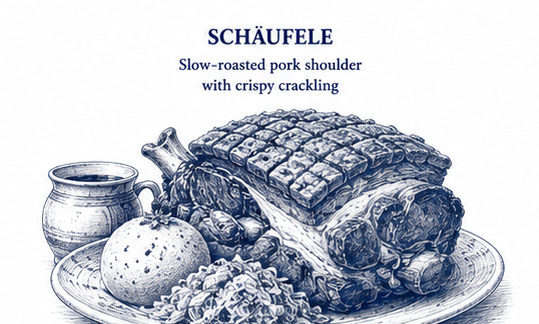
Schäufele
One of my favorite Franconian dishes, Schäufele is pork shoulder slowly roasted until the meat becomes tender and the skin develops a crisp crust. It is traditionally served with potato dumplings and rich gravy. If you want to try a hearty meal that feels distinctly Franconian, this would be one of my first choices.
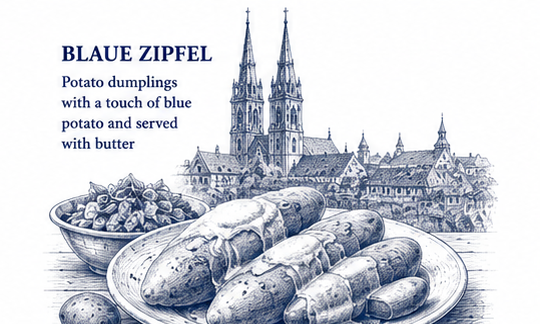
Blaue Zipfel
These Nürnberger sausages are prepared completely differently from the familiar grilled version. They are gently poached in a tangy broth of vinegar, onions, wine and spices, producing a surprisingly delicate dish. The name refers to the pale bluish appearance the sausages develop during cooking.
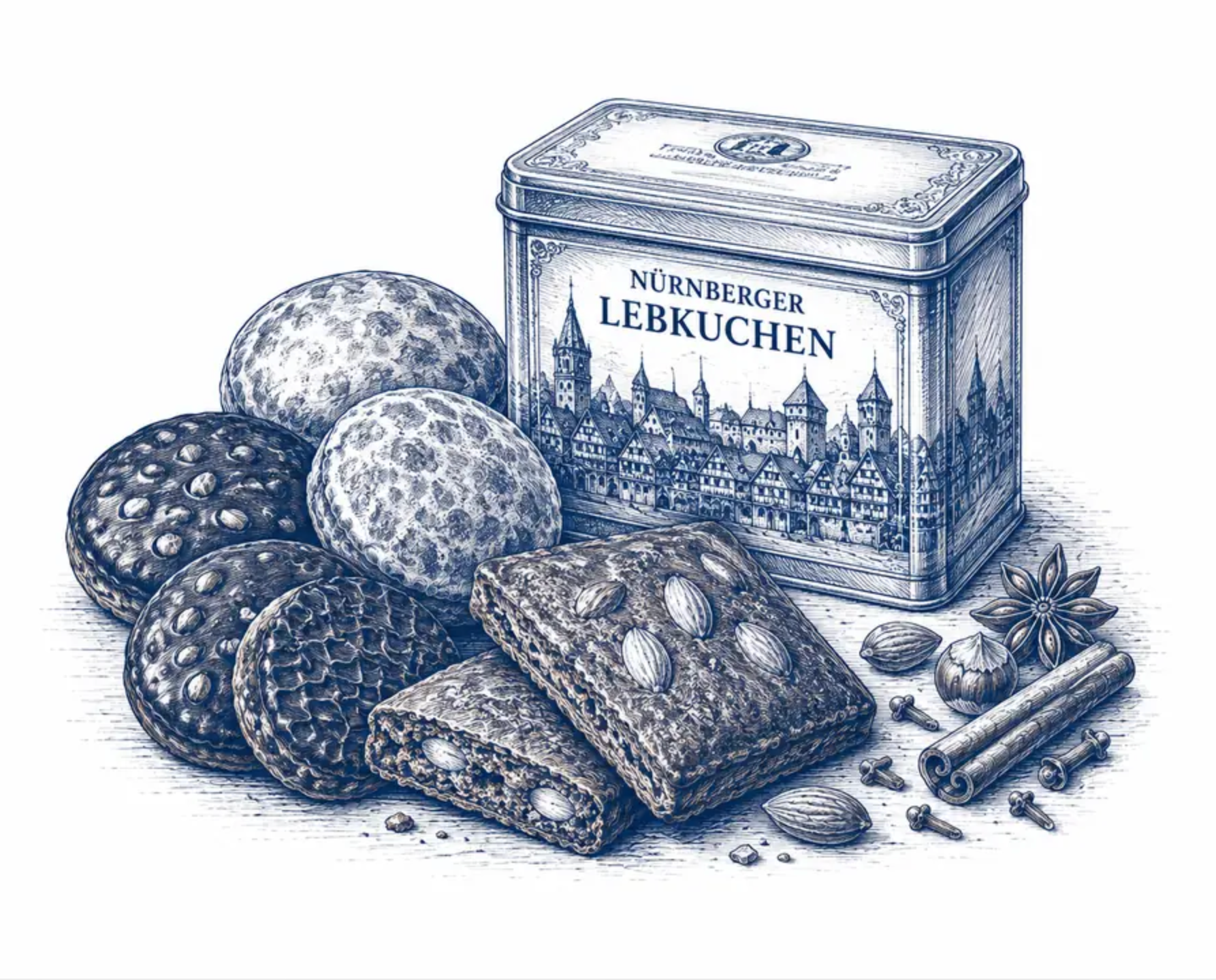
Nürnberger Lebkuchen
Nuremberg has been famous for Lebkuchen for centuries, particularly the nut-rich varieties associated with the Christmas season. They are soft, aromatic and flavored with warming spices rather than resembling a crisp gingerbread cookie. You'll find them throughout the year, but for me they are inseparable from Nuremberg at Christmas.
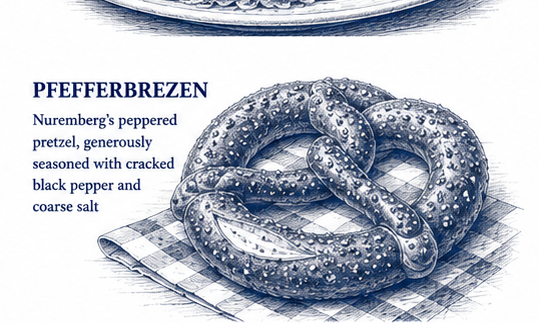
Pfefferbrezen
One of my simple Nuremberg favorites is the peppered pretzel sold by local bakeries. It takes an ordinary Breze and covers it generously with cracked black pepper, giving it a surprisingly addictive kick. I often find myself buying one to eat while walking through the Old Town whenever I return to the city.
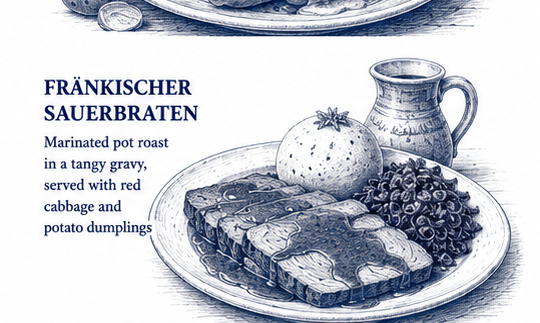
Fränkischer Sauerbraten
Franconia has its own tradition of Sauerbraten, with beef marinated before being slowly braised until tender and served with a rich sweet-and-sour sauce. Potato dumplings are a common accompaniment. It is the kind of traditional restaurant dish worth trying when you want something beyond Nuremberg's better-known sausages.
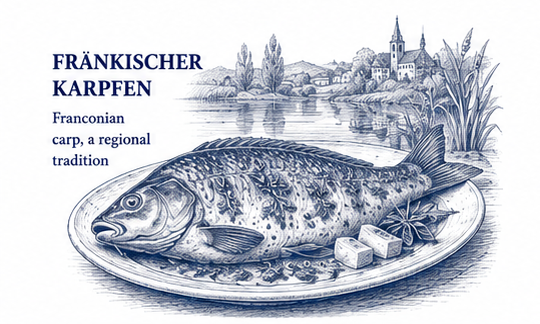
Fränkischer Karpfen
Carp has a long tradition in Franconia, particularly during the cooler months traditionally associated with the letter R. It may be served fried until crisp or prepared blau, gently cooked in seasoned liquid. Look for it in traditional restaurants during the season, especially if you want to try something distinctly regional.
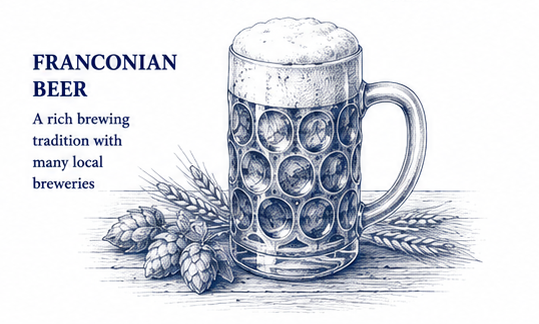
Franconian Beer
Franconia has an extraordinary brewing tradition, with numerous breweries producing distinctive local beers beyond the styles most visitors associate with Munich. In Nuremberg, trying a regional beer alongside sausages or Schäufele is an easy introduction to this culture. Ask what is local rather than automatically ordering a familiar national brand.
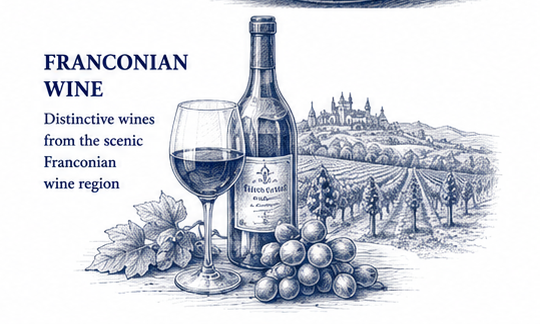
Franconian Wine
Beer gets much of the attention in Bavaria, but Franconia is also one of Germany's important wine regions. Silvaner is particularly associated with the area, and Franconian wines are traditionally recognizable by the flattened Bocksbeutel bottle. Trying a local wine is a good reminder that Franconian drinking culture extends well beyond beer.

Food Experiences I Personally Enjoy
My memories of eating in Nuremberg are less about collecting famous restaurants and more about how food fit into everyday life. When I lived here, we cooked frequently and often ate quite casually. Some places I enjoyed have since disappeared, but these are the restaurants, cafés and simple food experiences I still associate with my time in the city.

Traditional Franconian·St. Sebald·€–€€
Bratwursthäusle
Beside St. Sebald Church, Bratwursthäusle is one of the places I associate most strongly with traditional Nuremberg. Small Nürnberger Rostbratwürste are grilled over an open beechwood fire and served in a wonderfully historic setting. It gets busy, but the atmosphere is a large part of the experience and makes this an easy place to start exploring the city's Franconian food traditions.
Tip: Come for the combination of traditional sausages, historic surroundings and Old Town atmosphere.
Historic Bratwurst Restaurant·Altstadt·€–€€
Zum Gulden Stern
Zum Gulden Stern is another historic place I remember for experiencing Nuremberg's bratwurst tradition. The restaurant occupies an atmospheric old building and focuses on the kind of straightforward Franconian cooking that fits naturally into the Altstadt. For me, places like this are as much about sitting within centuries of history as they are about seeking out a particular dish.
Tip: A good choice when the historic setting matters as much as having a traditional meal.

Pastry Shop & Café·Altstadt·€
Konditorei Café Beer
Coffee and cake are an important part of how I like to slow down when exploring German cities, and Café Beer is one of the Nuremberg places I remember enjoying. Rather than treating every afternoon as another sightseeing opportunity, stop for a pastry, cake and coffee. It is a simple experience, but one that fits particularly well into a day spent walking through the Old Town.
Tip: Take a proper afternoon break rather than trying to turn every hour into sightseeing.
Castle Café·Kaiserburg·€–€€
Burg Café Beer
After climbing to the Kaiserburg, I enjoy stopping around the castle for coffee, cake or something light to eat while taking in the views across Nuremberg. Burg Café Beer makes that particularly easy. The combination of the historic setting, rooftops below and a relaxed break is more memorable to me than rushing through the castle and immediately moving on to the next attraction.
Tip: Give yourself time to sit and enjoy the view instead of treating the Kaiserburg as a quick stop.

Market & Street Food·Königstraße·€
Königstraße Food Stalls & Markets
Some of my strongest everyday food memories from living in Nuremberg are surprisingly simple. I loved browsing food vendors around Königstraße and buying olives, Mediterranean dips, cheeses and other things to take home. These aren't traditional Franconian specialties, but they reflect the more international side of a food scene that has continued to change since I lived here.
Tip: Browse first and see what looks good rather than arriving with a specific shopping list.
Everyday Food·Throughout the City·€
Bakeries, Ice Cream & Everyday Eating
When I lived in Nuremberg, we cooked frequently and didn't spend every evening searching for a notable restaurant. We would pick up pastries or Pfefferbrezen from bakeries, stop for ice cream, or simply go out for kebab or pizza. Some of those places no longer exist, but this casual side of eating remains part of how I remember actually living in the city.
Tip: Leave room for spontaneous bakery stops, ice cream and whatever you discover while walking.
Events
Festivals & Events Throughout the Year
Nuremberg's calendar ranges from major music festivals and open-air concerts to traditions that have shaped the region for generations. Some events transform entire parts of the city, while others are worth a short trip into neighboring Fürth. December remains the most famous time to visit, but several of my favorite experiences have taken place at other times of year.
May · Nuremberg Old Town
Blaue Nacht
For one night each spring, museums, cultural institutions, courtyards and public spaces across Nuremberg stay open late for the Blaue Nacht. Art installations, performances and projections transform the historic center after dark. It is a particularly interesting way to experience familiar Old Town streets and buildings in a completely different setting.
Tip: Check the annual program in advance and choose a few priorities rather than trying to see everything.
June · Dutzendteich & Zeppelinfeld
Rock im Park
Rock im Park is one of Germany's largest music festivals and an event I associate with my younger years in Nuremberg. I spent several days camping here and attending the festival back in the 1990s, when the lineups mixed rock with pop, hip-hop and other genres. Today it still takes over the area around Dutzendteich for an enormous weekend of live music.
Tip: Expect major crowds and transportation changes throughout the Dutzendteich area during the festival.
July & August · Luitpoldhain
Klassik Open Air
Nuremberg's Klassik Open Air brings orchestral music into Luitpoldhain during summer, turning the large park into an informal outdoor concert venue. Visitors spread blankets across the lawns and often bring food for a picnic while listening to classical music. It shows a completely different side of an area many visitors otherwise associate primarily with 20th-century history.
Tip: Bring a blanket and picnic and make an evening of it rather than treating it like a formal concert.
September–October · Fürth City Center
Michaelis-Kirchweih
Held in neighboring Fürth, the Michaelis-Kirchweih is one of the region's great traditional festivals and much more interesting to me than a conventional fairground Volksfest. Rides, food stalls, beer stands and vendors fill the streets of central Fürth, integrating the festival directly into the city. Nuremberg and Fürth are connected by U-Bahn, making it easy to visit.
Tip: Combine the Kirchweih with time exploring Fürth's attractive and often overlooked historic center.
Late November–December 24 · Hauptmarkt & Old Town
Christkindlesmarkt
I have visited Nuremberg's Christkindlesmarkt since childhood, and the lights, stalls, Lebkuchen and winter atmosphere remain strongly connected with how I remember the city. It is deservedly famous, but it can also become extraordinarily crowded. I now appreciate the atmosphere most when I can explore the market at quieter times rather than being carried along by the crowds.
Tip: Visit on a weekday or earlier in the day if you want more time to browse the stalls.
December · Old Town
Christmas Concerts & Performances
Christmas in Nuremberg extends well beyond the market. Churches, theaters and concert venues offer seasonal performances throughout December. One memory that has stayed with me is standing outside St. Sebald on a snowy evening while beautiful choir music came from inside. Check the calendars for St. Sebald, Staatstheater and other venues when planning a December visit.
Tip: Reserve popular Christmas concerts in advance rather than assuming tickets will be available after arrival.

How to Spend Your Time
Suggested Itineraries
Nuremberg deserves more than a quick stop if you have the time. One day is enough to experience the highlights of the Altstadt, but each additional day reveals another side of the city, from museums and neighboring Fürth to the difficult history of the Nazi era and Nuremberg Trials. These itineraries build on one another, gradually moving beyond the medieval center while still leaving time to enjoy the streets, cafés and Pegnitz rather than simply rushing between sights.

One Day
The Essential Nuremberg
Experience Nuremberg's medieval heart on foot, from its great churches and historic squares to the Kaiserburg, traditional Franconian food and an evening along the Pegnitz.
Morning
Start at the Handwerkerhof beside the Hauptbahnhof and follow Königstraße through the Old Town to St. Lorenz. Continue along Kaiserstraße toward the Pegnitz and cross Museumsbrücke, with views toward the Narrenschiff fountain. From here, explore Hauptmarkt with Schöner Brunnen and Frauenkirche, then continue past St. Sebald before stopping for Nürnberger sausages at Bratwursthäusle.
Afternoon
After lunch, climb toward the Kaiserburg and explore the museum and castle grounds. Leave time for the wonderful views across Nuremberg's rooftops before heading downhill to Fembo-Haus and Albrecht Dürer House. Wander through the smaller streets around Tiergärtnertor as you make your way back toward the river.
Evening
Finish along the Pegnitz, one of my favorite parts of Nuremberg. Walk toward Kettensteg and Henkersteg, enjoy the historic buildings and river views, then find somewhere in the Altstadt for a relaxed dinner.

Two Days
Art, Shopping & Fürth
Spend your second day with German art and culture, Nuremberg's lively pedestrian streets and neighboring Fürth, an attractive historic center that far too many visitors overlook.
Morning
Begin at the Germanisches Nationalmuseum, one of the city's most important museums. Its collection is enormous, so concentrate on the periods and subjects that interest you rather than trying to see everything. Afterwards, stroll along Breite Gasse and Karolinenstraße, Nuremberg's main pedestrian shopping streets, with time to browse the stores or stop for coffee and cake.
Afternoon
Continue toward Weißer Turm and the remarkable Ehekarussell fountain, then have lunch around the surrounding square. Afterwards, take the U1 to neighboring Fürth and explore its attractive historic center, which I think deserves far more attention from visitors. If you want another museum, consider the Ludwig Erhard Zentrum.
Evening
Return to central Nuremberg for dinner or a stroll around Hauptmarkt. Check the programs at Staatstheater Nürnberg and Meistersingerhalle and consider ending the day with an opera, concert or theater performance.

Three Days
Nuremberg's WWII History
Devote your third day to Nuremberg's darkest chapter, exploring how National Socialism took hold and how the city later became synonymous with attempts to hold its leaders accountable.
Morning
Head to the Documentation Center Nazi Party Rally Grounds to understand how propaganda, mass movements and political institutions helped undermine democracy and establish dictatorship. Afterwards, walk through the surrounding Rally Grounds and around the immense unfinished Congress Hall. Seeing the physical scale of the site adds context that photographs and museum exhibits alone cannot provide.
Afternoon
Take public transport toward Bärenschanze and stop for lunch before visiting the Memorium Nuremberg Trials at the Palace of Justice. The exhibition shifts the story toward the postwar trials, the prosecution of leading Nazis and their influence on international criminal law. Courtroom 600 is especially important when accessible.
Evening
Return to the Altstadt for dinner at Trödelstuben near the Pegnitz. After such a heavy day, I would keep the evening deliberately relaxed and simply enjoy the historic center and river after dark.

Four Days
Railways, Caves & the Future
Go deeper into Nuremberg's less obvious stories, from Germany's first railway and the hidden world beneath the Altstadt to interactive exhibits exploring technologies of the future.
Morning
Start at the DB Museum in the city where German passenger railway service began. It is a great museum even if you aren't a train enthusiast, with historic locomotives and royal railway carriages alongside exhibits exploring rail's broader social history and its use during National Socialism. Afterwards, head into the Altstadt for some browsing, lunch or a leisurely coffee and cake.
Afternoon
If you booked ahead, tour the Historische Felsengänge and discover the old beer cellars and shelters hidden beneath the Altstadt. Alternatively, visit the Deutsches Museum Nürnberg, whose interactive exhibits on artificial intelligence, robotics and emerging technologies provide a fascinating contrast to the historic city outside.
Evening
Spend your final evening without a strict agenda. Return to the Pegnitz, revisit a favorite bridge or street and have dinner somewhere you discovered during your stay, enjoying the city rather than adding one final attraction.
Beyond Nuremberg
Day Trips & Onward Journeys
Nuremberg is also a great base for exploring more of Franconia and northern Bavaria. Excellent rail connections make it easy to reach historic cities, smaller towns and very different landscapes without a car. I particularly enjoy that these trips complement Nuremberg rather than simply offering more of the same, whether you spend the day in Bamberg, explore medieval Rothenburg or head into the Franconian countryside.
These are the day trips I recommend most often. Each one offers a genuinely different experience from Nuremberg itself, and all are worth at least a full day.
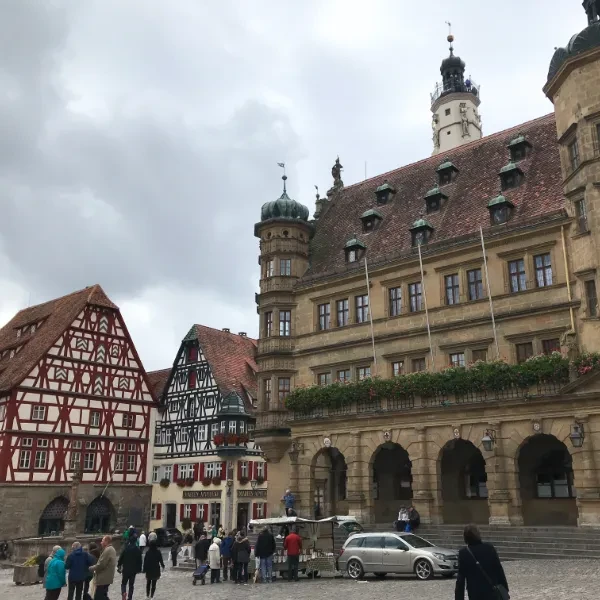
Rothenburg ob der Tauber
Germany's most famous medieval town. Remarkably well-preserved, with intact city walls, half-timbered houses and a fairy-tale atmosphere that rewards an overnight stay.
Highlights
- Medieval city walls
- Plönlein
- Stadtmuseum
- Medieval Crime Museum

Bamberg
UNESCO World Heritage city with remarkable architecture, a beautifully preserved old town and world-famous smoked beer. One of Germany's most rewarding smaller cities.
Highlights
- Altes Rathaus
- Klein Venedig
- Bamberg Cathedral
- Rauchbier

Regensburg
Beautiful medieval city on the Danube with Roman roots and impressive architecture. Another exceptional destination that many visitors overlook.
Highlights
- Stone Bridge
- Regensburg Cathedral
- Old Town
- Danube riverside
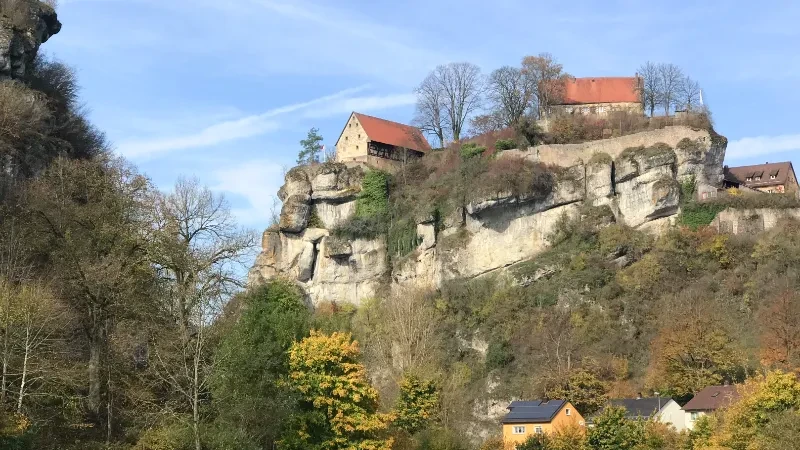
Fränkische Schweiz
The Franconian Switzerland region offers dramatic limestone landscapes, historic castles, charming villages and excellent hiking. A wonderful contrast to the city.
Highlights
- Teufelshöhle cave
- Pottenstein
- Limestone cliffs
- Hiking trails
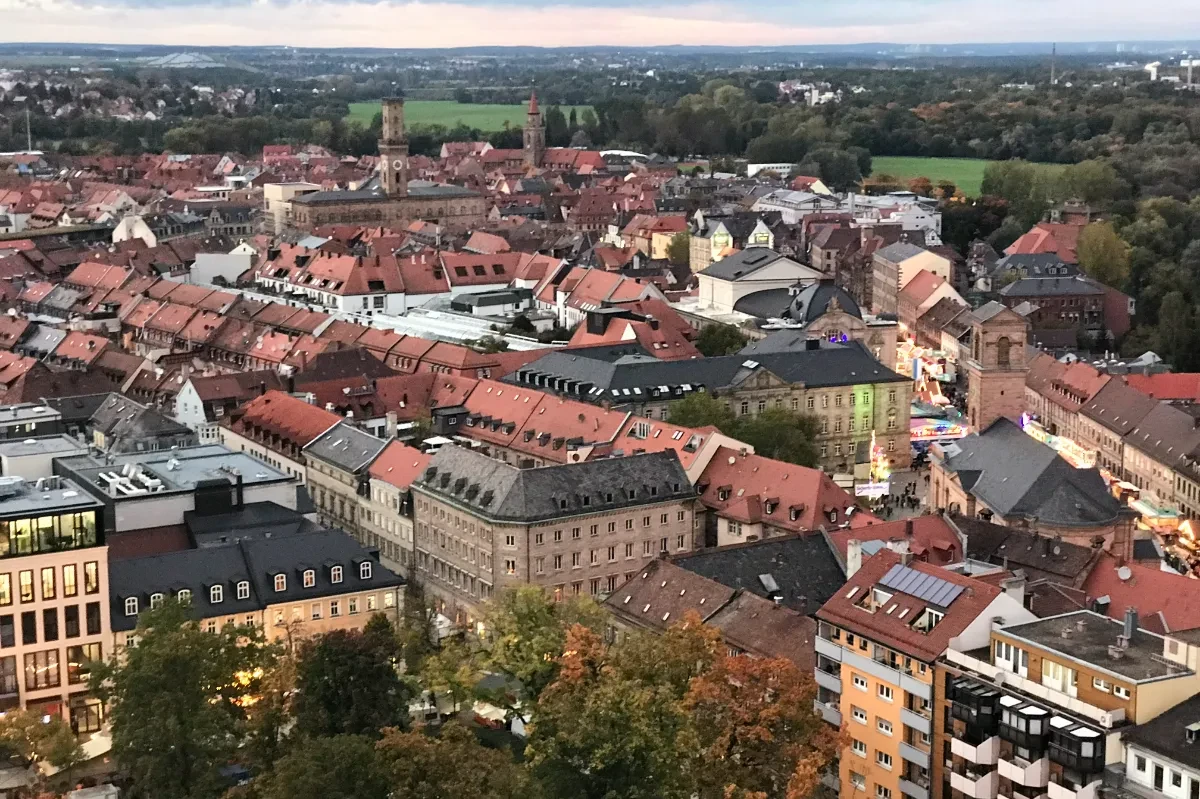
Fürth
Nuremberg's neighboring city has its own distinct identity and a charming historic center around Gustavstraße. Much quieter than Nuremberg and often completely overlooked by visitors.
Highlights
- Gustavstraße
- Green Market
- Art Nouveau architecture
- Stadtpark
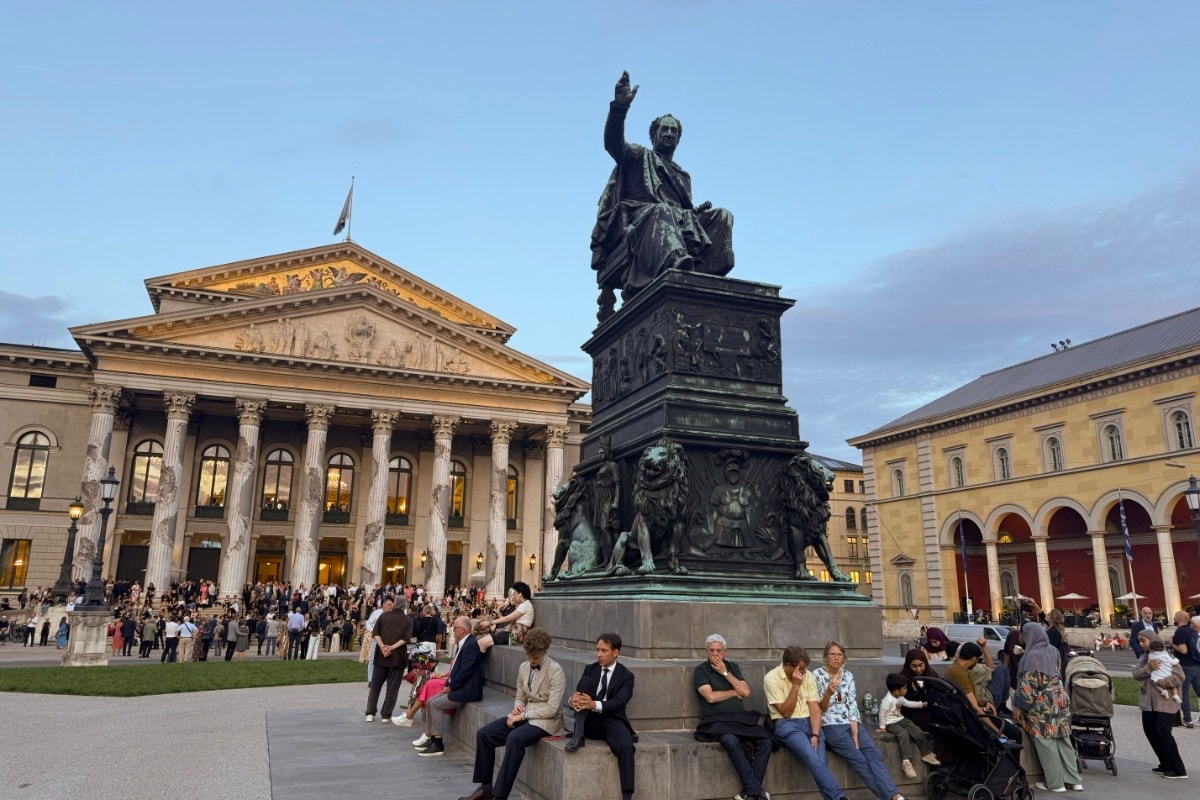
Munich
Easily reached by ICE in just over an hour, making it a surprisingly practical day trip if your itinerary allows. Bavaria's capital offers a completely different character to Franconian Nuremberg.
Highlights
- Marienplatz
- Englischer Garten
- Residenz
- Viktualienmarkt
Final Thoughts
Nuremberg has accompanied me through almost every stage of my life. From childhood shopping trips and visits to the zoo, to concerts, Christmas markets and eventually living here for several months, it has always been a city I enjoy returning to. What I appreciate most is that Nuremberg doesn't try to compete with Munich. It has its own identity, shaped by Franconian traditions, medieval architecture and an extraordinary history. It feels relaxed, approachable and wonderfully walkable. Many visitors only spend a few hours here before moving on. Personally, I think that's a mistake. Slow down, wander without a map, enjoy a peppered pretzel from a local bakery, and allow yourself time to simply experience the city. I suspect you'll leave feeling the same way I do every time I visit: already looking forward to coming back.


